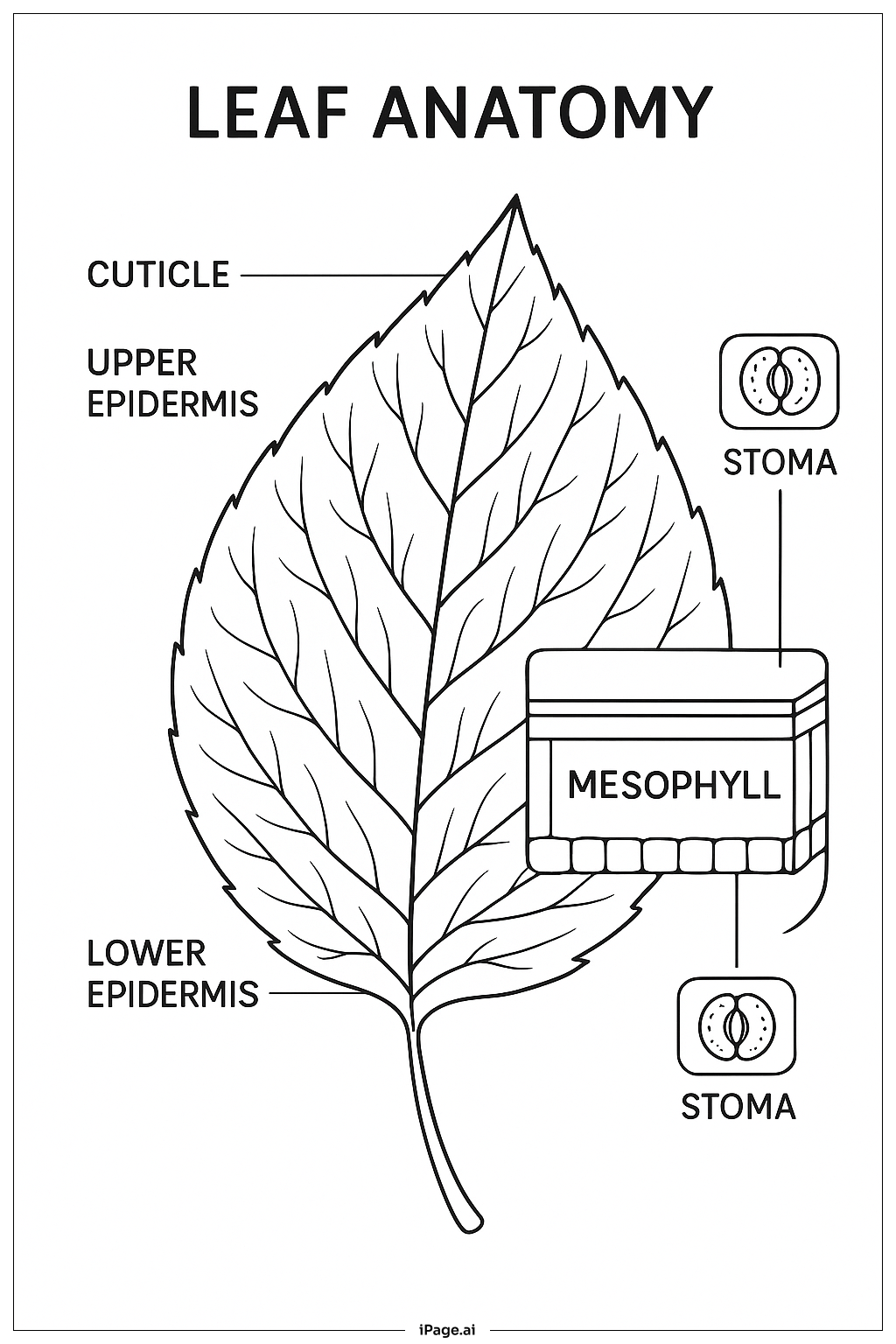
Coloring tips: How to color Photosynthesis Leaf Anatomy Study coloring page well?
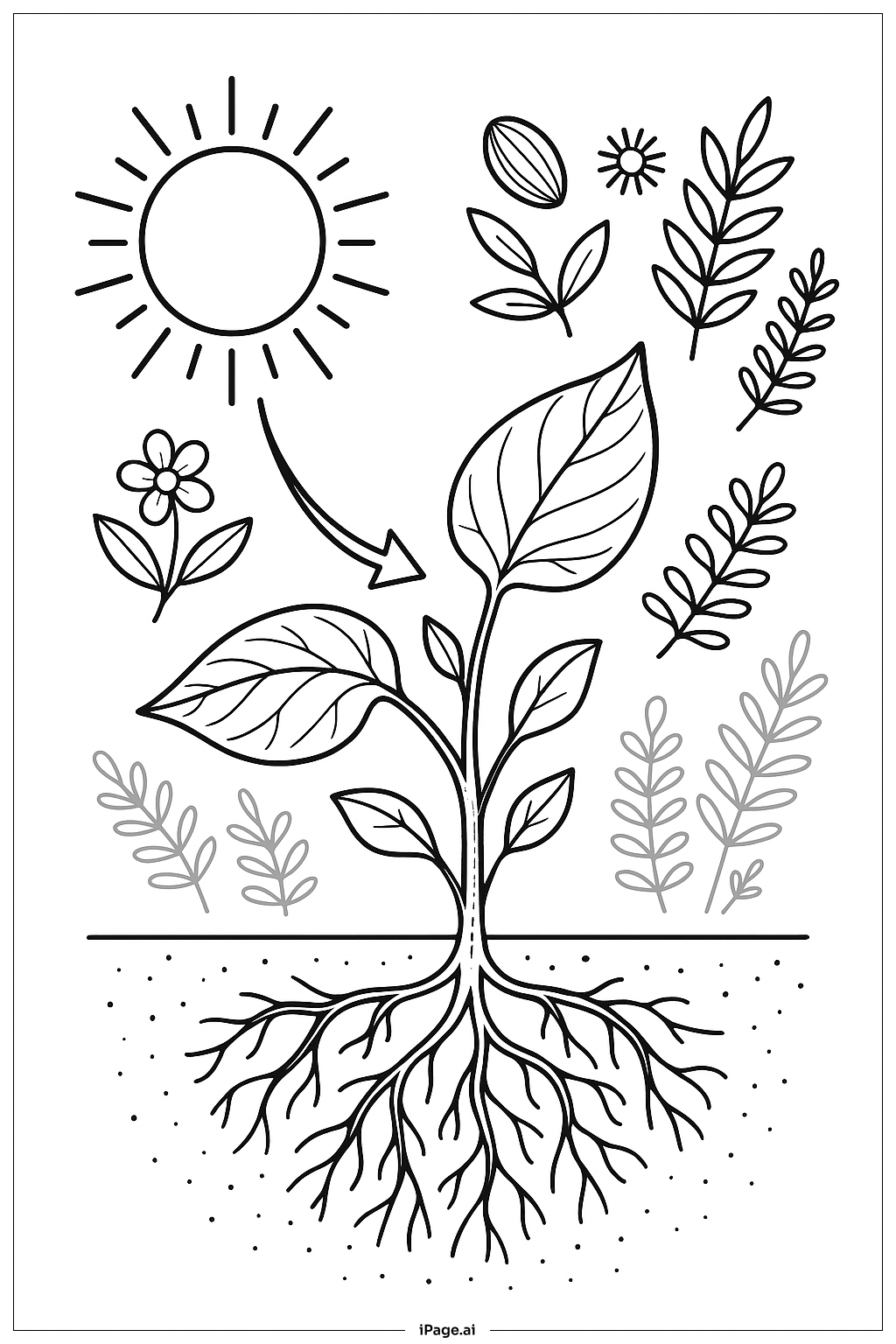
Use green shades for the leaf sections such as the cuticle, upper epidermis, and lower epidermis. The veins can be colored in a darker green or brown to stand out. For the mesophyll section, use lighter greens and yellows to show the different layers inside the leaf. The stoma can be colored in light gray or soft purple to highlight them. Try using different shades to give depth and make the image more lively. Use crayons, colored pencils, or markers for smooth coloring. Take your time to stay inside the lines for a neat finish.
Coloring challenges: Which parts are difficult to color and need attention for Photosynthesis Leaf Anatomy Study coloring page?
1. The small veins inside the leaf require careful coloring to avoid going outside the lines. 2. Mesophyll section has different layers which might be confusing to color correctly. 3. The stoma details are tiny and need precise coloring to show their shape clearly. 4. Balancing light and dark green shades to make the leaf look natural can be challenging. 5. Staying inside the thin lines around the leaf edges requires good control and patience.
Benefits of coloring books: Advantages of drawing Photosynthesis Leaf Anatomy Study coloring page
Coloring this leaf anatomy picture helps children learn about plant parts and photosynthesis in a fun way. It improves their fine motor skills by practicing careful coloring. It also encourages focus and attention to detail while recognizing scientific terms. Using different colors boosts creativity and helps them understand how parts of a leaf differ. This activity supports both artistic skills and science knowledge, making learning more interactive and exciting for kids.