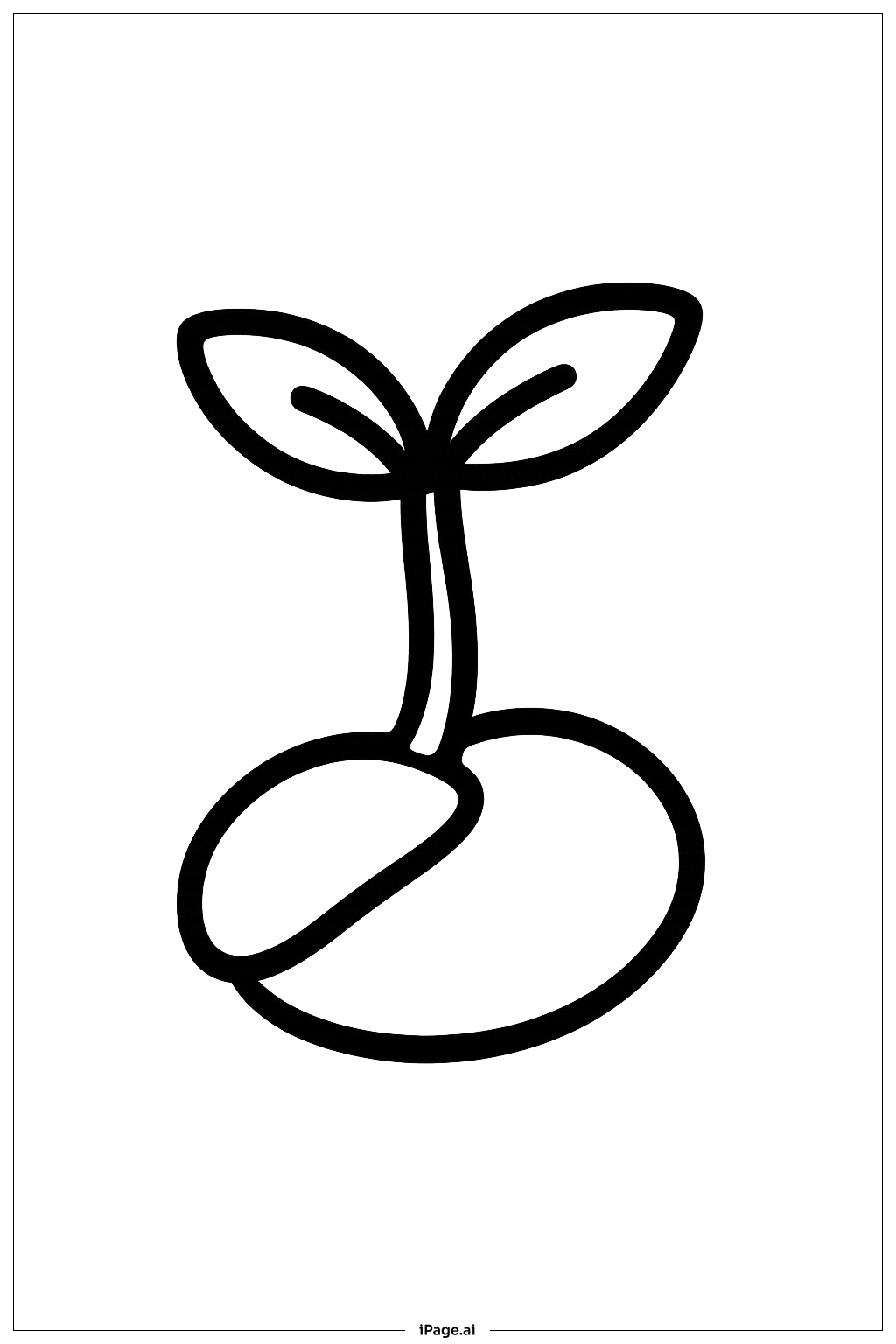
Coloring tips: How to color Photosynthesis Tiny Sprout coloring page well?
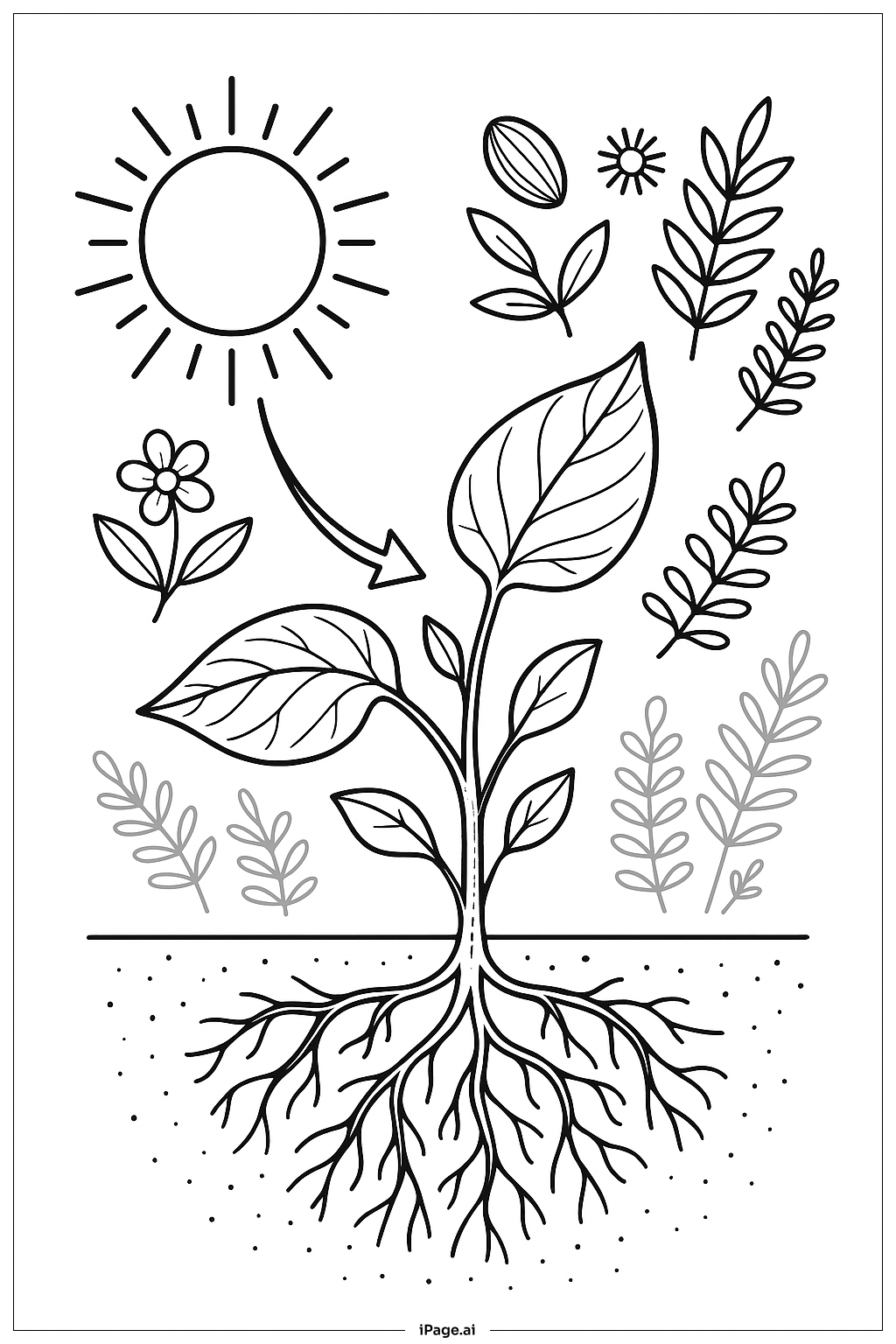
Start with the sprout itself. Use a fresh, bright green for the leaves and a slightly darker green for the stem. The roots can be colored in light brown or tan to look like they are underground. For the soil, use rich brown tones — darker at the bottom and lighter near the surface. Color the sun a warm yellow or golden orange. Add soft blue for water droplets near the roots. The sky or background can be a gentle light blue. If there are energy arrows or bubbles, try using yellow or white with a soft outline. Keep the colors cheerful and vivid to show how full of energy this little plant really is. Do not worry about being perfectly neat — this image is great for exploring color and having fun.
Coloring challenges: Which parts are difficult to color and need attention for Photosynthesis Tiny Sprout coloring page?
• Tiny Leaf Details: The sprout has very small leaves with delicate edges and faint vein lines. Staying inside these small shapes without going over the lines can be tricky, especially for younger children. Using a fine-tipped coloring tool like a colored pencil or thin marker will help a lot.
• Root Sections Underground: The roots spread out in thin, winding lines beneath the soil. Coloring these narrow sections without smudging or overlapping into the soil area takes patience and a steady hand. A sharp pencil point works best here.
• Soil and Surface Layers: The ground is divided into a surface layer and a deeper underground section. Getting a natural, earthy look means blending two or three shades of brown smoothly. This kind of gradual color blending can be challenging if you only have a few colors available.
• Sun Rays and Light Effects: The sunlight rays coming from above are thin and spread outward from a central point. Keeping each ray evenly colored and cleanly separated from the background requires careful attention. You may want to color the rays first before filling in the sky around them.
• Small Symbols and Arrows: If the image includes small arrows or bubbles to show energy flow, these are very tiny and closely spaced. Coloring them neatly without filling in the surrounding white space is one of the harder parts of this page. Take your time and work slowly in these areas.
Benefits of coloring books: Advantages of drawing Photosynthesis Tiny Sprout coloring page
Coloring this Photosynthesis Tiny Sprout page is a wonderful activity for kids and learners of all ages. It makes learning about science fun and hands-on. As you choose colors for the sun, leaves, roots, and soil, you are also thinking about how each part of a plant works — which turns coloring into a quiet learning experience.
For younger children, this page helps build fine motor skills. Holding a crayon or pencil and carefully filling in small shapes strengthens the muscles used for writing. It also teaches focus and patience, as some sections of the image require slow and careful work.
For older kids, this page can spark curiosity about biology and nature. It encourages them to think about why leaves are green, where roots go, and what sunlight really does for a plant.
Beyond science, coloring is a great way to relax and express creativity. There are no wrong color choices — kids can make a rainbow sprout or stick to realistic tones. Either way, they are making something they can feel proud of.
This page is also a great classroom tool. Teachers can use it alongside a lesson on photosynthesis to reinforce key ideas in a creative, low-pressure way. It is a simple image with a big, meaningful story behind it.