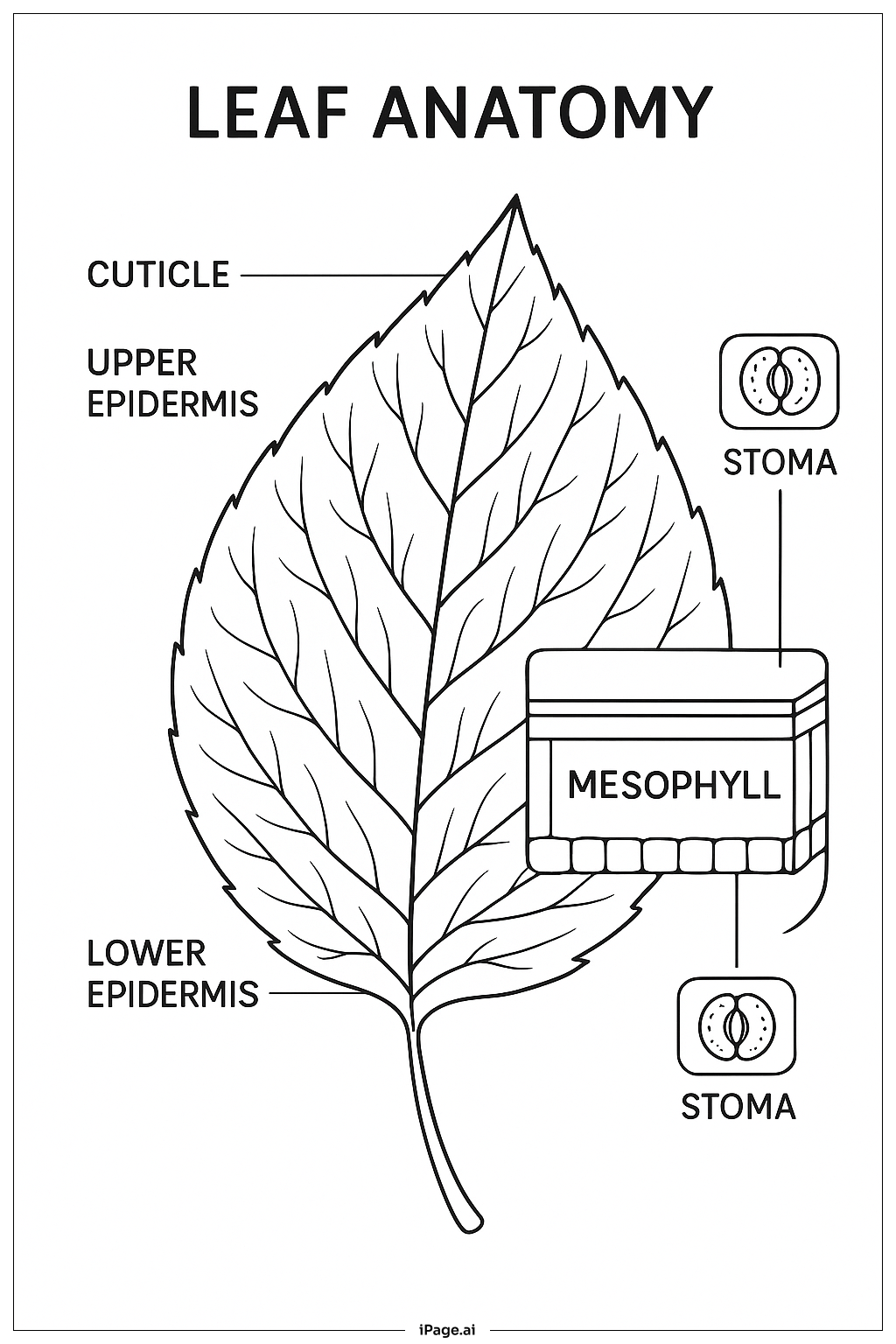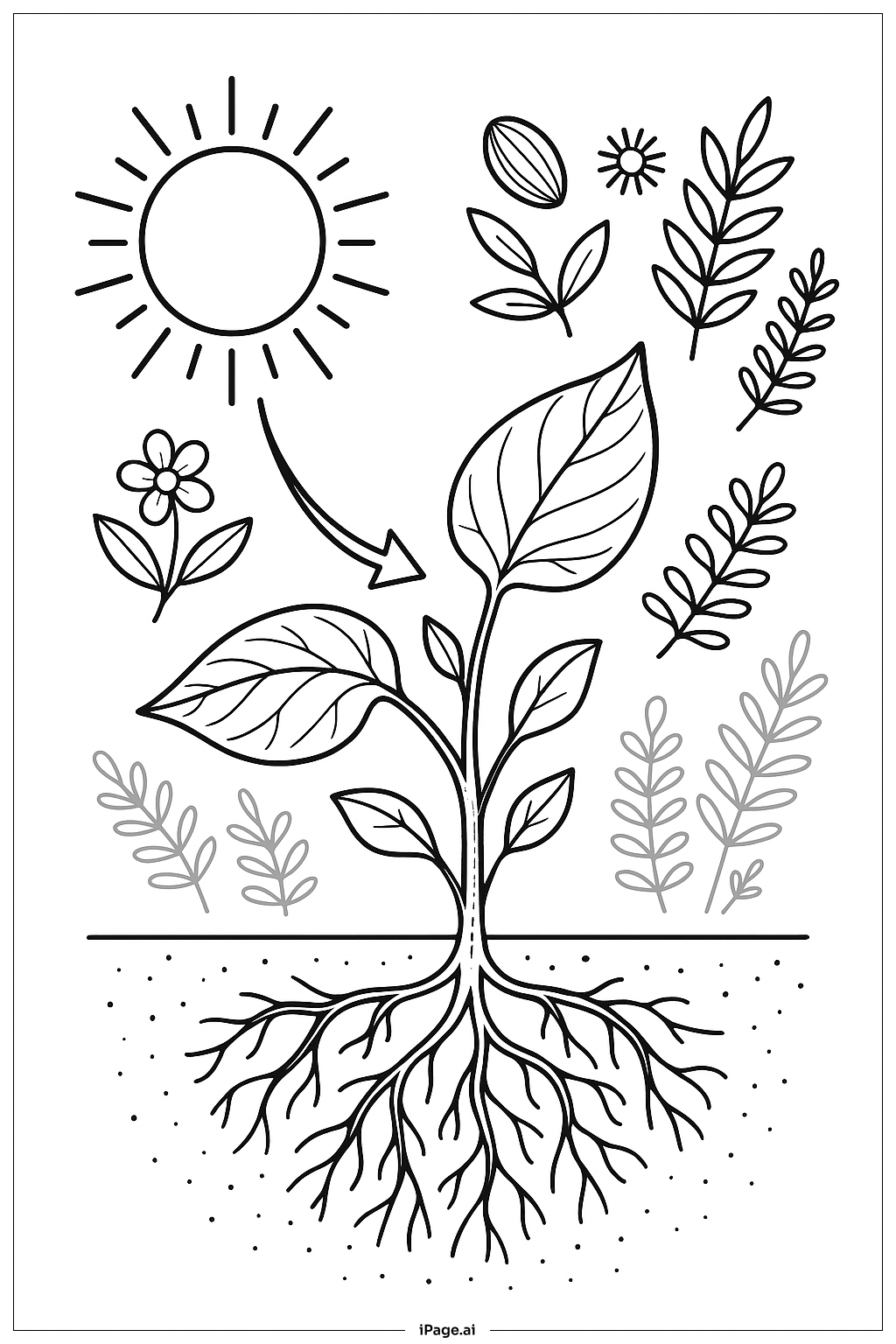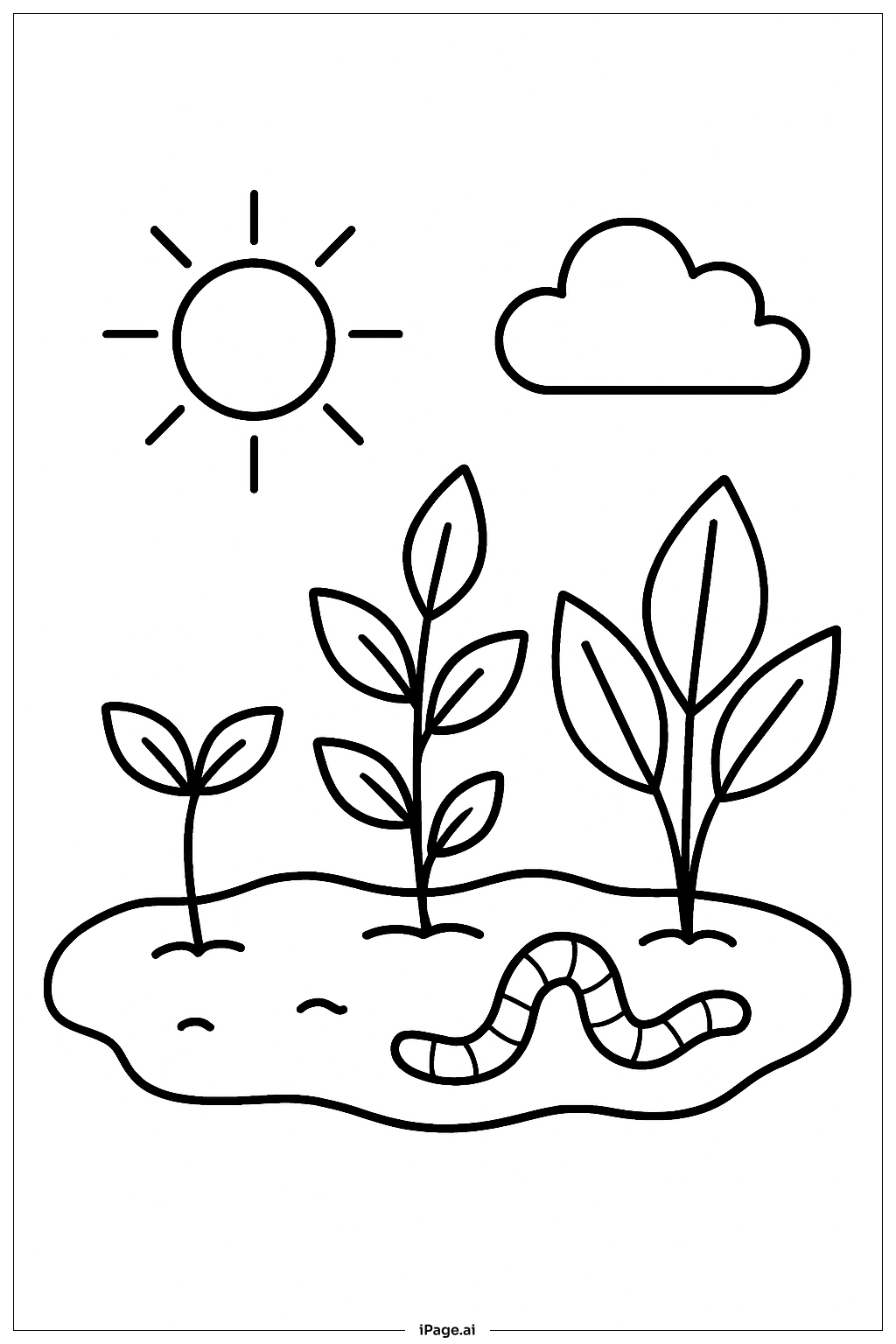
Coloring tips: How to color Photosynthesis Tiny Ecosystem coloring page well?
Start with the sun using bright yellow and orange to show its warmth and energy. Color the leaves in various shades of green, from light lime to deep forest green, showing different stages of growth. Use blue for water droplets and rain clouds, adding white highlights for dimension. The soil can be rich browns and earthy tones. Make the flowers vibrant with reds, purples, pinks, or yellows to attract the pollinators. Color butterflies and bees with natural patterns using oranges, blacks, and yellows. For the carbon dioxide molecules, try light gray or pale blue, while oxygen bubbles can be light blue or white. The roots underground can be tan or light brown. Add sky blue in the background to create depth and atmosphere.
Coloring challenges: Which parts are difficult to color and need attention for Photosynthesis Tiny Ecosystem coloring page?
• Intricate Leaf Veins: The detailed vein patterns within each leaf require steady hand control and careful coloring to stay within the fine lines. Young children may find it challenging to color these delicate structures without crossing boundaries, while older colorists can use this as an opportunity to practice precision and create realistic shading effects along the veins.
• Multiple Small Elements: The image contains numerous tiny components like water droplets, molecular representations, and small insects that need individual attention. Each element requires switching colors frequently and working in confined spaces, which can be time-consuming and requires good hand-eye coordination and patience to complete neatly.
• Layered Composition: The overlapping elements such as leaves in front of stems, roots beneath soil, and insects near flowers create depth that needs thoughtful color planning. Deciding which parts are in the foreground versus background and maintaining consistent lighting and shadows across these layers presents a moderate challenge that helps develop spatial awareness.
• Scientific Accuracy Versus Creativity: Balancing realistic colors that represent the actual photosynthesis process with creative artistic expression can be tricky. Children may wonder whether to use scientifically accurate colors or let their imagination guide them, requiring guidance about when accuracy matters and when creativity can flourish.
Benefits of coloring books: Advantages of drawing Photosynthesis Tiny Ecosystem coloring page
Coloring this photosynthesis ecosystem page offers wonderful educational benefits while developing artistic skills. Children learn about plant biology, the water cycle, and how living things depend on each other in nature. It introduces scientific concepts like oxygen production and carbon dioxide absorption in a fun, memorable way. The detailed elements improve fine motor skills and hand-eye coordination through precise coloring of small areas. Working with multiple components teaches planning and organization as children decide which colors to use where. The natural theme promotes environmental awareness and appreciation for plants and pollinators. Completing this complex image builds patience, focus, and a sense of accomplishment. The variety of shapes and sizes keeps children engaged while the scientific theme sparks curiosity about how nature works, making learning feel like creative play.