Coloring tips: How to color Photosynthesis Sunlight and Leaves coloring page well?
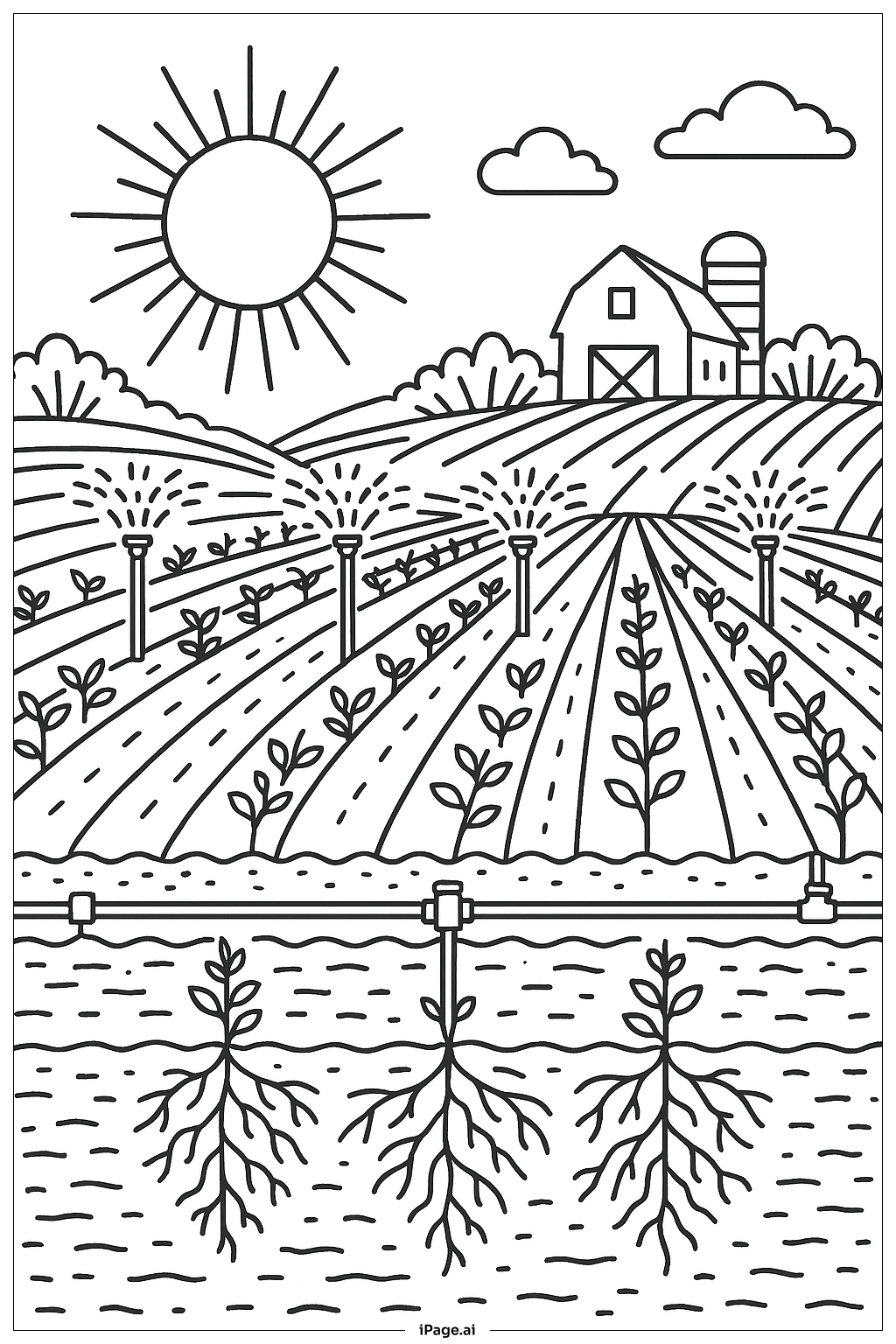
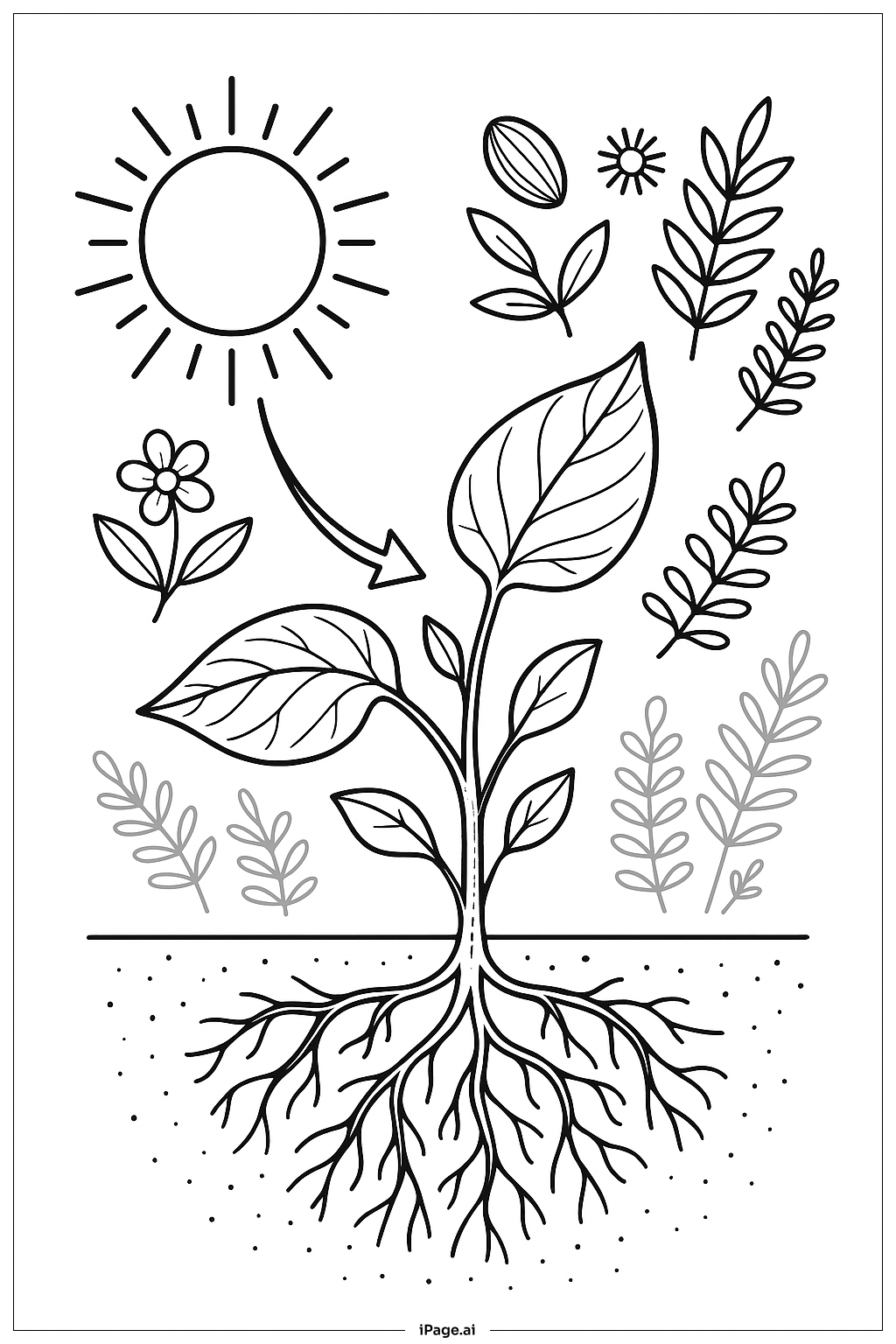
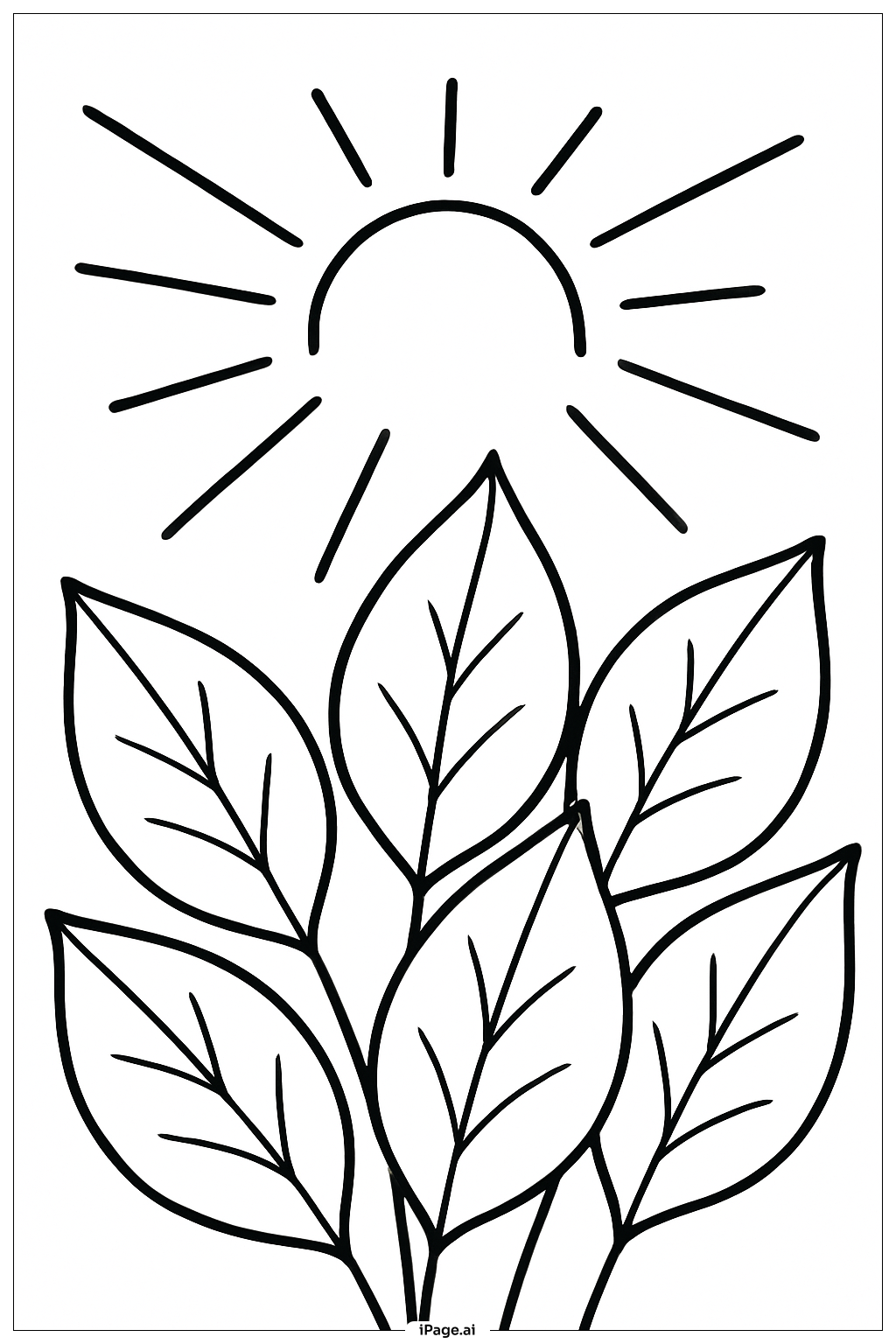
Start with the sun using bright yellow and golden orange for the rays to show warmth and energy. Color the leaf in rich, vibrant greens — use a lighter green for the center and darker shades near the edges to add depth. The leaf veins can be colored in a slightly lighter or white tone to make them stand out. Use light blue for water droplets, arrows showing water flow, and any clouds in the background. Color the soil in warm browns and tans. For roots, use medium brown or tan shades. If there are small bubbles representing oxygen, leave them white or color them pale blue. Use soft sky blue for the background to represent the open air. Keep your colors clean and distinct so the different parts of the photosynthesis process are easy to identify. This makes the image both beautiful and educational.
Coloring challenges: Which parts are difficult to color and need attention for Photosynthesis Sunlight and Leaves coloring page?
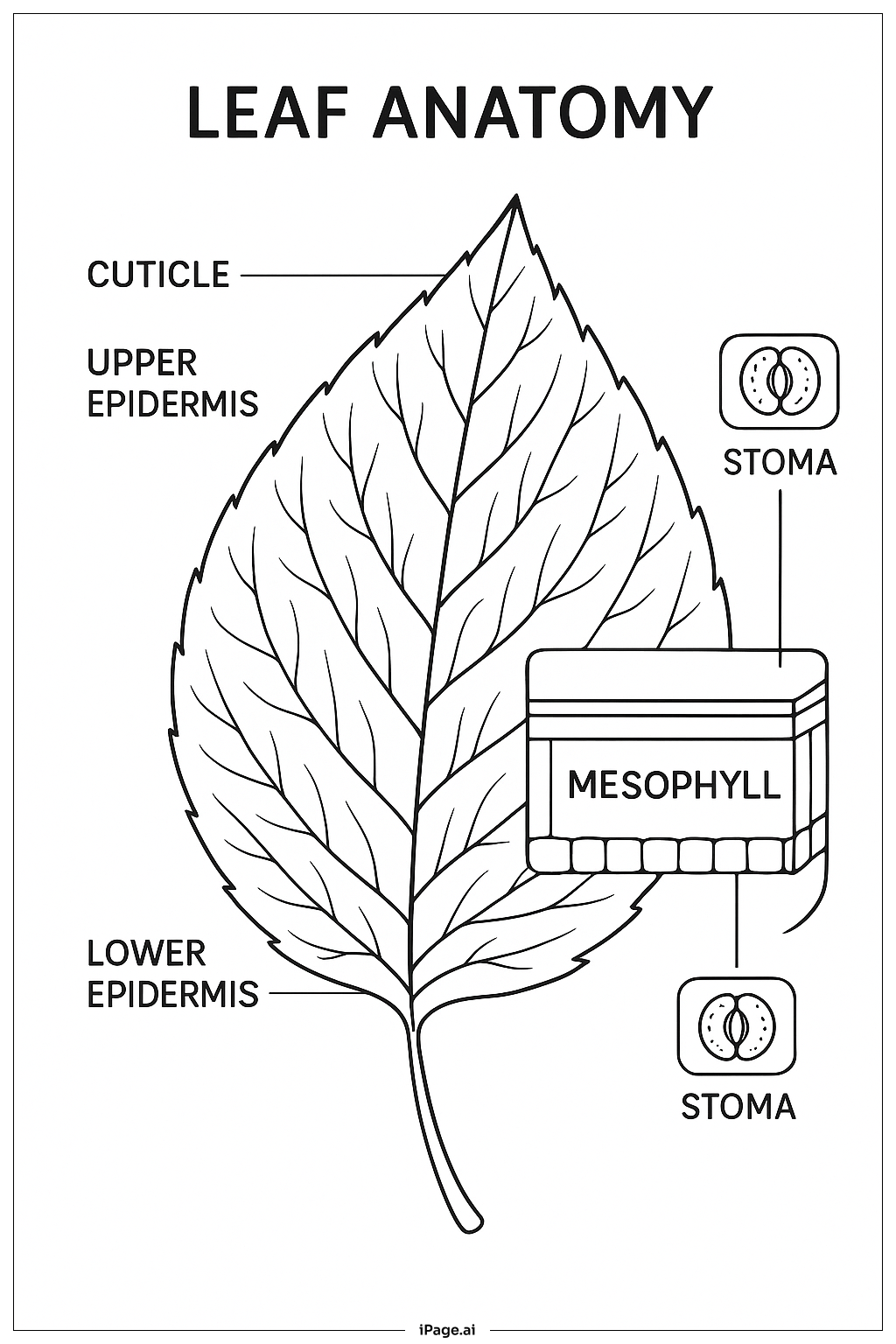
• Leaf Vein Details: The leaf contains many fine, branching veins spreading across its surface. Carefully coloring around each vein without overlapping takes patience and a fine-tipped coloring tool. Young colorists may find it tricky to stay within the narrow spaces between the veins, so taking it slowly is key.
• Shading the Leaf Surface: To make the leaf look realistic and three-dimensional, different shades of green need to be blended from the center to the edges. Achieving a smooth gradient without streaks can be challenging, especially for beginners who are still learning how to layer colors.
• Sun Rays and Light Effects: The radiating sun rays require careful attention to keep each ray evenly spaced and consistently colored. Using multiple tones of yellow and orange to suggest brightness and warmth adds visual interest but demands control and planning before applying color.
• Small Diagram Elements: The arrows, bubbles, and small labels that represent the flow of sunlight, water, carbon dioxide, and oxygen are tiny and closely spaced. Coloring these small details neatly without smudging into neighboring areas requires a sharp pencil or fine marker.
• Background Balance: Balancing the background colors — sky, soil, and surrounding space — so they complement the focal leaf without overpowering it is a visual challenge. Choosing colors that are soft and supportive rather than too bold helps the main subject stand out clearly.
Benefits of coloring books: Advantages of drawing Photosynthesis Sunlight and Leaves coloring page
Coloring this photosynthesis scene offers a wonderful mix of creativity and learning. As children fill in the leaf, sun rays, roots, and diagram elements, they naturally reinforce their understanding of how plants make food from sunlight, water, and air. This makes the activity both fun and educational.
The detailed veins and small diagram parts encourage fine motor skill development. Carefully guiding a pencil or marker along narrow lines builds hand strength and precision — skills that support handwriting and other everyday tasks.
Choosing colors for different parts of the process, like blue for water or yellow for sunlight, sparks curiosity and helps children connect colors to scientific concepts. It encourages them to think and ask questions about the natural world around them.
The focused, quiet nature of coloring also promotes calm and concentration. Sitting down to complete a detailed image like this helps children practice patience and stay on task, which builds important attention skills.
For older kids and teens, the complexity of shading the leaf and balancing the background offers a satisfying creative challenge. Completing the page gives a real sense of achievement and pride. Overall, this coloring page turns a science lesson into a hands-on, joyful experience that kids of all ages can enjoy.