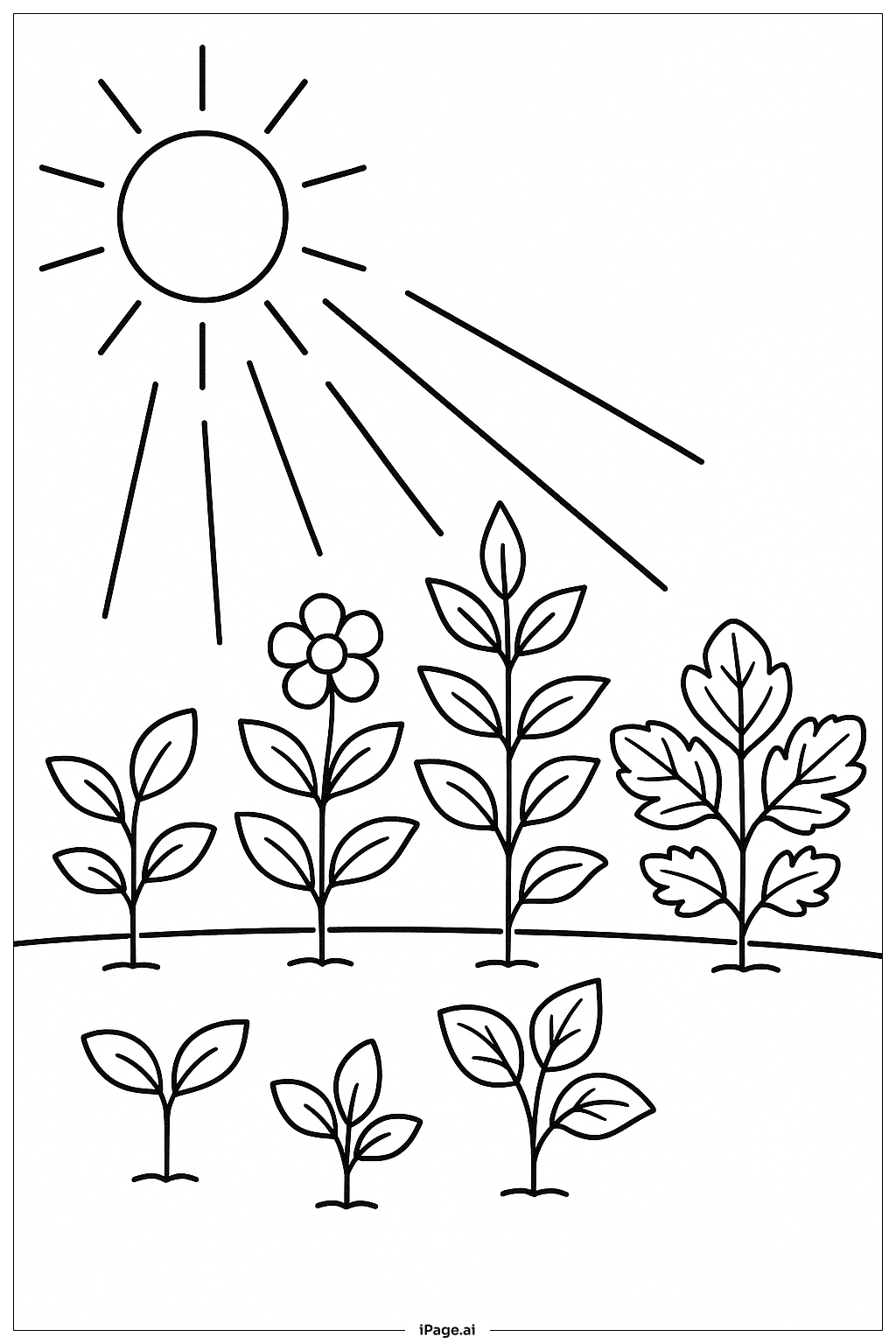
Coloring tips: How to color Photosynthesis Sun Rays and Plants coloring page well?
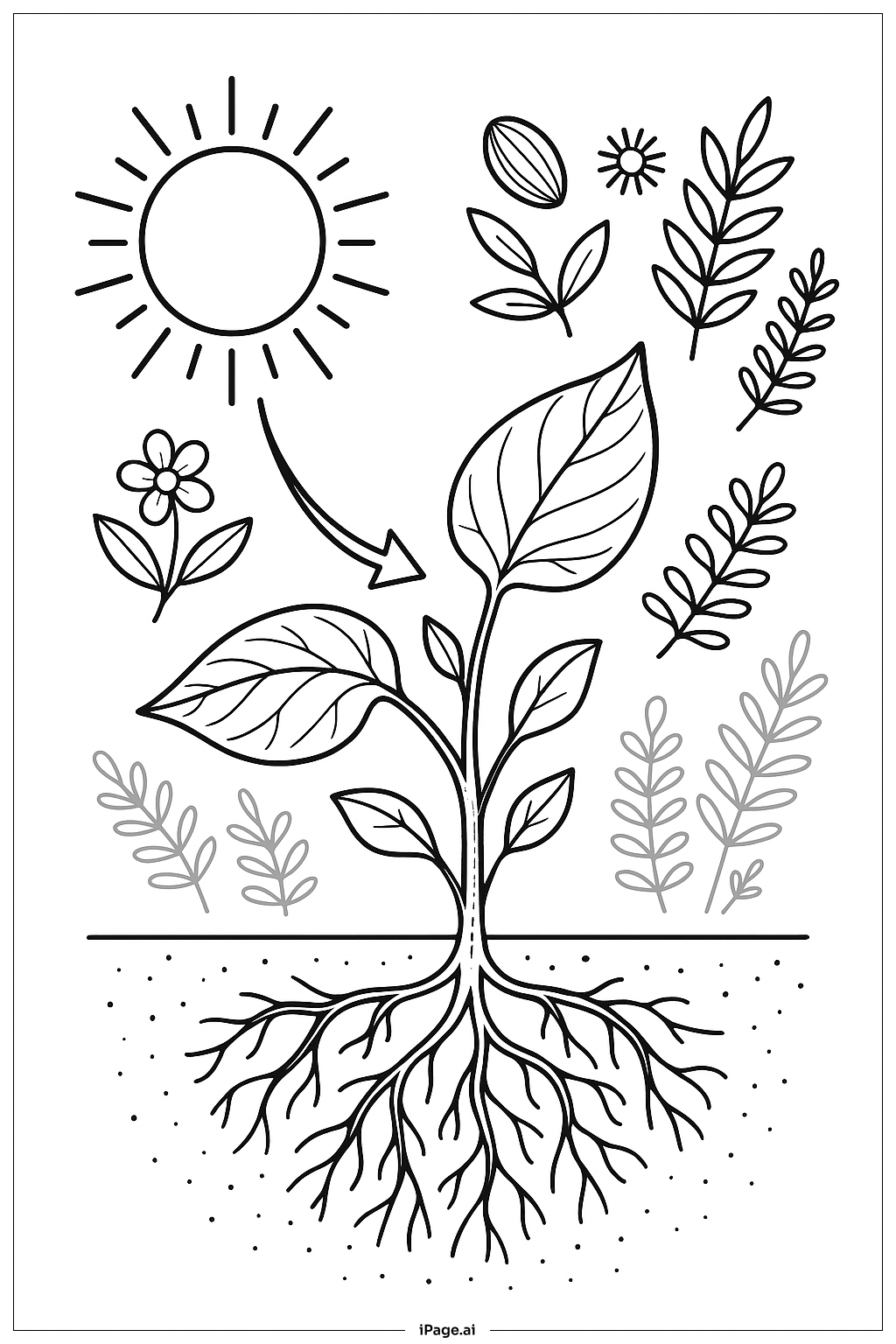
Use bright yellow and orange shades to color the sun and its rays, showing light and warmth. For the plants, use various shades of green to make each plant look different and vibrant. You can add brown to the stems and soil to make it more realistic. The flower in the middle can be colored with bright colors like red, pink, or purple to make it stand out. Feel free to use light blue or other soft colors in the background if you want to add sky. Try to stay inside the lines to make the picture neat.
Coloring challenges: Which parts are difficult to color and need attention for Photosynthesis Sun Rays and Plants coloring page?
1. The sun rays are long, straight lines which might be tricky to color evenly without going outside the lines.
2. The different sizes and shapes of leaves require careful coloring to keep each leaf distinct.
3. The thin stems need steady hand control to color properly.
4. The flower petals have small gaps that need careful attention to color inside.
5. Avoid mixing colors on the small spaces between leaves and stems to keep the image clear and clean.
Benefits of coloring books: Advantages of drawing Photosynthesis Sun Rays and Plants coloring page
Coloring this page helps children practice fine motor skills, especially hand-eye coordination by coloring inside detailed lines. It also supports learning about plants and the sun’s role in photosynthesis, combining science with creativity. Using different colors promotes creativity and decision-making. Completing the page gives a sense of achievement and encourages kids to care about nature and plants.