Coloring tips: How to color Photosynthesis Sun, Leaf, Roots coloring page well?
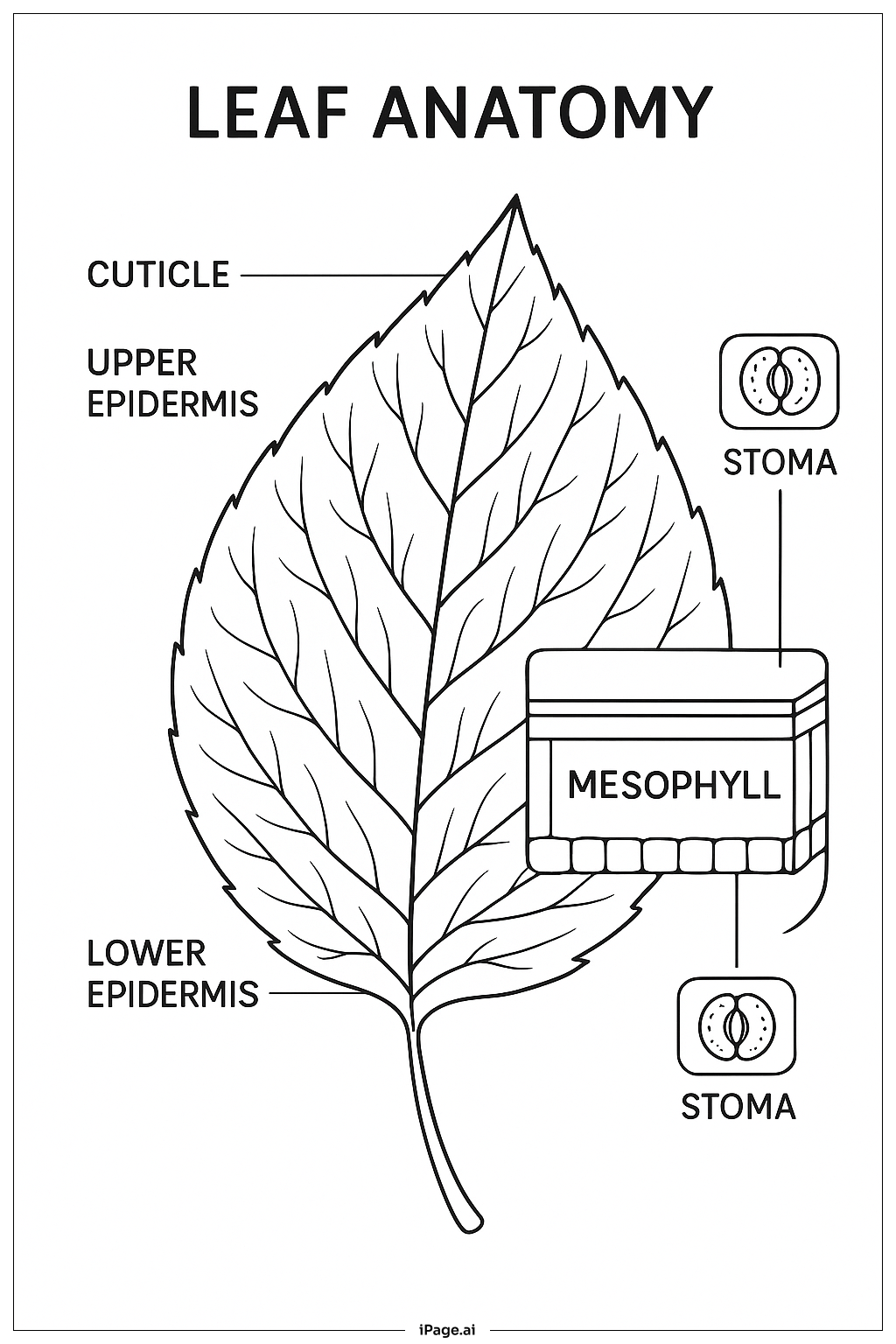
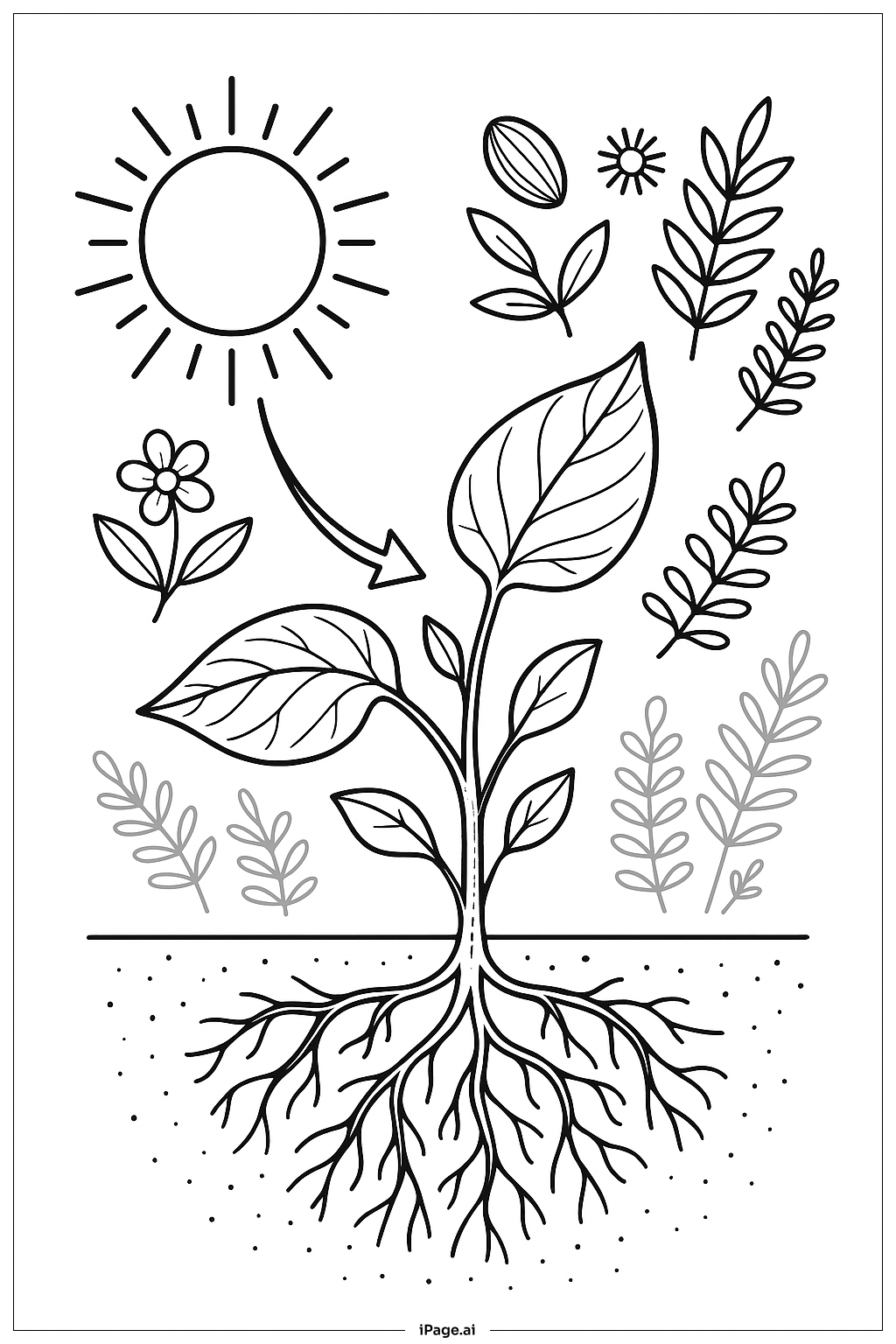
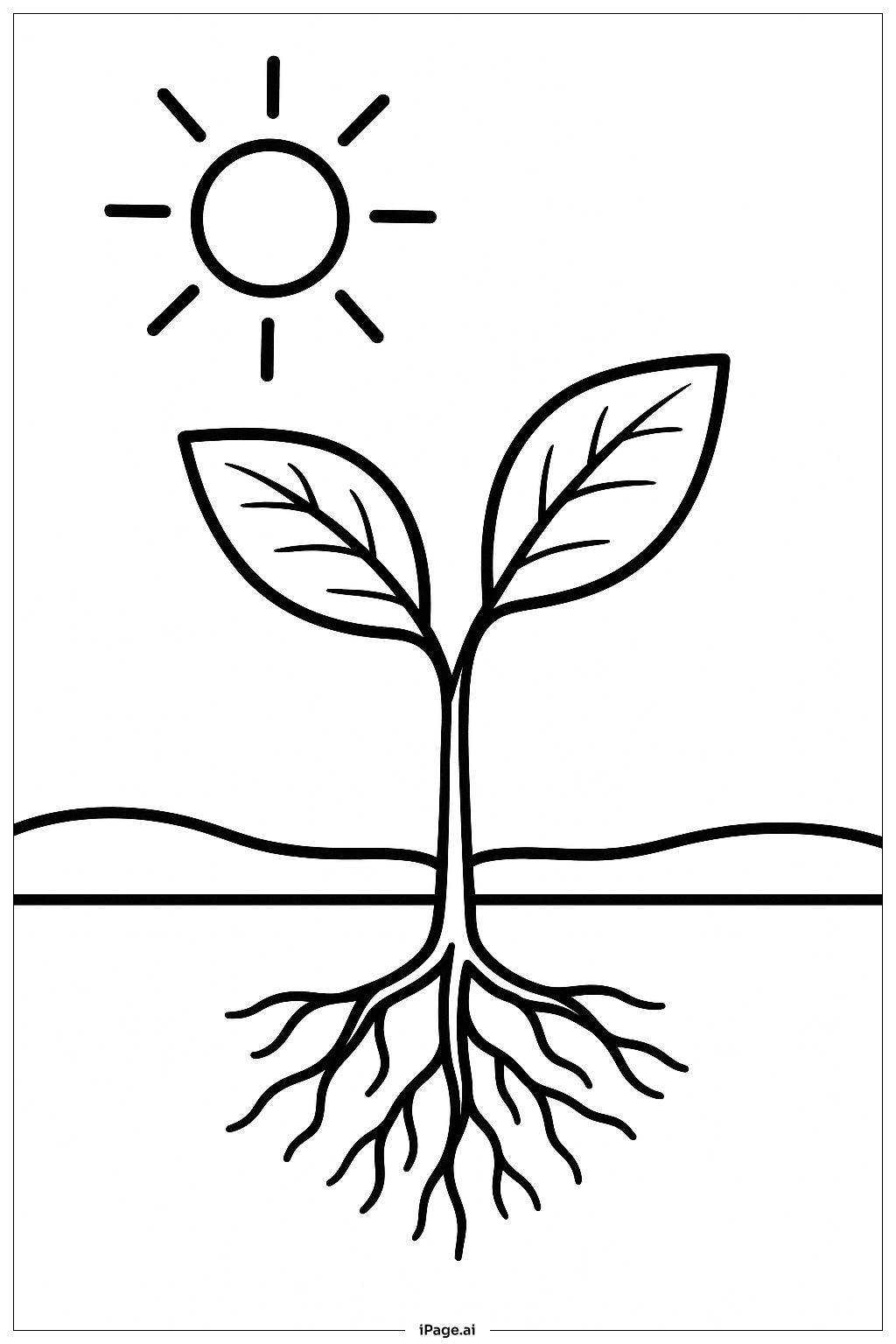
Start with the sun using bright yellows and oranges to show its warmth and energy. Color the rays in alternating shades to create depth and movement. For the leaf, choose vibrant greens ranging from lime to forest green, using lighter shades for the leaf edges and darker tones for the veins to make them stand out. The roots can be colored in earthy browns, tans, and beiges, with darker browns for the main roots and lighter shades for the smaller root hairs. Consider adding a light blue background to represent the sky, and use brown or tan for the soil section. You might also add subtle shading around the arrows to make them pop, using colors like light gray or pale blue. This creates a colorful, educational diagram that clearly shows how photosynthesis works.
Coloring challenges: Which parts are difficult to color and need attention for Photosynthesis Sun, Leaf, Roots coloring page?
• Leaf Vein Details: The intricate network of veins running through the leaf requires careful attention and a steady hand. Young colorists may find it challenging to stay within the thin lines while creating contrast between the leaf surface and the vein structure. Using fine-tipped markers or colored pencils helps achieve precision, and choosing a darker green for veins against a lighter green background makes the pattern visible and realistic.
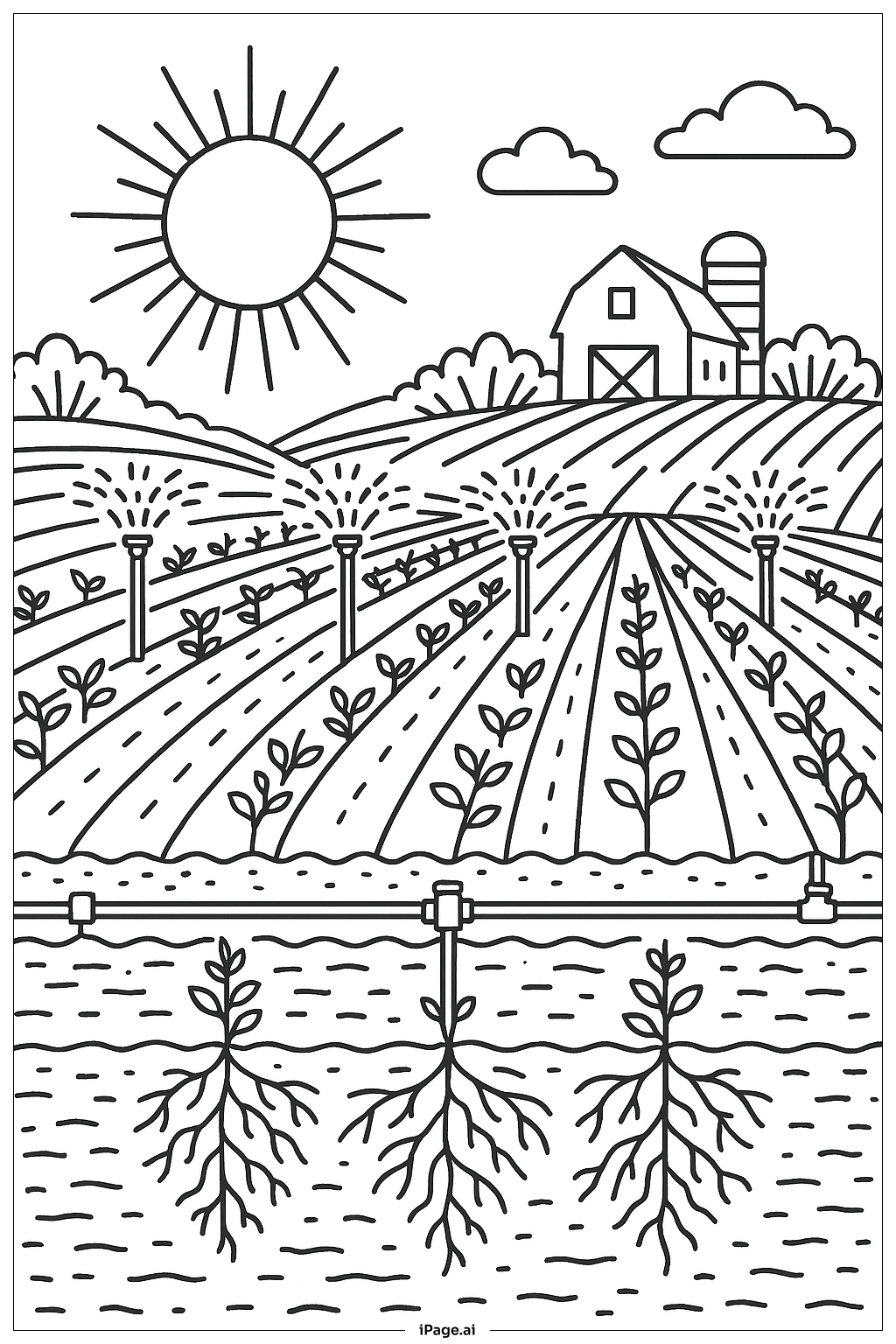
• Root System Complexity: The underground root system features numerous branching structures that intertwine and overlap, creating a maze-like pattern. Distinguishing individual roots while maintaining consistent coloring can be tricky, especially where roots cross over each other. Children may struggle to decide which root connects to which branch, requiring patience and planning to avoid confusion and create depth.
• Sun Ray Symmetry: The sun's radiating rays extend outward in multiple directions, and keeping them uniform in color and intensity while creating a glowing effect presents a challenge. Colorists must decide whether to use solid colors or gradients, and how to make the rays appear to emit light. Blending yellows and oranges smoothly requires practice and the right tools.
• Creating Scientific Accuracy: Balancing artistic creativity with educational accuracy adds another layer of difficulty. Colorists might wonder if they should use realistic colors or more imaginative hues, and whether the arrows and labels should be colored to match the elements they connect or stand out separately for clarity.
Benefits of coloring books: Advantages of drawing Photosynthesis Sun, Leaf, Roots coloring page
Coloring this photosynthesis diagram offers wonderful educational benefits alongside creative development. Children learn about plant biology in a hands-on, memorable way, reinforcing classroom science lessons through art. The activity strengthens fine motor skills as they carefully color intricate leaf veins and root systems, improving hand-eye coordination and pencil control. It also encourages critical thinking as they consider which colors best represent natural elements like sunlight, leaves, and soil. The combination of labeling and illustration helps visual learners understand complex scientific processes better than text alone. Additionally, this coloring page promotes environmental awareness by showing children how plants create oxygen and sustain life on Earth. The calming, focused activity reduces stress while building concentration skills, making science learning enjoyable and accessible for various age groups and learning styles.