Coloring tips: How to color Photosynthesis Smiling Plant coloring page well?
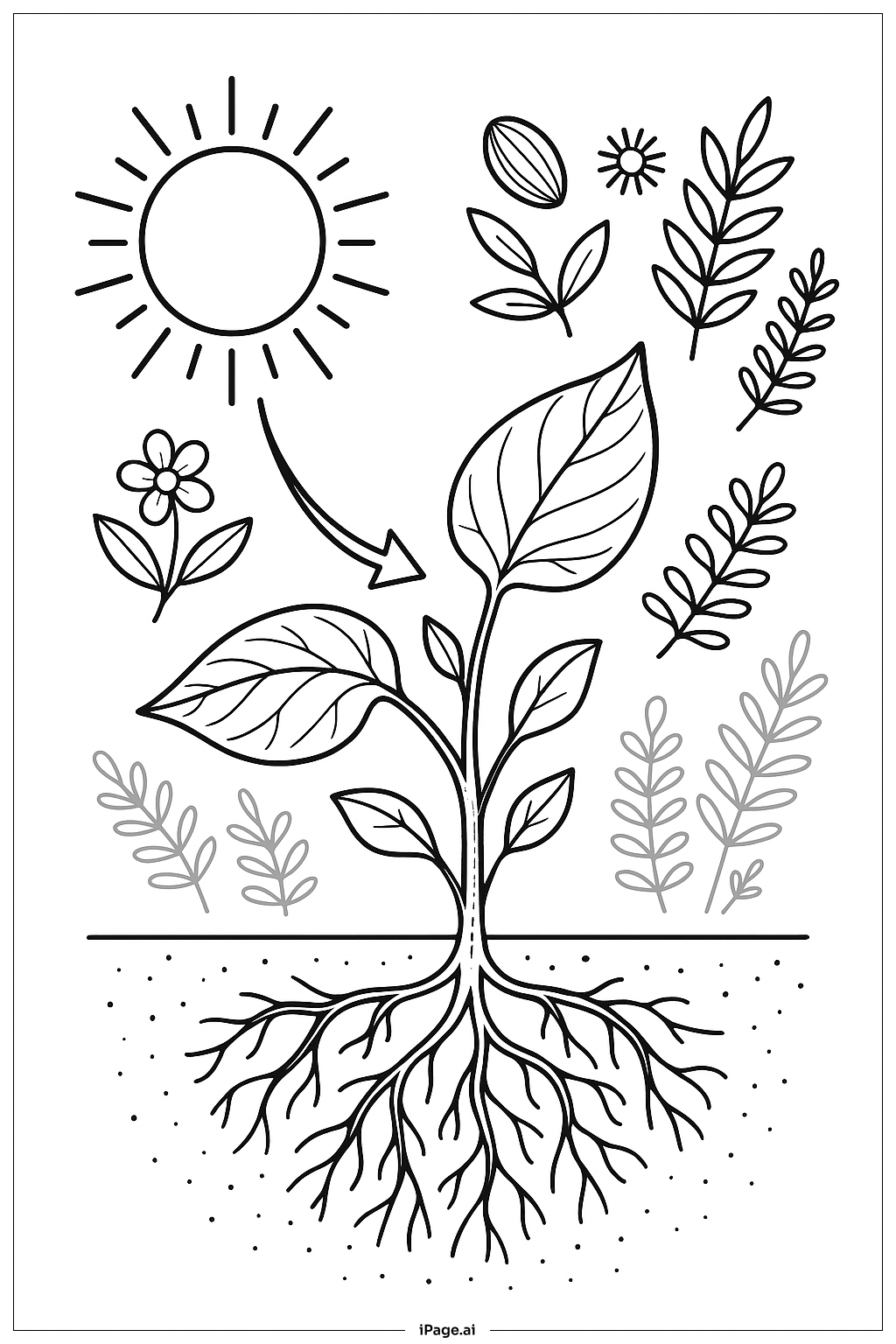
Start with the sun using bright yellows and oranges to create a warm, glowing effect. You can add golden highlights to the sun's rays to make them shimmer. For the plant's leaves, try using various shades of green, from light lime to deep forest green, to add depth and dimension. Consider making each leaf slightly different to show how light hits them differently. The stem can be a rich green or brown tone. For the plant's cheerful face, use soft colors like pink for cheeks and rosy tones for the smile. The sparkles around the plant can be colored with light blues, whites, or even rainbow colors to represent energy and magic. Don't forget to add a light blue or yellow background to represent the sky and sunlight during photosynthesis.
Coloring challenges: Which parts are difficult to color and need attention for Photosynthesis Smiling Plant coloring page?
• Leaf Vein Details: The leaves contain intricate vein patterns that require careful attention and steady hand control. Young colorists may find it challenging to stay within these thin lines while switching between different shades of green. Using fine-tipped coloring tools will help achieve clean results in these delicate areas.
• Shading and Dimension: Creating realistic depth on the leaves requires understanding how to layer colors and blend different shades smoothly. Beginners might struggle with making the leaves look three-dimensional rather than flat. Practice blending lighter greens on the edges where sunlight hits and darker greens in shadowed areas.
• Sun Ray Consistency: The sun's rays extend outward in multiple directions, and maintaining consistent color intensity and even coverage across all rays can be tricky. Children may find it difficult to keep the pressure even, resulting in some rays appearing darker than others. Taking breaks between rays can help maintain focus.
• Small Sparkle Elements: The tiny sparkle and light effect details surrounding the plant are small and numerous, requiring precision and patience. Younger children might find these small spaces frustrating to color without going outside the lines. Using markers or colored pencils with fine points works best for these miniature features.
Benefits of coloring books: Advantages of drawing Photosynthesis Smiling Plant coloring page
Coloring this Photosynthesis Smiling Plant page offers wonderful educational benefits while building important skills. Children learn about the science of photosynthesis in a fun, engaging way, connecting the happy plant with the sun to understand how plants make their own food. The detailed leaf structures help develop fine motor skills and hand-eye coordination as kids carefully color within the lines and veins. The cheerful expressions on both the sun and plant encourage positive emotions and creativity, making science feel friendly and approachable. Working with different shades of green teaches color recognition and blending techniques. The varying sizes of elements, from large leaves to tiny sparkles, challenge children to adjust their coloring approach and build patience. This page also promotes environmental awareness, helping kids appreciate the important role plants play in our world while having creative fun.