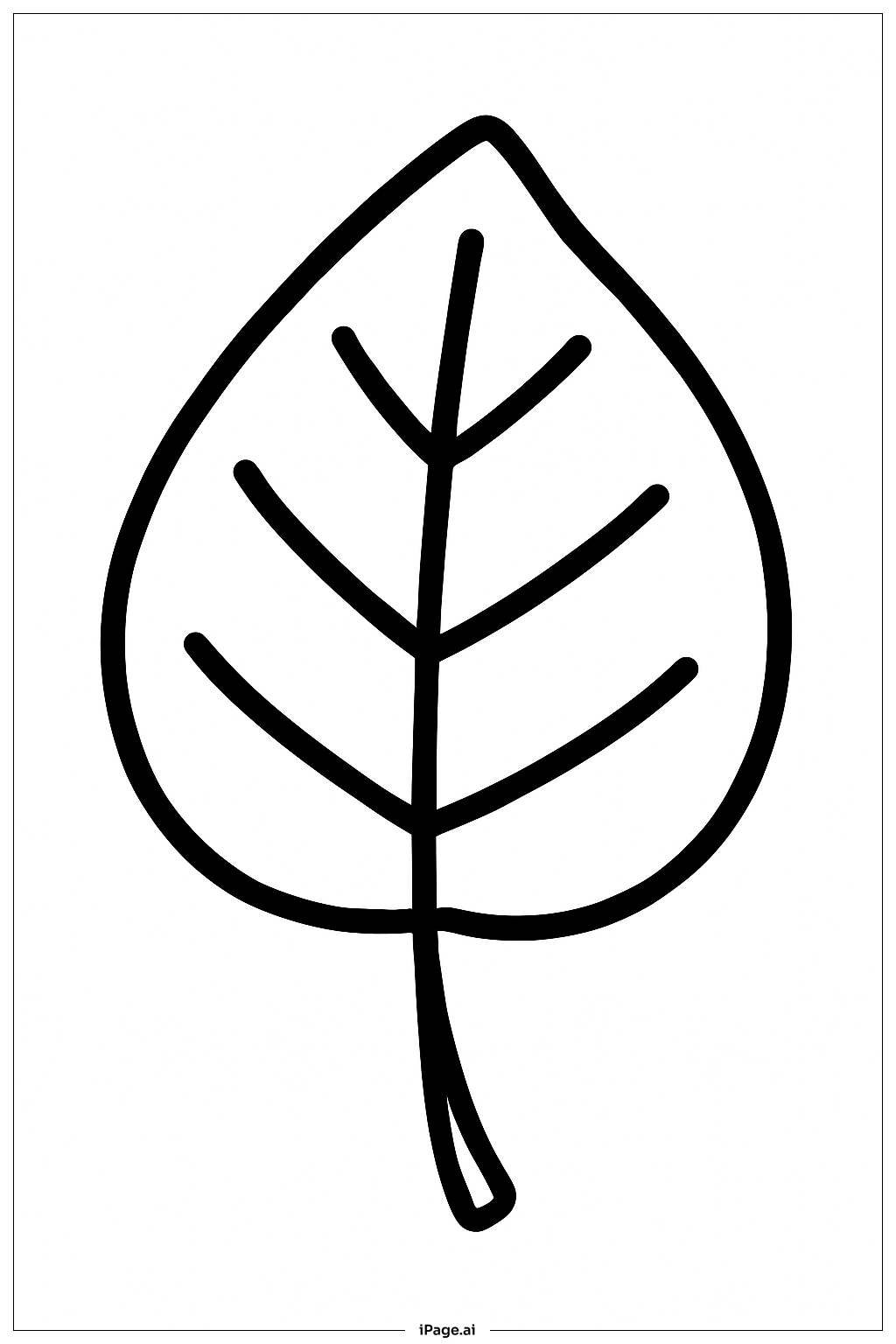
Coloring tips: How to color Photosynthesis Single Tree Leaf coloring page well?
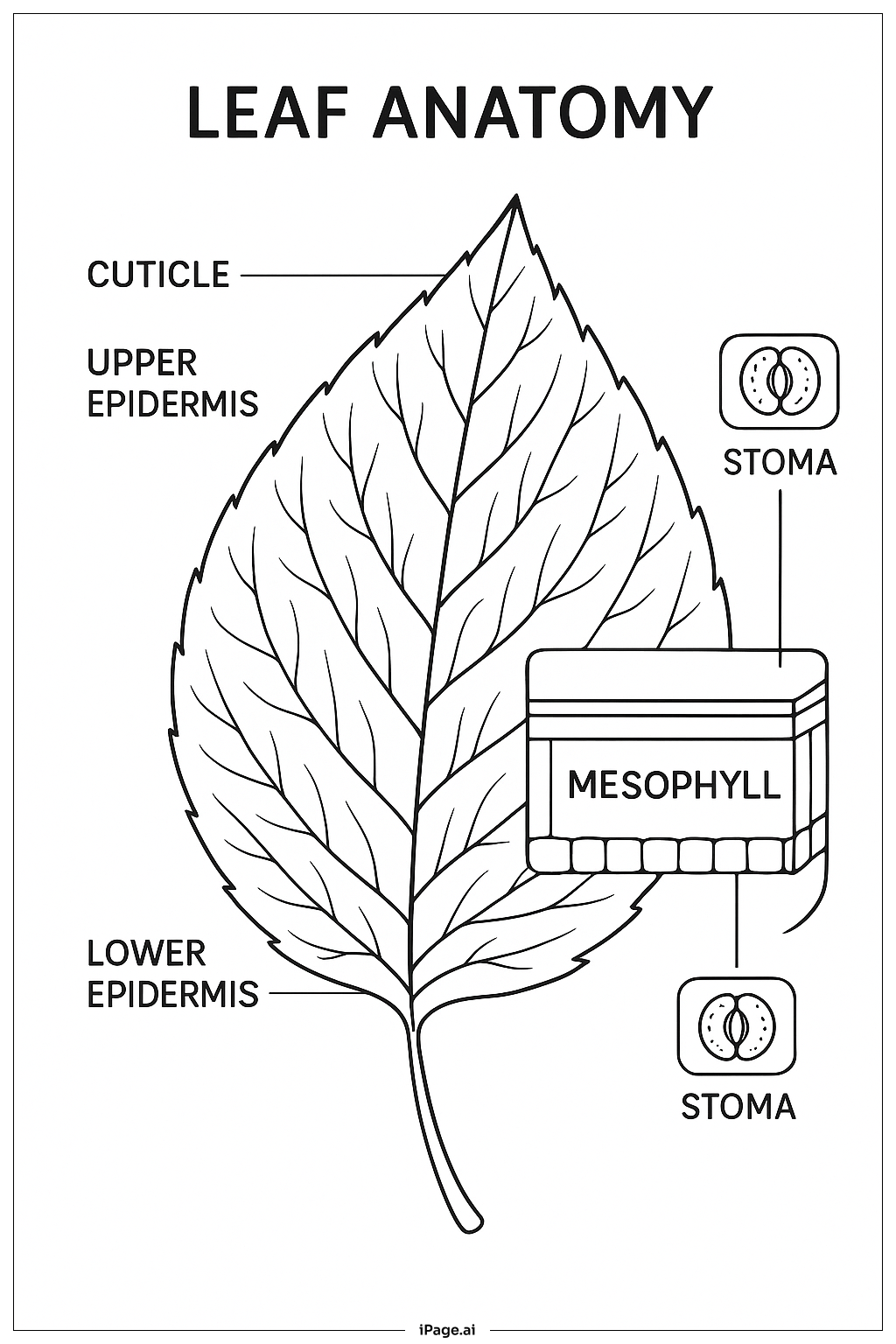
You can use different shades of green to color the leaf to make it look natural. Use a darker green for the veins to show the leaf’s structure. Try adding some yellow or light green in the spaces between veins to create a fresh look. The stem can be colored brown or dark green. Feel free to add small spots of color like tiny hints of orange or red to make it interesting and lively. Using crayons, colored pencils, or markers will work well.
Coloring challenges: Which parts are difficult to color and need attention for Photosynthesis Single Tree Leaf coloring page?
1. Coloring inside the narrow spaces between the veins can be tricky because they are thin and close together. 2. Keeping the colors smooth and even without mixing too much can be hard for younger kids. 3. Shading the leaf to show natural depth and light may be challenging since it requires blending colors carefully. 4. Choosing colors that contrast well without overpowering the delicate vein design is important but not always easy. 5. Staying within the bold outlines while coloring can require careful hand control and patience.
Benefits of coloring books: Advantages of drawing Photosynthesis Single Tree Leaf coloring page
Coloring this leaf helps children learn about nature and photosynthesis in a fun way. It improves hand-eye coordination and fine motor skills as they color inside the lines. It also encourages creativity by letting kids experiment with different greens and shading techniques. This activity boosts focus and patience, important skills for many tasks. Children become more aware of plant life and science while enjoying a relaxing and educational pastime.