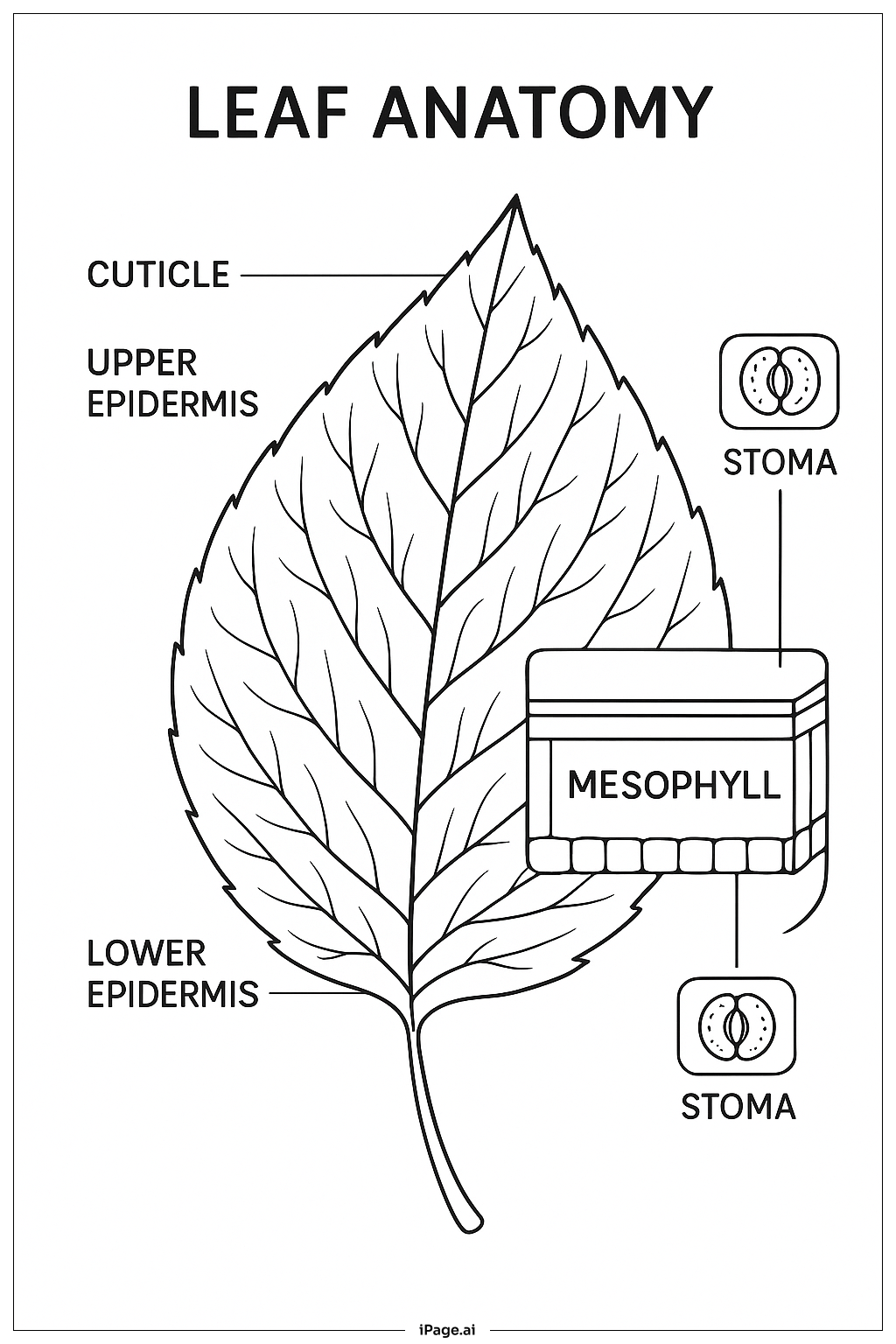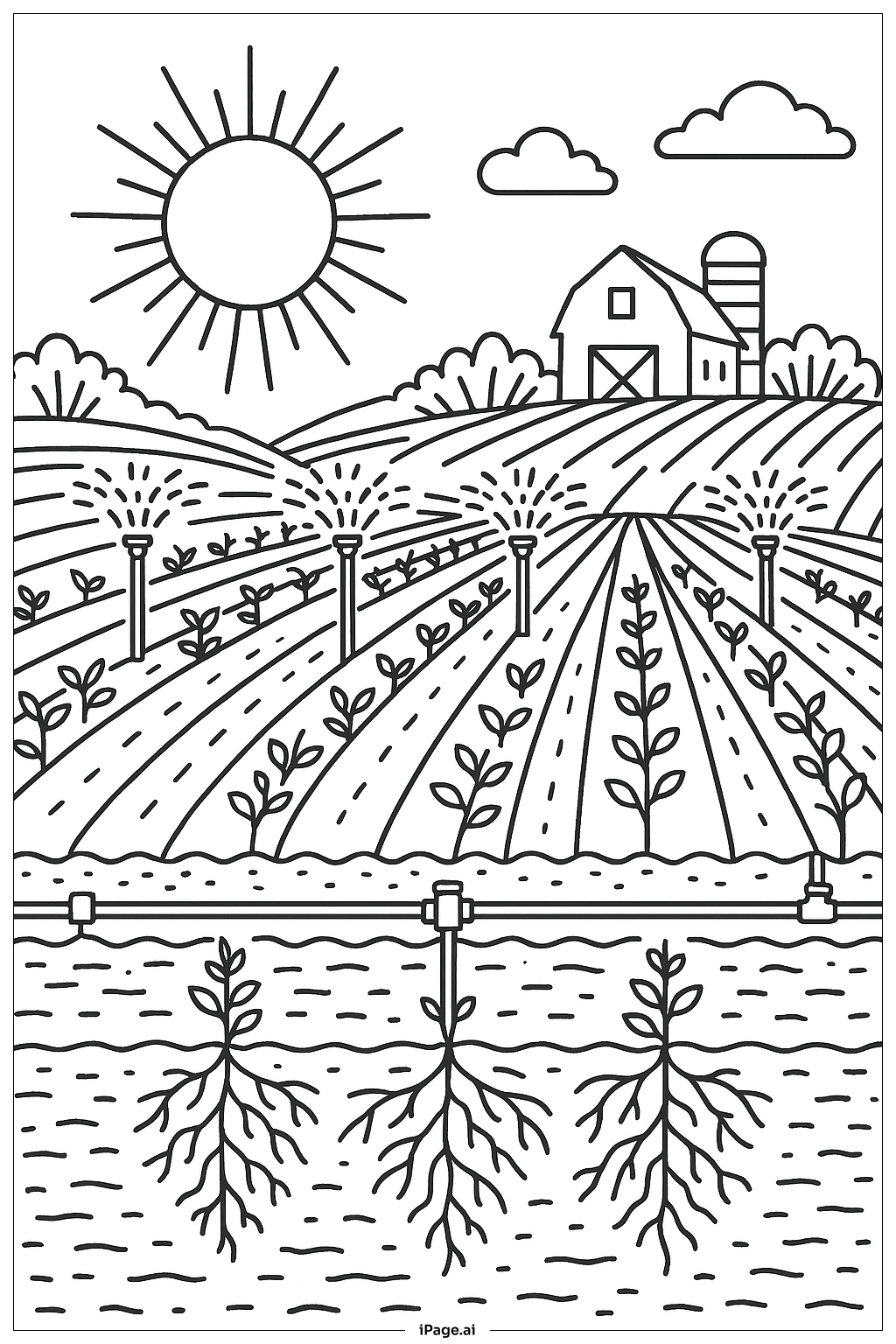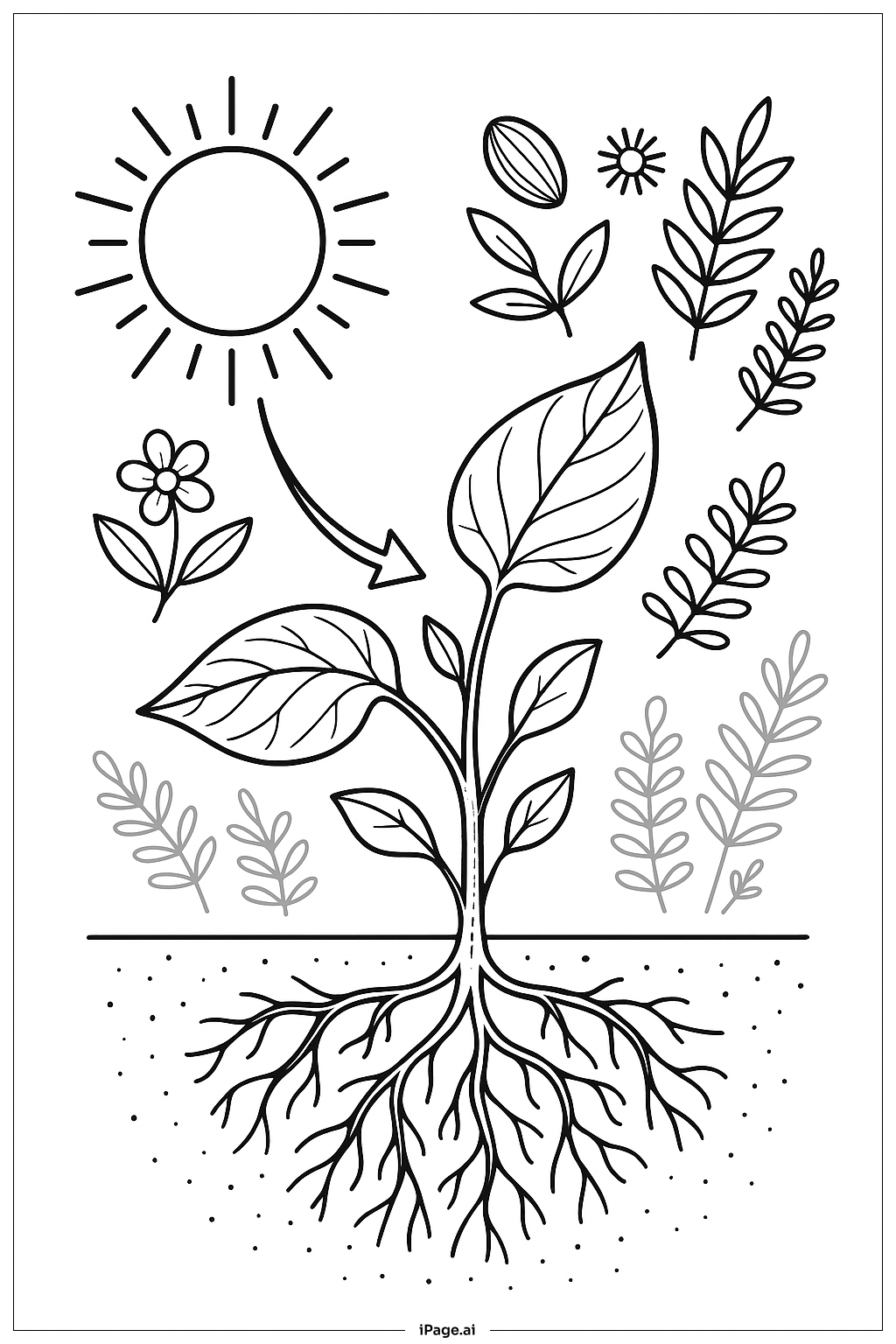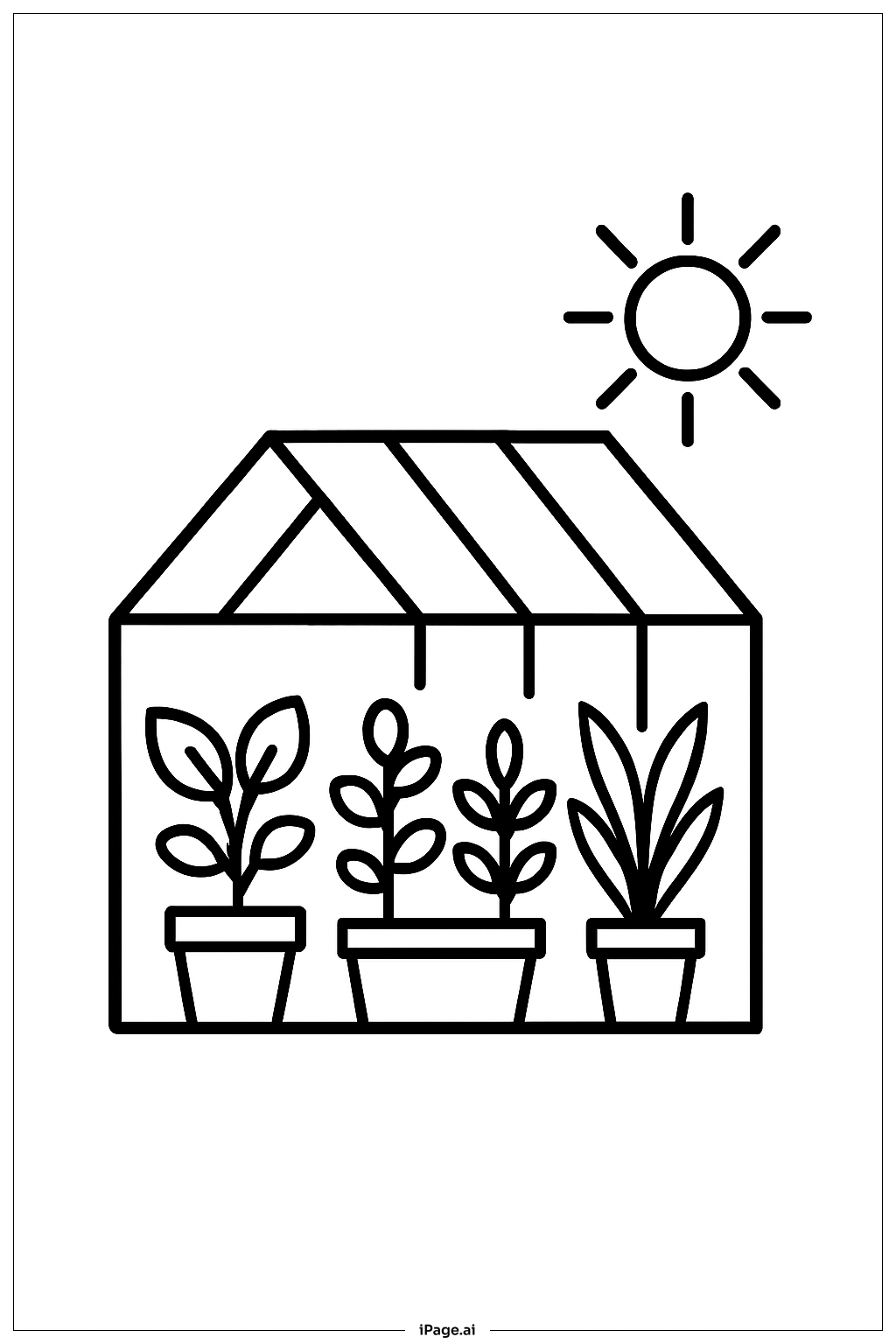
Coloring tips: How to color Photosynthesis Simple Greenhouse coloring page well?
Start with the sun using bright yellow and orange to show its warmth and energy. Color the greenhouse frame in brown or gray to represent wood or metal materials. The glass panels can be left white or filled with a very light blue to show transparency. Use various shades of green for the plant leaves, from light green for young leaves to darker green for mature foliage. Color the soil in rich browns and the plant pots in terracotta orange or clay colors. Make the water droplets blue to show moisture. Use light blue or gray for the carbon dioxide arrows and light green or yellow for the oxygen arrows to differentiate between them. The sky background can be colored in soft blue tones to create a peaceful outdoor atmosphere.
Coloring challenges: Which parts are difficult to color and need attention for Photosynthesis Simple Greenhouse coloring page?
• Greenhouse Structure Details: The greenhouse frame contains multiple straight lines and geometric shapes that require careful coloring to maintain clean edges. Children need to stay within the lines of the rectangular panels and triangular roof sections, which can be challenging for younger artists. The overlapping frame elements require attention to create depth and dimension.
• Arrow and Label Elements: The directional arrows showing carbon dioxide and oxygen flow are relatively small and require precision coloring. Distinguishing between different types of arrows while keeping them neat can be tricky. Children must be careful not to color over the text labels while filling in the surrounding areas.
• Plant Complexity: The multiple plants shown at different growth stages have various leaf shapes and sizes. Coloring each leaf individually while maintaining consistent color choices requires patience and planning. The overlapping leaves create depth that children need to represent through color variation and shading techniques.
• Small Details: The water droplets, soil texture, and root systems contain fine details that require controlled coloring with sharp pencils or thin markers. Younger children may find these tiny elements difficult to color without going outside the lines or losing the distinct shapes that make each element recognizable.
Benefits of coloring books: Advantages of drawing Photosynthesis Simple Greenhouse coloring page
Coloring this photosynthesis greenhouse scene offers wonderful educational benefits alongside creative development. Children learn about the important scientific process of photosynthesis while engaging in a fun artistic activity. The image helps reinforce understanding of how plants create food and oxygen, making abstract concepts more concrete and memorable. Fine motor skills are enhanced as children carefully color within the various plant parts, greenhouse structures, and scientific elements. The process encourages patience and attention to detail, especially when working on the smaller components like water droplets and arrows. Color recognition and decision-making skills develop as children choose appropriate colors for natural elements like plants, soil, and sky. This coloring page also promotes environmental awareness and appreciation for plant life, helping children understand the vital role plants play in our ecosystem and daily lives.