Coloring tips: How to color Photosynthesis Seed Growing coloring page well?
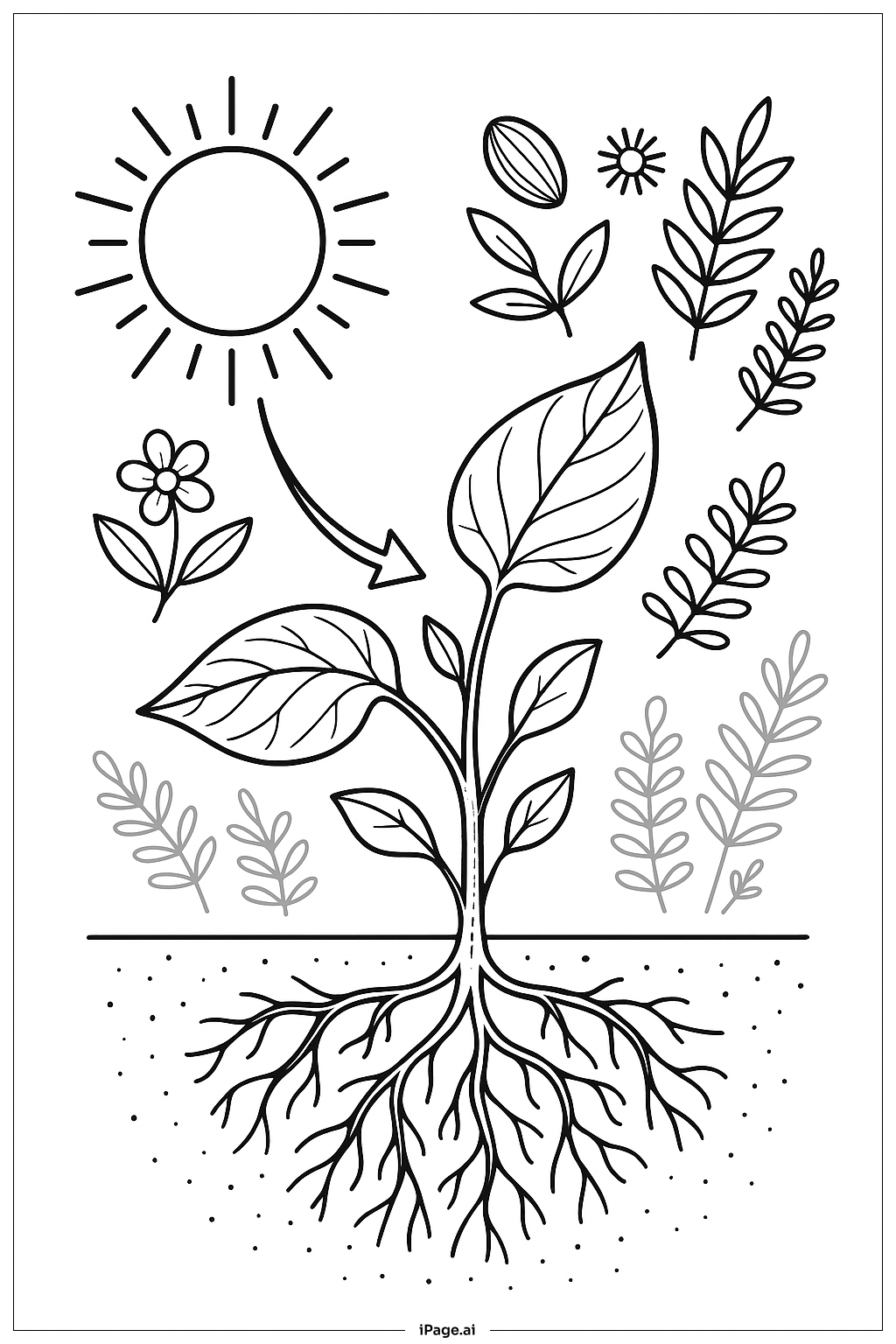
Use green shades for the tiny leaves to show they are fresh and growing. The seed body can be colored brown or beige, like real seeds. For the root, choose light brown or soft yellow colors to make it look natural. You can add different shades to make the parts stand out and look 3D. You may use darker tones on one side to create shadows and lighter ones on the other side to show light. Feel free to add soft soil color or background to make it more lively. Avoid using very bright or neon colors to keep it natural and educational.
Coloring challenges: Which parts are difficult to color and need attention for Photosynthesis Seed Growing coloring page?
1. The seed body is oval and smooth which needs careful coloring to avoid streaks and make it look solid.
2. The thin root line can be tricky to color evenly without going outside the lines.
3. The twin leaves are narrow and close together, requiring attention to color inside the edges.
4. Shading to show light and shadow on such simple shapes can be challenging but important for depth.
5. Keeping colors natural and not too bright while still making it interesting may be hard for young kids.
Benefits of coloring books: Advantages of drawing Photosynthesis Seed Growing coloring page
Coloring this seed growing picture helps kids learn about plant life and nature. It boosts creativity by choosing colors and shading. It improves hand-eye coordination because of the small parts like leaves and roots. Kids also practice staying inside lines and using patience for fine details. This picture teaches the early stage of photosynthesis in a fun way. It encourages children to understand how plants grow which can build curiosity about science and the environment.