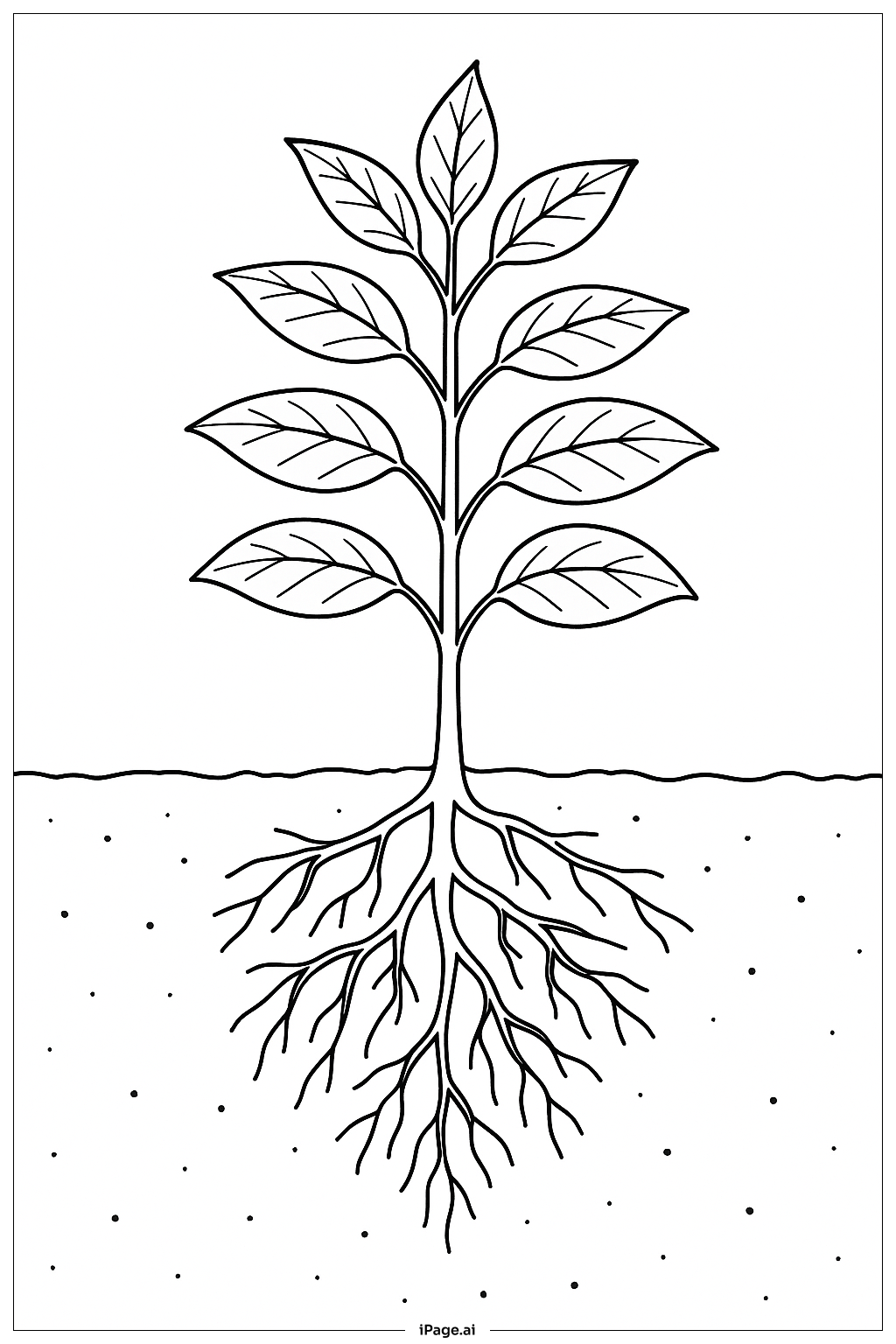
Coloring tips: How to color Photosynthesis Roots and Soil coloring page well?
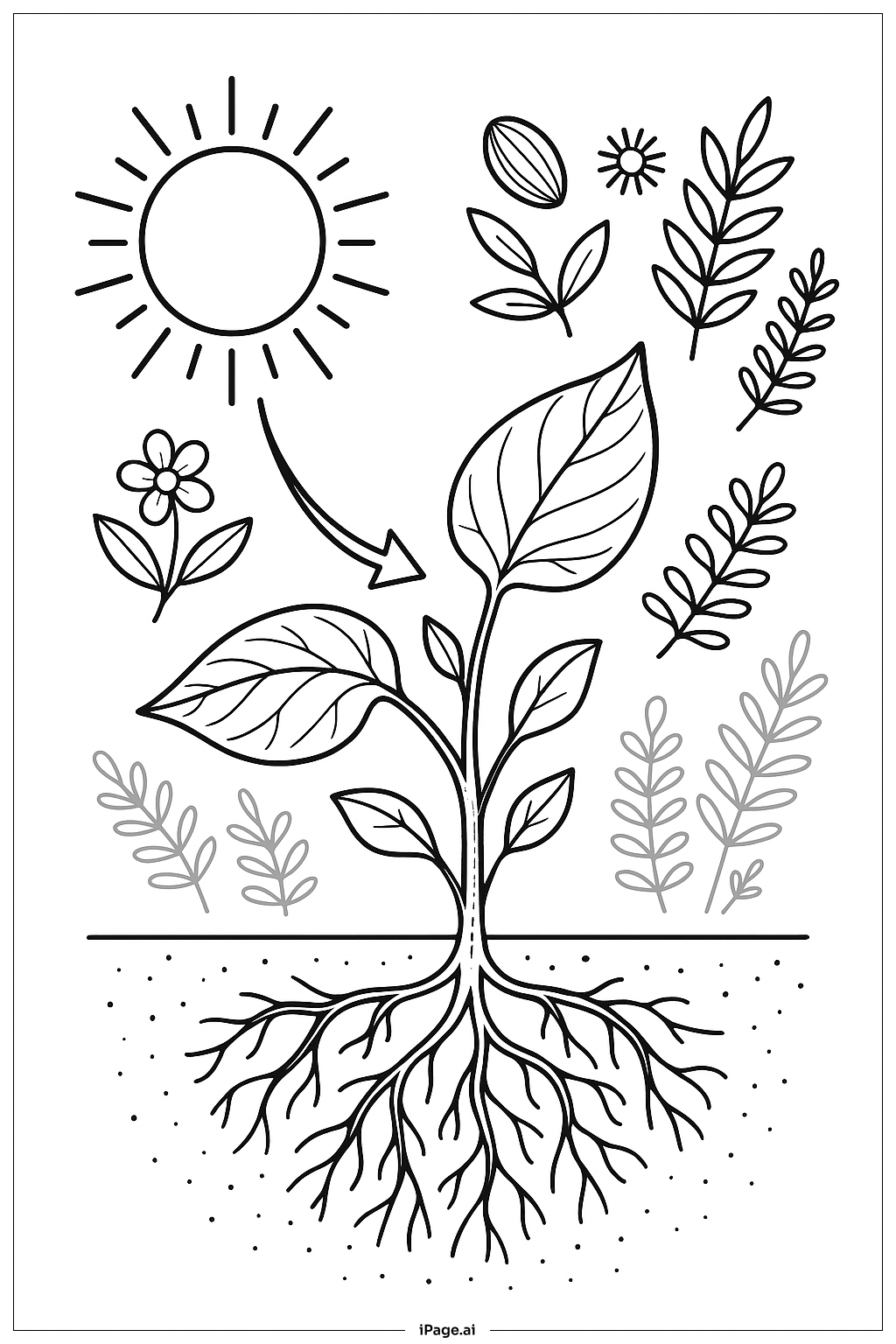
Use different shades of green to color the leaves to make them look lively. The stem can be colored in a light brown or green shade. For the roots, use light brown or orange colors to show they are underground. The soil can be colored with different browns to represent dirt. You can add a bit of yellow or light green to some leaves for variation. Try to color inside the lines carefully to keep the picture neat. Use darker shades for veins in the leaves to make them stand out. Mixing colors gently will make the plant look more natural and beautiful.
Coloring challenges: Which parts are difficult to color and need attention for Photosynthesis Roots and Soil coloring page?
1. Coloring the many small roots evenly can be challenging because they are thin and spread out. It requires patience and a steady hand.
2. Making the soil look realistic might be hard since it has many small dots and uneven surface details.
3. Coloring the veins inside each leaf carefully without going outside the lines can be tricky.
4. Choosing and blending the right shades of green and brown to make the plant look natural may be difficult for beginners.
5. Keeping the coloring neat in small spaces like root tips and leaf edges needs concentration.
Benefits of coloring books: Advantages of drawing Photosynthesis Roots and Soil coloring page
Coloring this plant picture helps children learn about plant parts like roots and leaves. It teaches patience and focus as they fill in many small spaces. Using different colors encourages creativity and understanding of nature. Coloring also improves hand-eye coordination and fine motor skills. It is a fun way to explore biology concepts and connect with the environment.