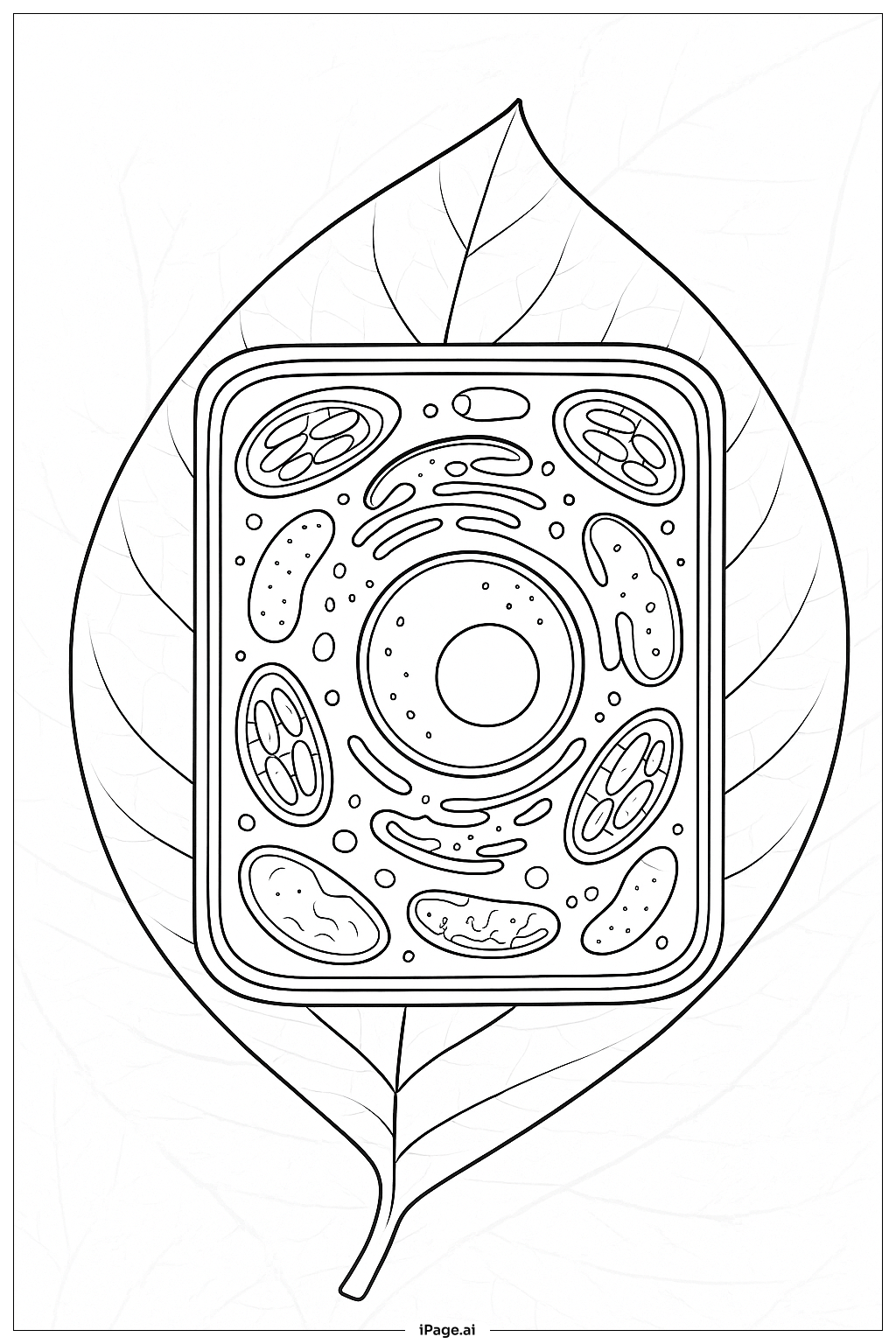
Coloring tips: How to color Photosynthesis Plant Cell Interior View coloring page well?
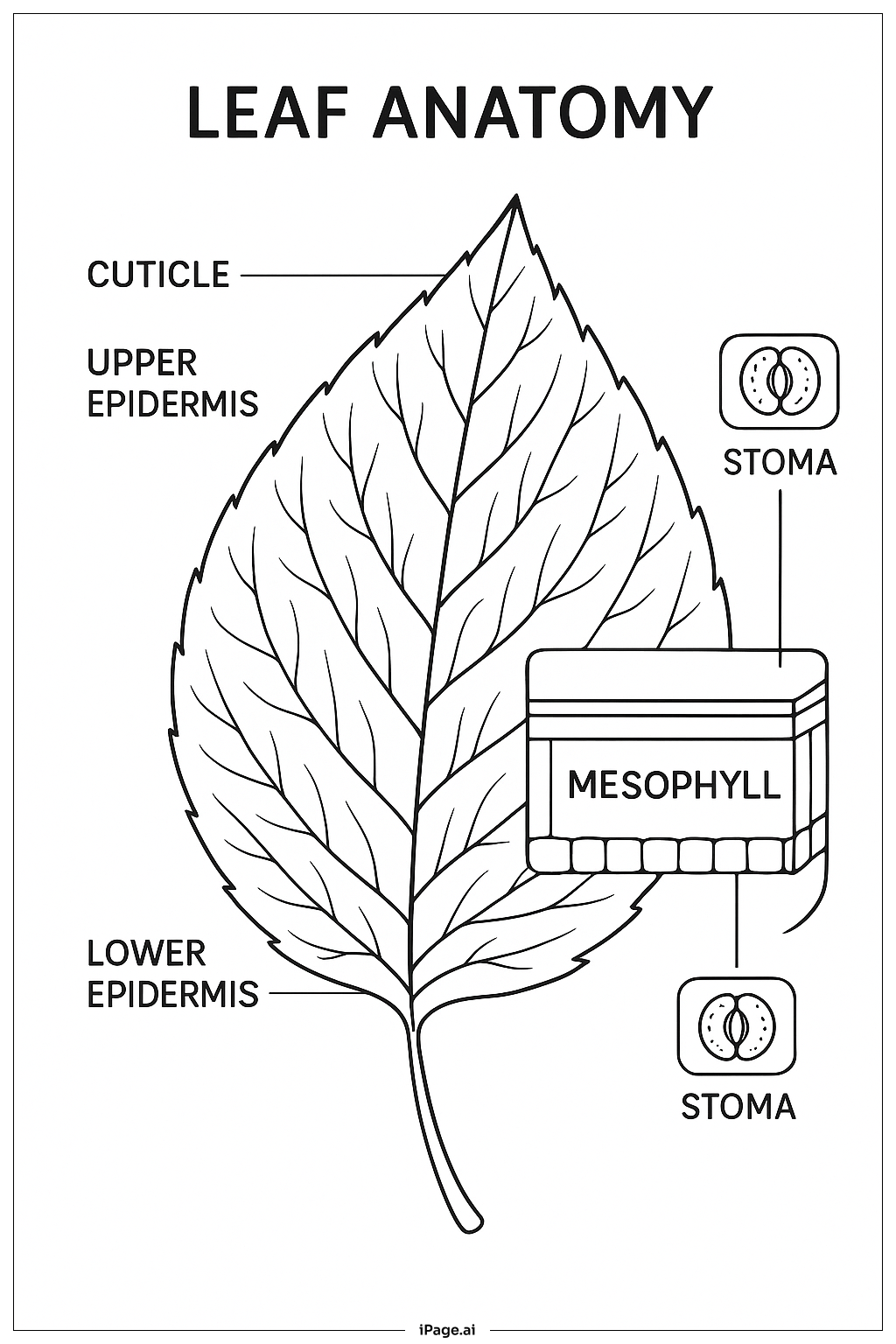
Use green colors for the leaf and chloroplasts since they contain chlorophyll which is green. The mitochondria can be colored in orange or red. The nucleus can be purple or blue to make it stand out. Light colors can be used for the background leaf veins to keep focus on the cell. Try to color each cell part neatly to understand their shapes. You can also use bright colors to make the picture lively and interesting.
Coloring challenges: Which parts are difficult to color and need attention for Photosynthesis Plant Cell Interior View coloring page?
1. Small details inside the cell like tiny dots and lines may be tricky to color without going outside the lines. 2. The similar shapes of organelles like mitochondria and chloroplasts can make it hard to choose different colors. 3. The leaf veins in the background are delicate and thin, so it requires a steady hand to color. 4. Balancing bright colors without making the picture look too busy or messy can be challenging. 5. Keeping the edges neat around the rounded square shape of the cell might be difficult for younger children.
Benefits of coloring books: Advantages of drawing Photosynthesis Plant Cell Interior View coloring page
Coloring this plant cell picture helps children learn about biology and photosynthesis. It improves their focus and fine motor skills as they color small details carefully. It also encourages curiosity about how plants live and grow. Coloring different parts with different hues helps kids remember the functions and names of cell structures better. Plus, it builds creativity and patience while having fun.