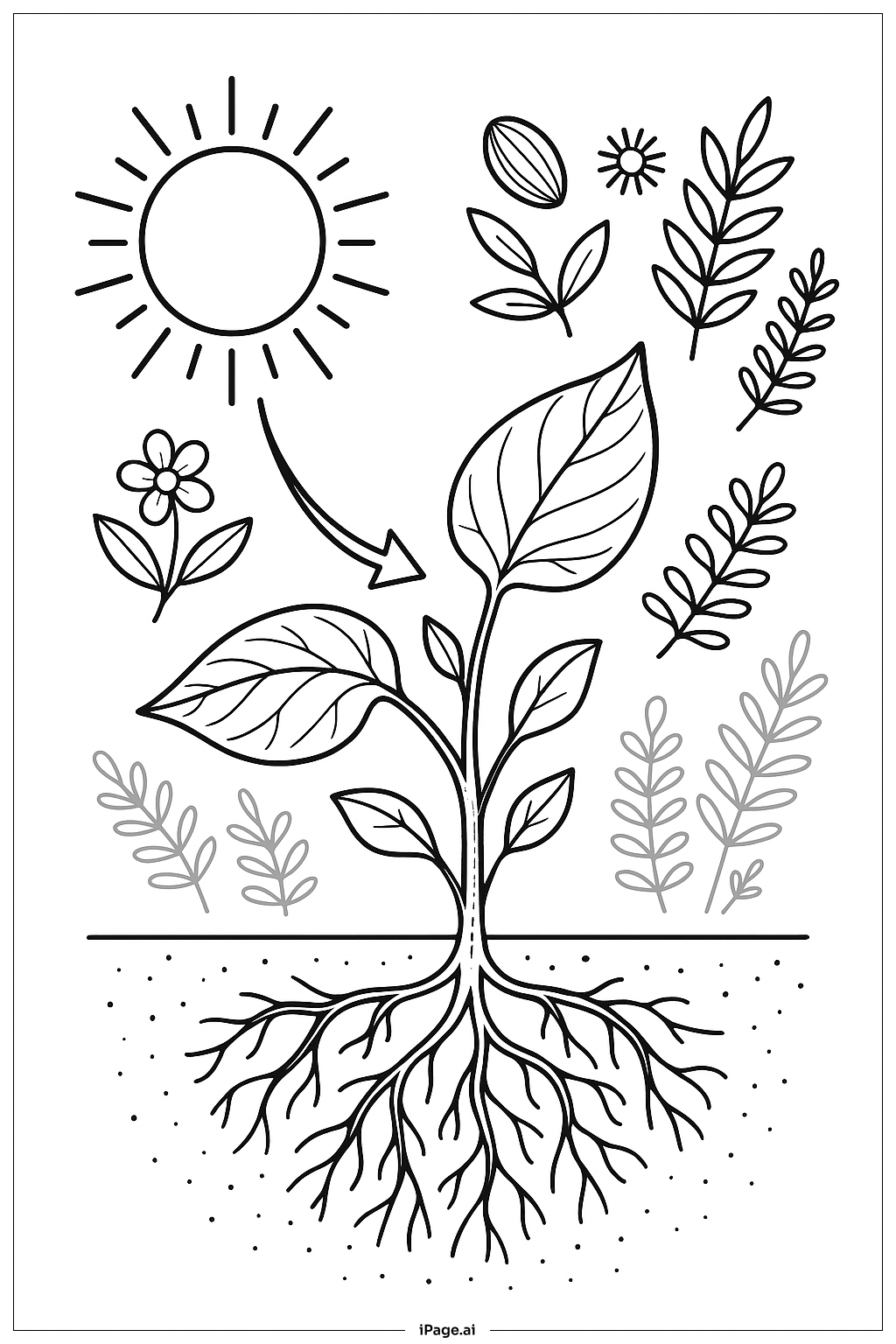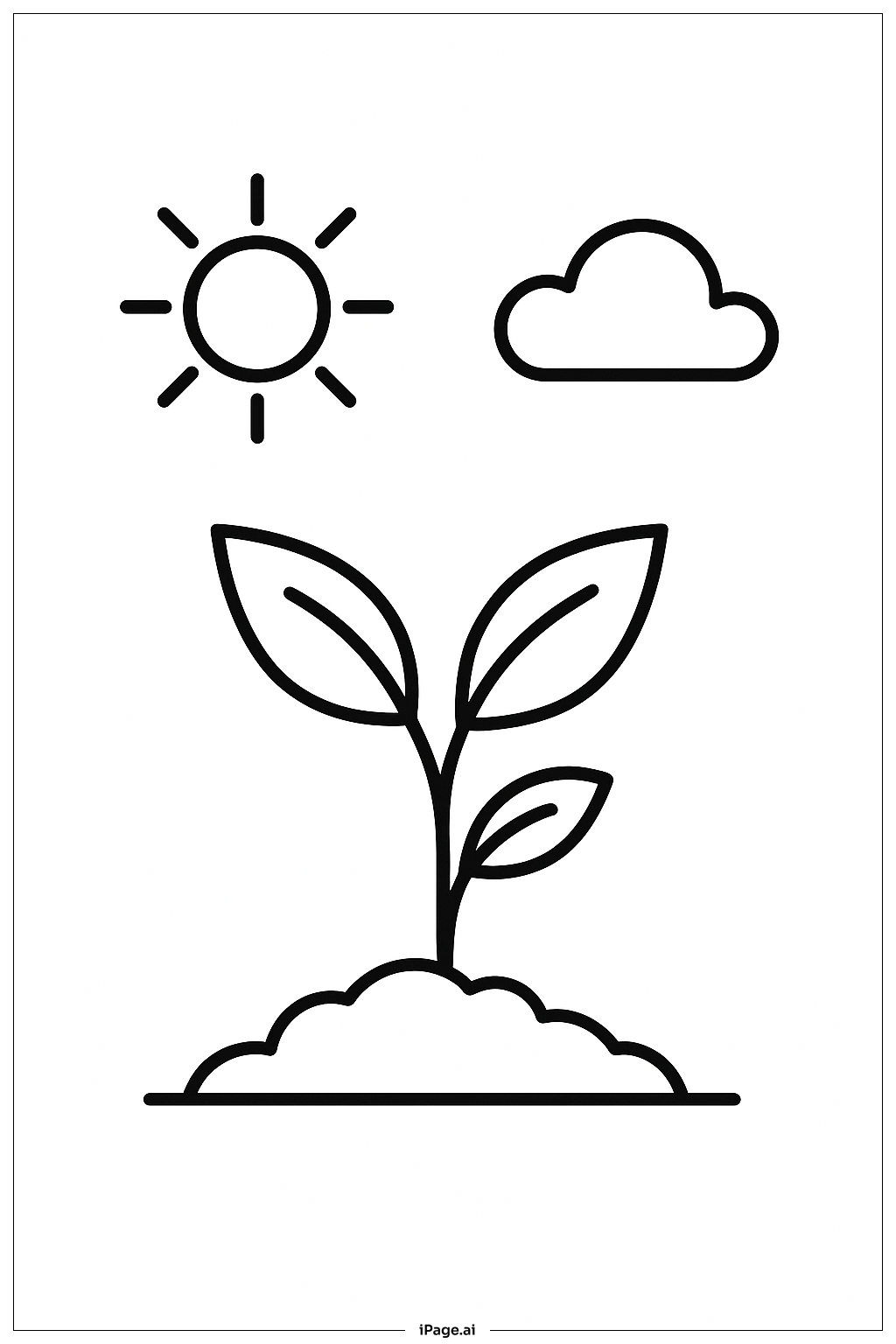
Coloring tips: How to color Photosynthesis Plant and Sun coloring page well?
Use green shades for the leaves to show the vibrant life of the plant. Color the stem in a darker green or brown to give it a natural look. The soil should be brown with some gradients to make it realistic. Color the sun in bright yellow and the rays in a lighter yellow or orange for warmth. The cloud can be light blue or white with soft shading around the edges. You can add small details like a blue sky background or green grass at the bottom to make the picture more lively.
Coloring challenges: Which parts are difficult to color and need attention for Photosynthesis Plant and Sun coloring page?
1. Coloring the leaves evenly can be tricky because of their curved shapes. It’s important to stay inside the leaf lines to keep the picture neat.
2. The sun’s rays are thin and close together, so children need to color carefully without mixing the yellow with the white space.
3. The cloud has smooth rounded edges which require soft coloring to create a fluffy look without harsh outlines.
4. The soil shape has uneven lines, making it a bit challenging to fill accurately without going outside the lines.
5. Adding shadows or gradients to the soil and leaves for a more realistic feel might need some practice for young kids.
Benefits of coloring books: Advantages of drawing Photosynthesis Plant and Sun coloring page
Coloring this picture helps children learn about plants and the importance of sunlight in photosynthesis. It encourages fine motor skills as they carefully color inside the lines. The image also inspires creativity by allowing kids to choose shades for the sun, leaves, and soil. This activity supports concentration and patience. Additionally, coloring the natural elements can increase a child’s interest in science and nature, making learning fun and engaging.