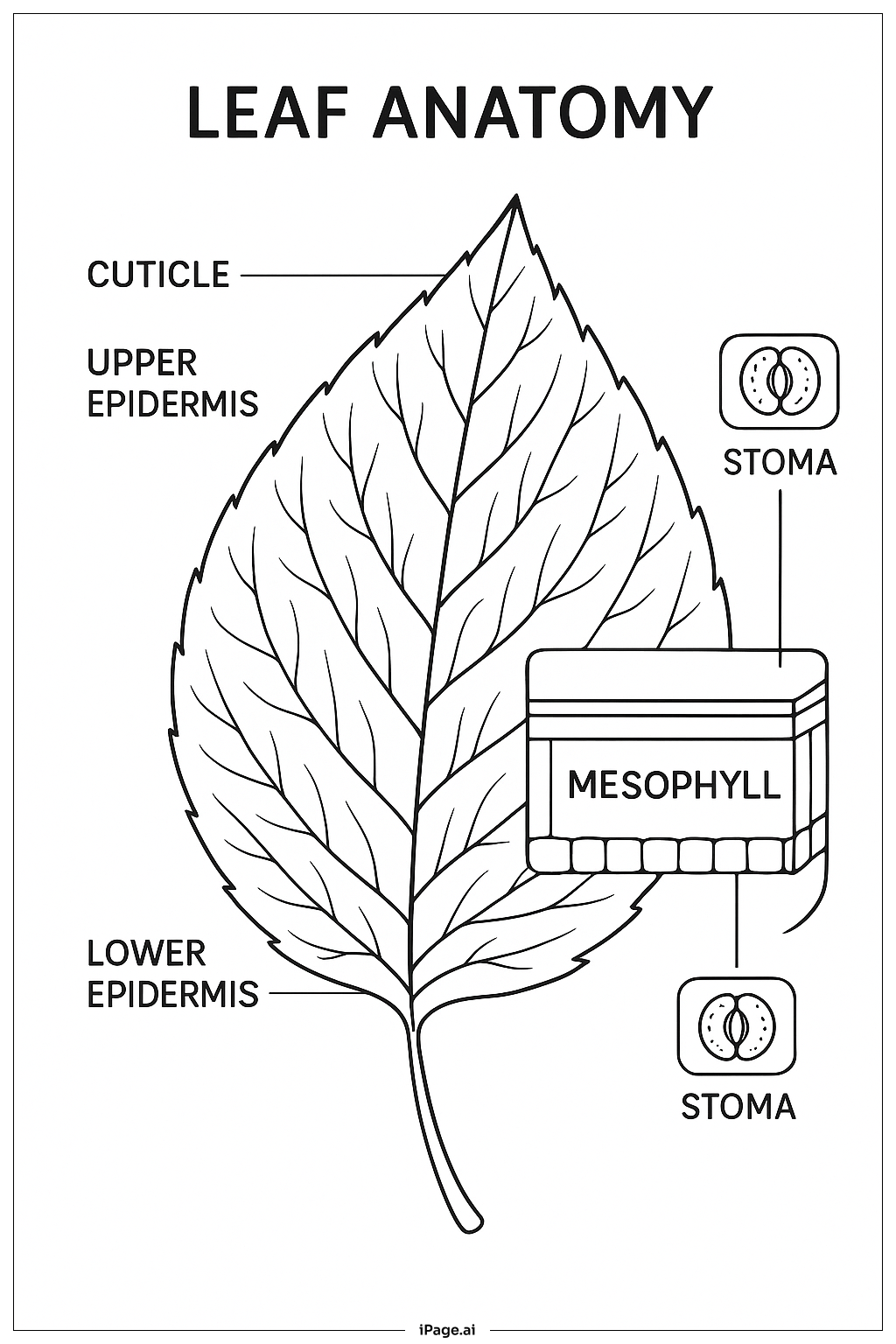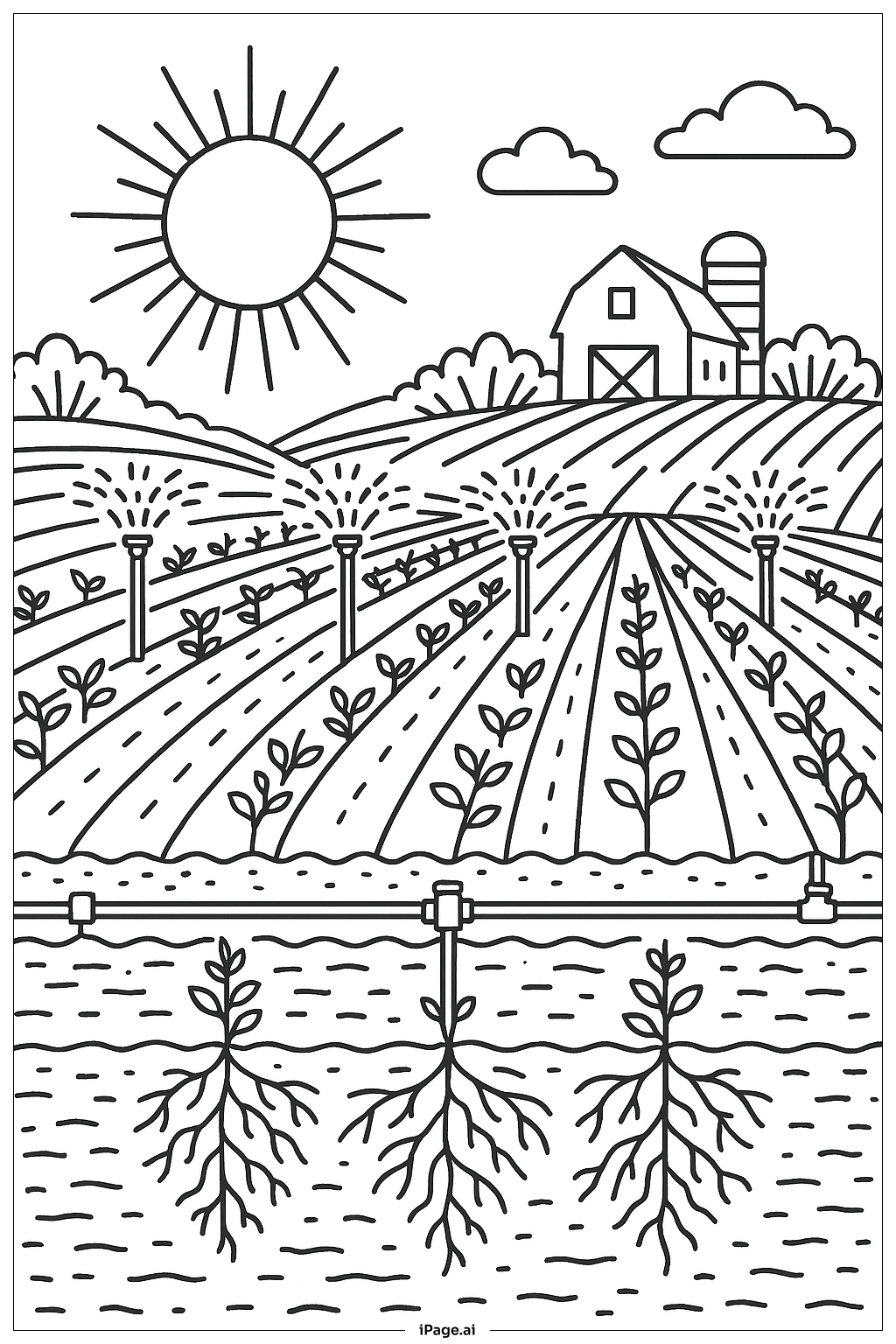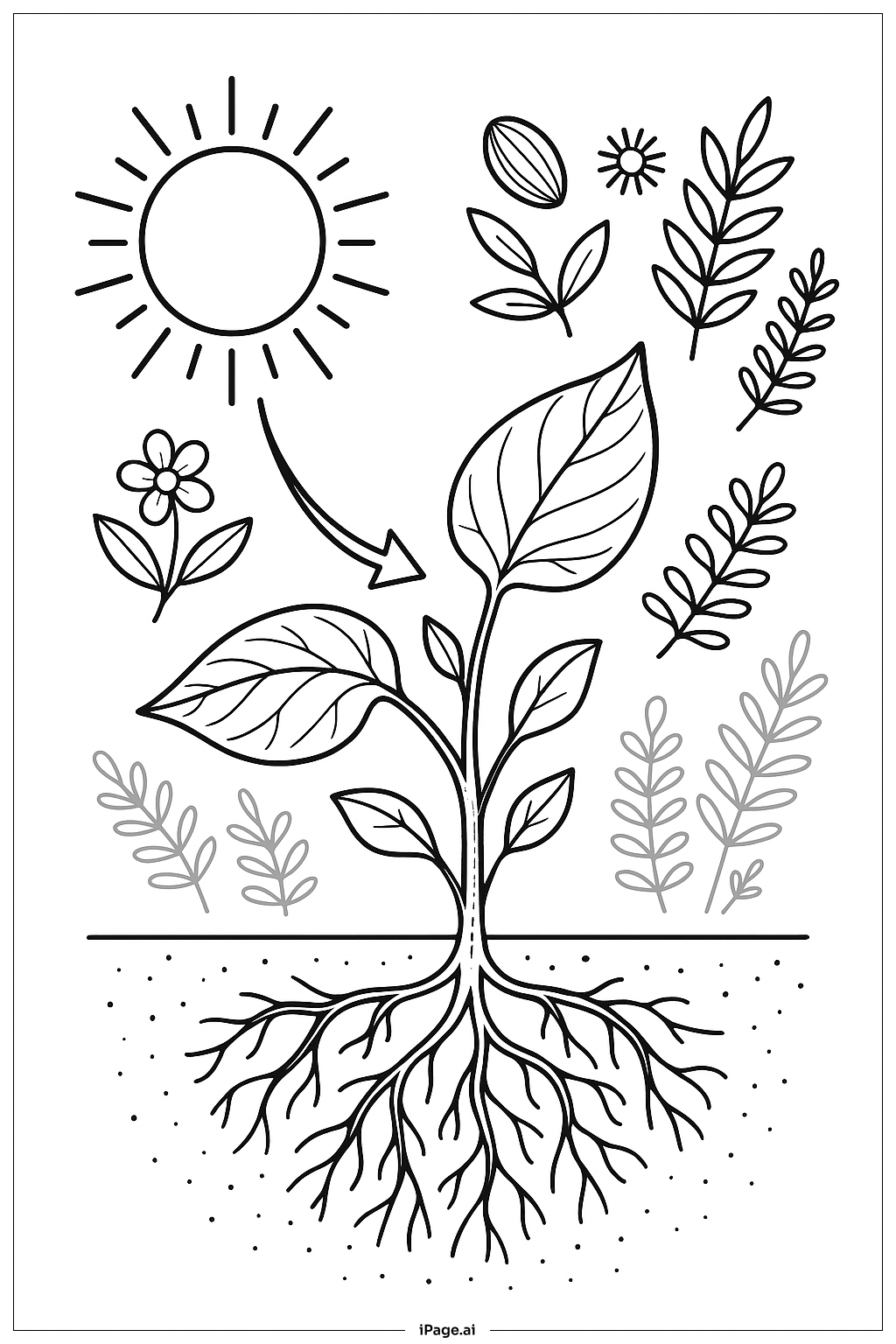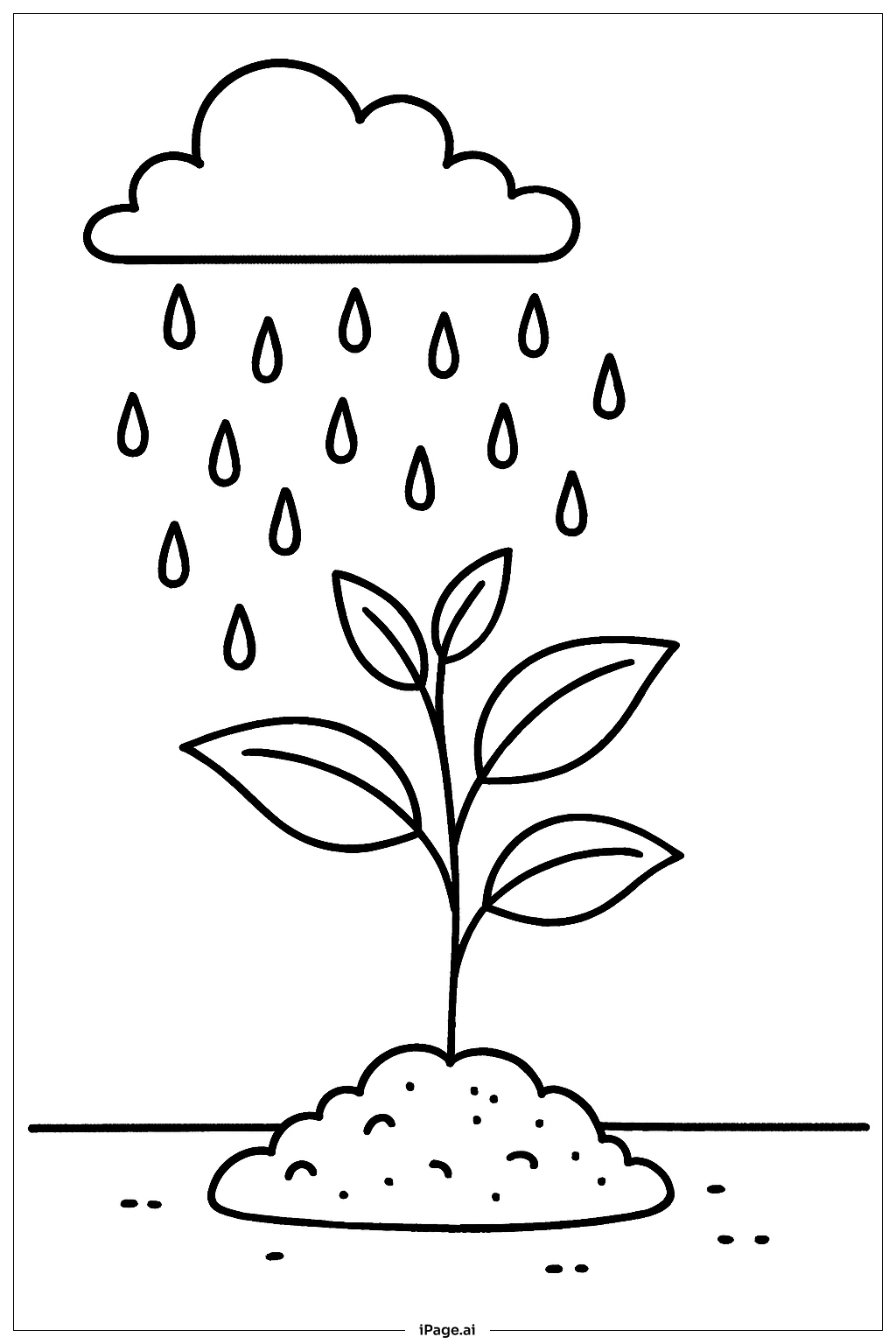
Coloring tips: How to color Photosynthesis Plant and Rain coloring page well?
Use different shades of green to color the leaves to show their freshness and life. Color the stem a darker green or brown to make it look sturdy. For the soil, choose brown or dark brown shades. The cloud can be colored light gray or left white to look fluffy. Use blue for the raindrops to make them look like fresh water falling. Try blending colors gently to make the picture more alive and three-dimensional.
Coloring challenges: Which parts are difficult to color and need attention for Photosynthesis Plant and Rain coloring page?
1. Coloring the raindrops neatly can be hard because they are many and close to each other. 2. The leaves have detailed lines inside; it might be tricky to color them without going outside the lines. 3. The soil has small dots and curves that need careful coloring to keep their shape. 4. Balancing the colors to make the cloud look soft but still different from the background may be challenging. 5. Making the stem and leaves look natural with different shades requires some attention to color blending.
Benefits of coloring books: Advantages of drawing Photosynthesis Plant and Rain coloring page
Coloring this picture helps improve fine motor skills by practicing staying inside the lines of small raindrops and detailed leaves. It encourages creativity in choosing colors and blending them to make the plant and rain look lively. The activity also supports an understanding of nature and how plants need water to grow. Children can relax and focus while coloring, which helps with concentration. Overall, it is a fun and educational way to learn about plants and the environment.