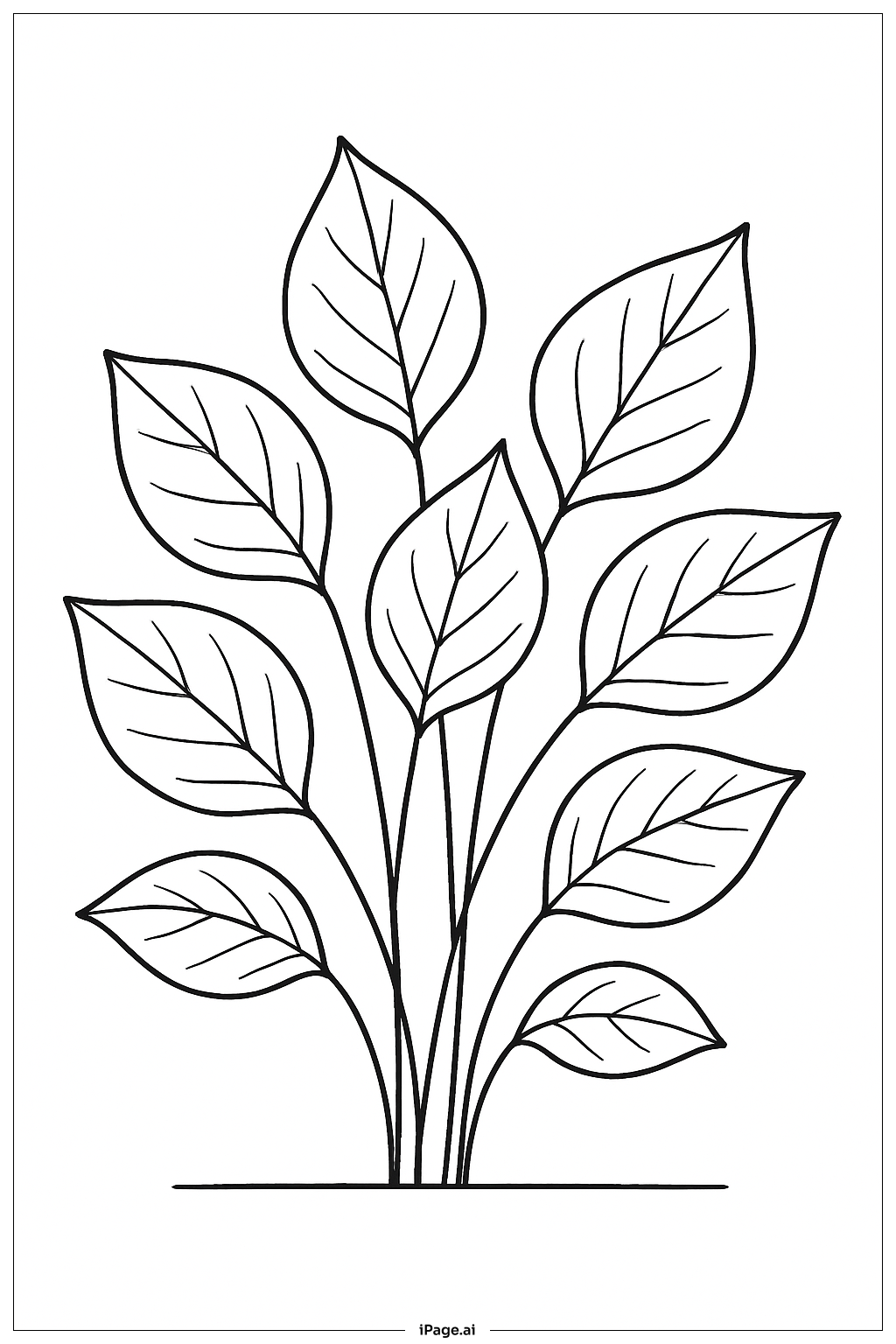
Coloring tips: How to color Photosynthesis Leaves and Stems coloring page well?
Use different shades of green to make the leaves look lively and natural. You can mix light green and dark green to show shadows and highlights. Color the main veins a slightly darker green to add detail. The stems can be colored with brown or green, depending on your choice. For a creative touch, you can add small yellow or light green spots on the leaves to show sunlight or texture. Try to color inside the lines to keep the picture neat and clear. Use small strokes near the veins to highlight their shape. Don’t forget to color the background with soft blue or light colors to make the plant stand out.
Coloring challenges: Which parts are difficult to color and need attention for Photosynthesis Leaves and Stems coloring page?
1. Staying inside the lines can be hard since the leaves have thin veins and curved edges. 2. Coloring the veins differently from the leaves themselves needs careful layering of colors. 3. Making the stems look natural with a smooth color transition between brown or green can be tricky. 4. Adding highlights or shadows to the leaves requires some blending skills. 5. Keeping the picture neat while coloring small spaces between the stems and leaves may require patience and steady hands.
Benefits of coloring books: Advantages of drawing Photosynthesis Leaves and Stems coloring page
Coloring this plant picture helps kids learn about the parts of a plant, such as leaves and stems, which are important for photosynthesis. It improves their focus and fine motor skills by coloring inside small shapes and veins. Using different shades encourages creativity and understanding of color blending. It also promotes patience and attention to detail while working on the delicate parts of the leaves. Overall, it can make learning about plants fun and interactive through art.



