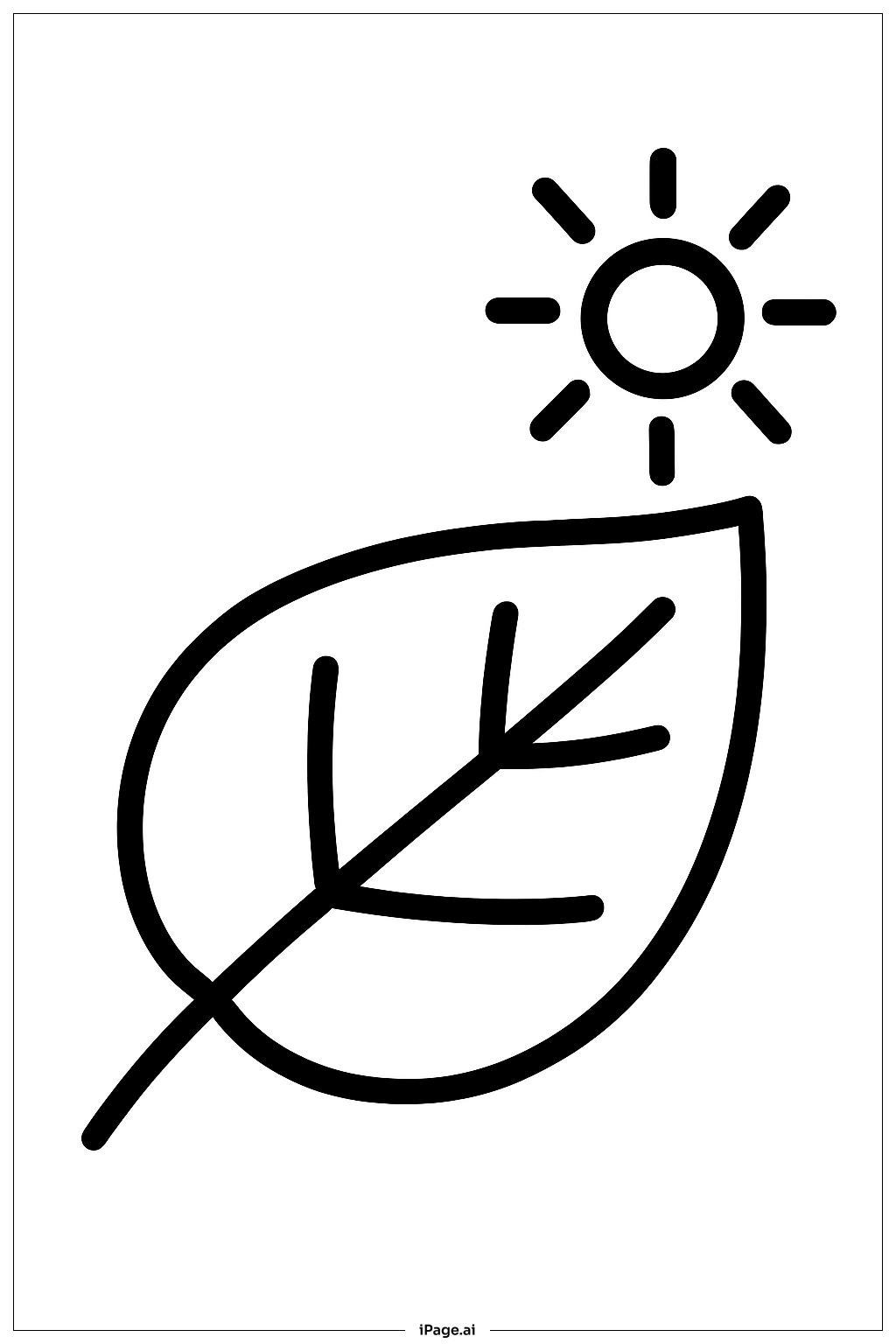
Coloring tips: How to color Photosynthesis Leaf with Sunbeam coloring page well?
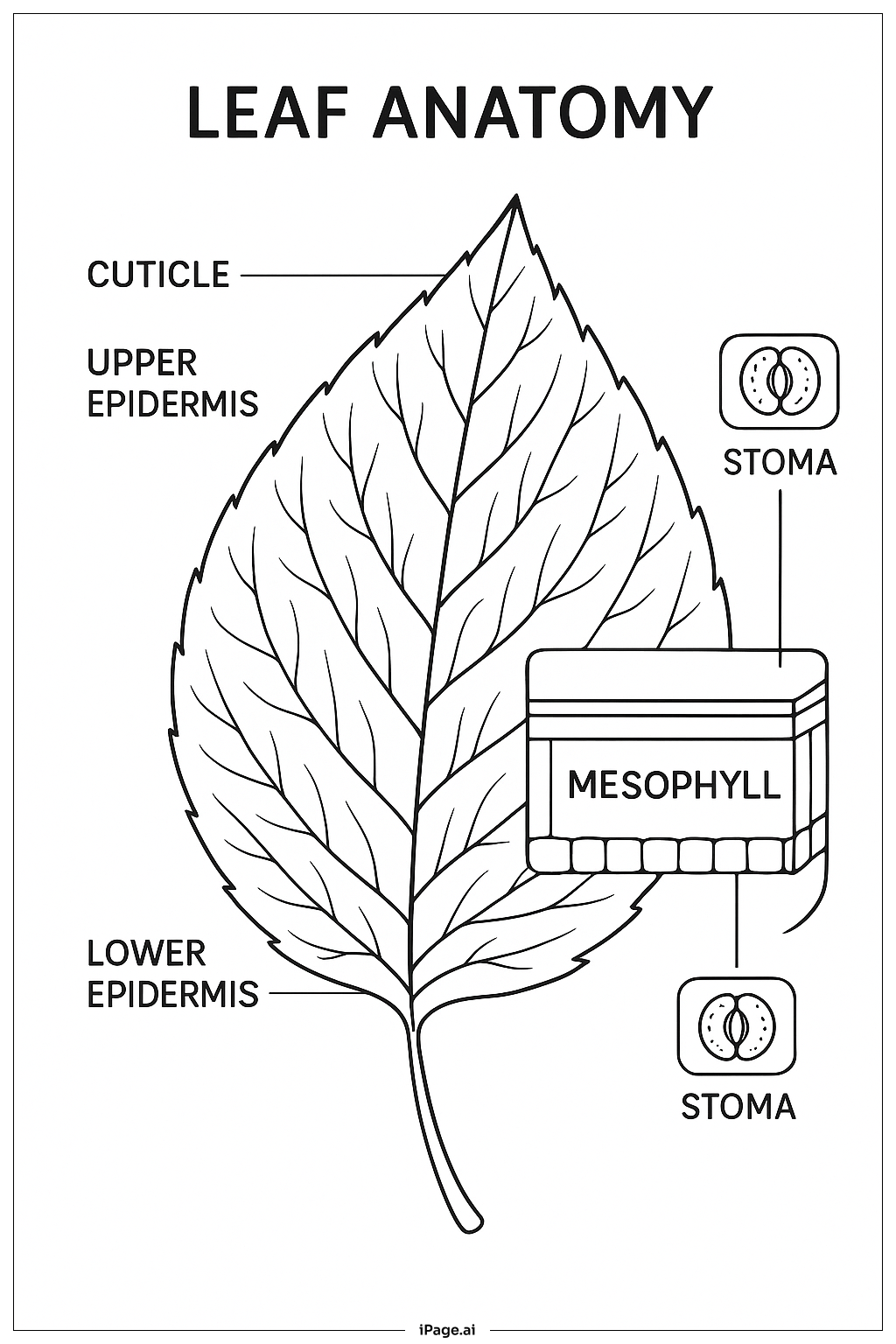
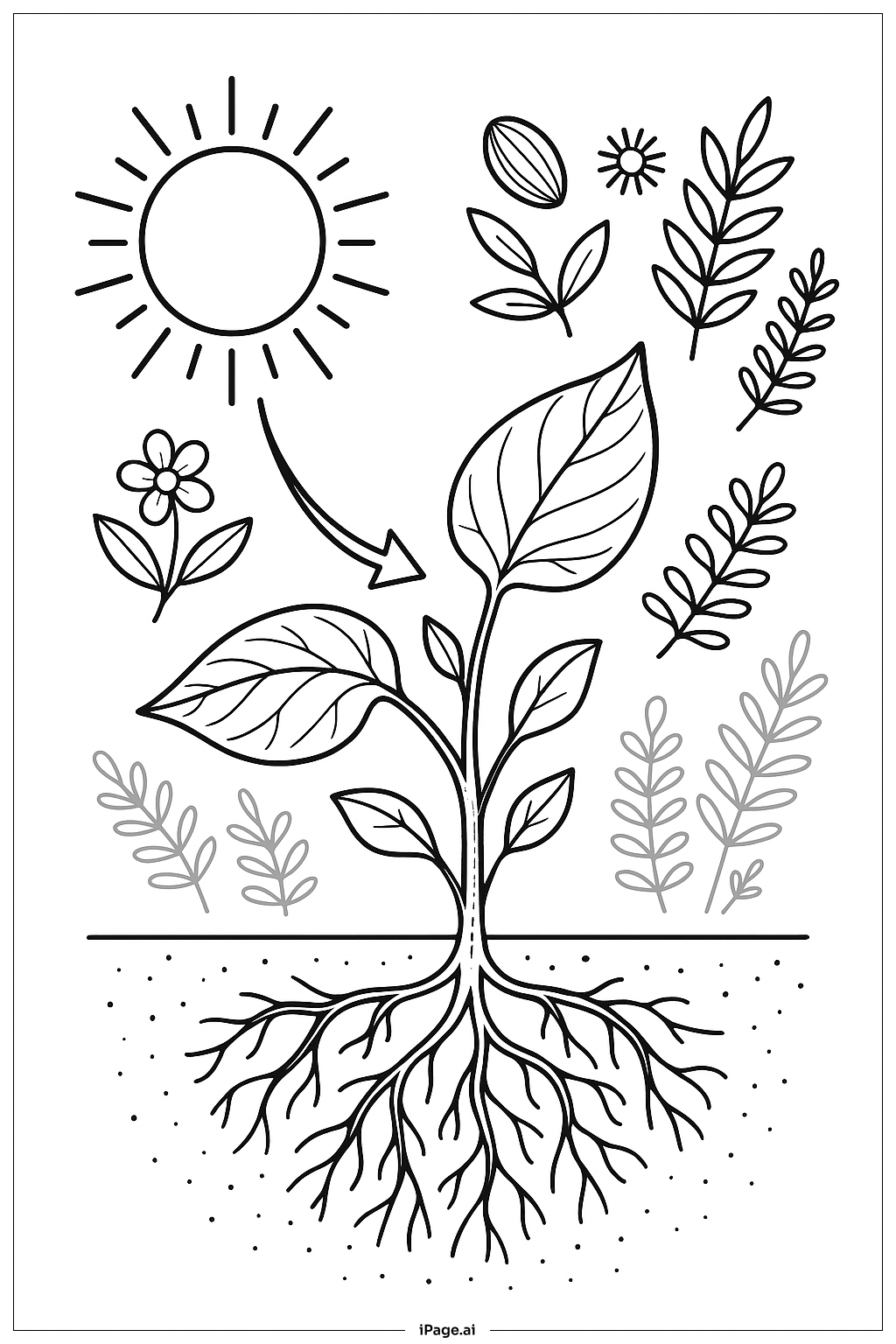
For the leaf, use various shades of green from light lime to deep forest green, creating depth by making veins slightly darker. The sunbeam can be colored with bright yellows and warm oranges, gradually fading toward the edges. Color the sun with vibrant yellow at the center, transitioning to orange at the outer rays. The oxygen bubbles can be left white or colored with very light blue or cyan to suggest transparency. For the background, consider soft blues or pale purples to represent the atmosphere. Use brown or tan for the stem to add natural contrast. Layer lighter greens over darker ones on the leaf surface to create a realistic three-dimensional effect. Adding touches of yellow-green where the sunbeam hits will emphasize the light interaction beautifully.
Coloring challenges: Which parts are difficult to color and need attention for Photosynthesis Leaf with Sunbeam coloring page?
• Leaf Vein Network: The intricate system of veins branching throughout the leaf requires careful attention and a steady hand. Children must navigate thin lines while maintaining consistent coloring in the small spaces between veins. Younger colorists may find it challenging to stay within these narrow boundaries, while older children can use this opportunity to practice precision with fine-tipped coloring tools.
• Light Gradient Effects: Creating a realistic sunbeam effect demands understanding of color blending and gradient techniques. The transition from bright yellow at the beam's center to softer tones at the edges requires smooth color application. Children need to apply varying pressure or layer multiple shades to achieve a natural light effect, which can be tricky for those still developing their blending skills.
• Oxygen Bubble Transparency: Depicting the clear, translucent quality of oxygen bubbles presents a unique challenge. Colorists must decide whether to leave them uncolored, use very light colors, or add subtle shading around the edges to suggest three-dimensional spheres. This requires spatial reasoning and an understanding of how light interacts with transparent objects.
• Background and Depth: Creating appropriate contrast between the main leaf subject and the background requires thoughtful color choices. Children must select colors that allow the leaf and sunbeam to stand out while maintaining a cohesive overall composition. Understanding which areas should be lighter or darker to create depth can be conceptually challenging for younger artists.
Benefits of coloring books: Advantages of drawing Photosynthesis Leaf with Sunbeam coloring page
Coloring this photosynthesis-themed page offers wonderful educational value alongside artistic development. Children learn about the vital process that sustains life on Earth while engaging in a calming creative activity. The detailed leaf structure helps develop fine motor skills and hand-eye coordination as they carefully color within the vein patterns. Working with light effects and gradients encourages experimentation with color theory and blending techniques. The scientific elements spark curiosity about plant biology and environmental science, making this an excellent cross-curricular activity. The natural subject matter promotes mindfulness and connection to nature. Completing this moderately complex design builds confidence and patience, especially when children see their finished work depicting this essential life process. It is suitable for elementary through middle school students who enjoy both art and science.