Coloring tips: How to color Photosynthesis Leaf Cross Section coloring page well?
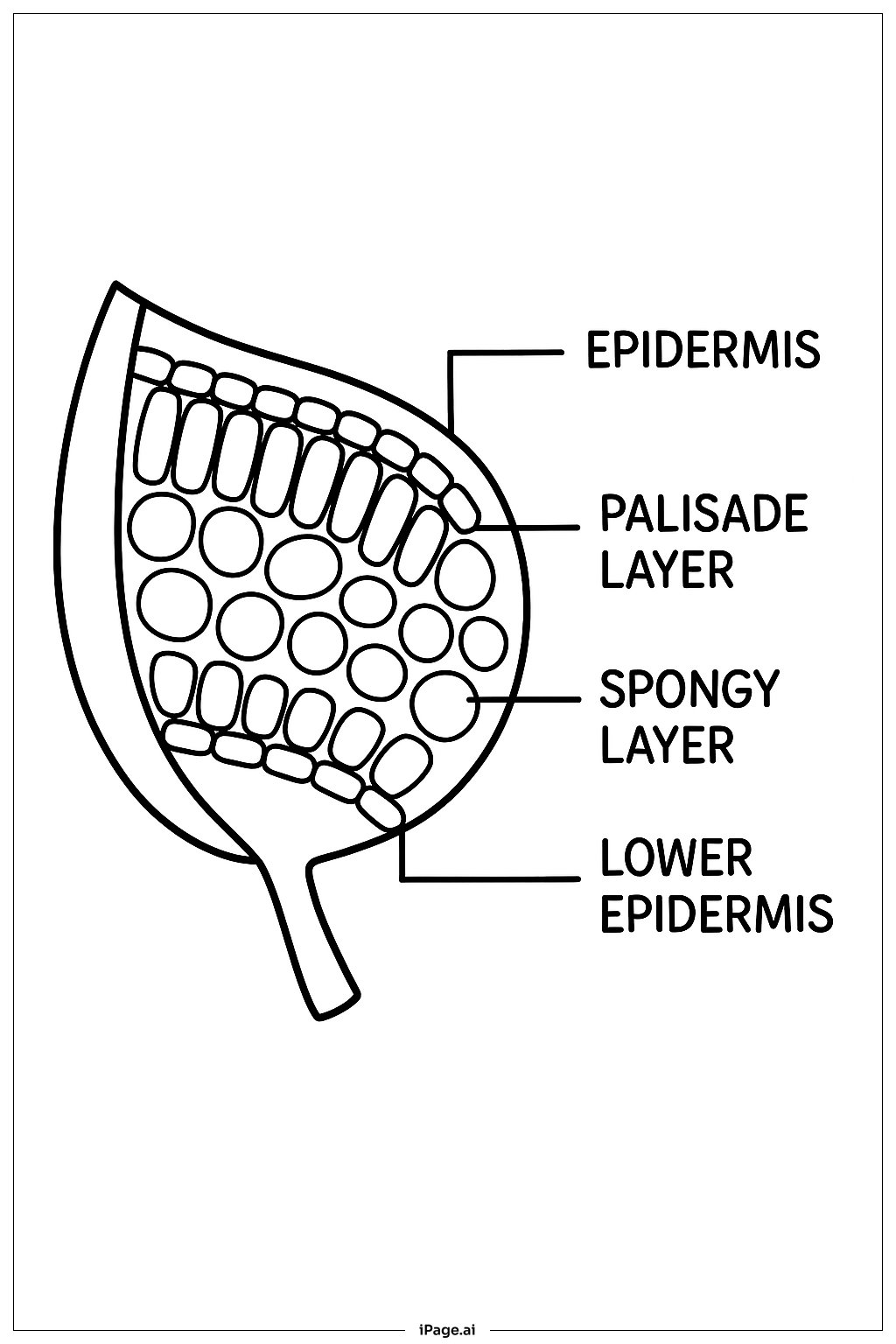
Use green shades to color the leaf parts to show they are living plant tissues. The outer layers, the epidermis, can be light green or pale yellow. The palisade layer can be a darker green to show it holds many chloroplasts for photosynthesis. The spongy layer might be colored light green with some white space to show air pockets. The leaf stem can be brown or green. You can also use different shades of green for variety and to highlight each section distinctly.
Coloring challenges: Which parts are difficult to color and need attention for Photosynthesis Leaf Cross Section coloring page?
1. Small, rounded shapes in the spongy layer can be tricky to color neatly without going over the lines.
2. The palisade layer has many narrow, oval shapes that need careful coloring to stay inside the boundaries.
3. Keeping consistent shades of green to make the parts look natural might be challenging.
4. Coloring the thin outer layers (epidermis) with a lighter color needs gentle strokes to avoid darkening.
5. Distinguishing between similar green shades in adjacent layers could confuse some children.
Benefits of coloring books: Advantages of drawing Photosynthesis Leaf Cross Section coloring page
Coloring this leaf cross section helps children learn about plant biology in a fun way. It improves fine motor skills by coloring small, detailed shapes. The activity supports memory as kids remember which color to use for each part. It encourages focus and patience while coloring carefully. Plus, it makes learning photosynthesis more interactive and interesting.



