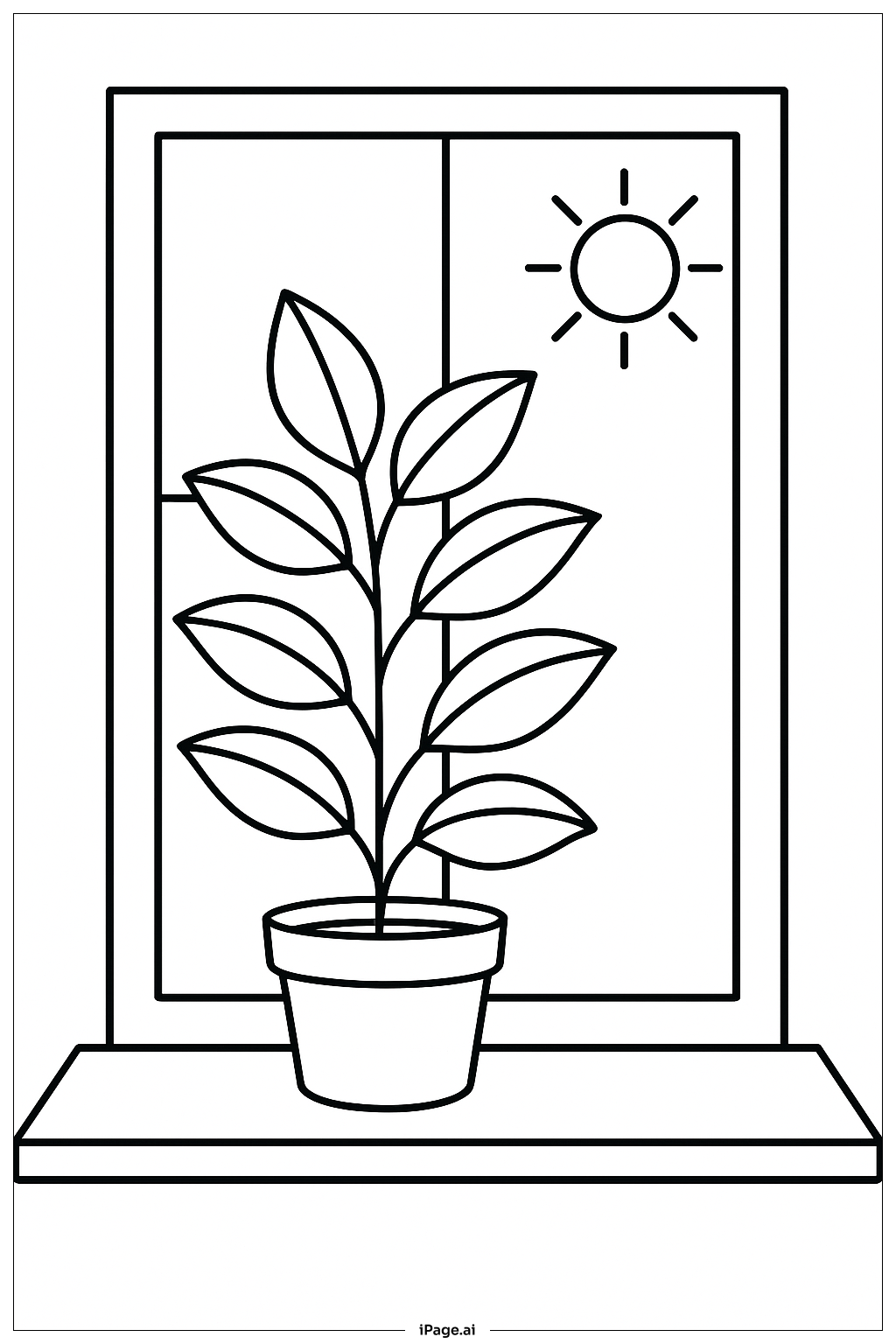
Coloring tips: How to color Photosynthesis Indoor Plant Scene coloring page well?
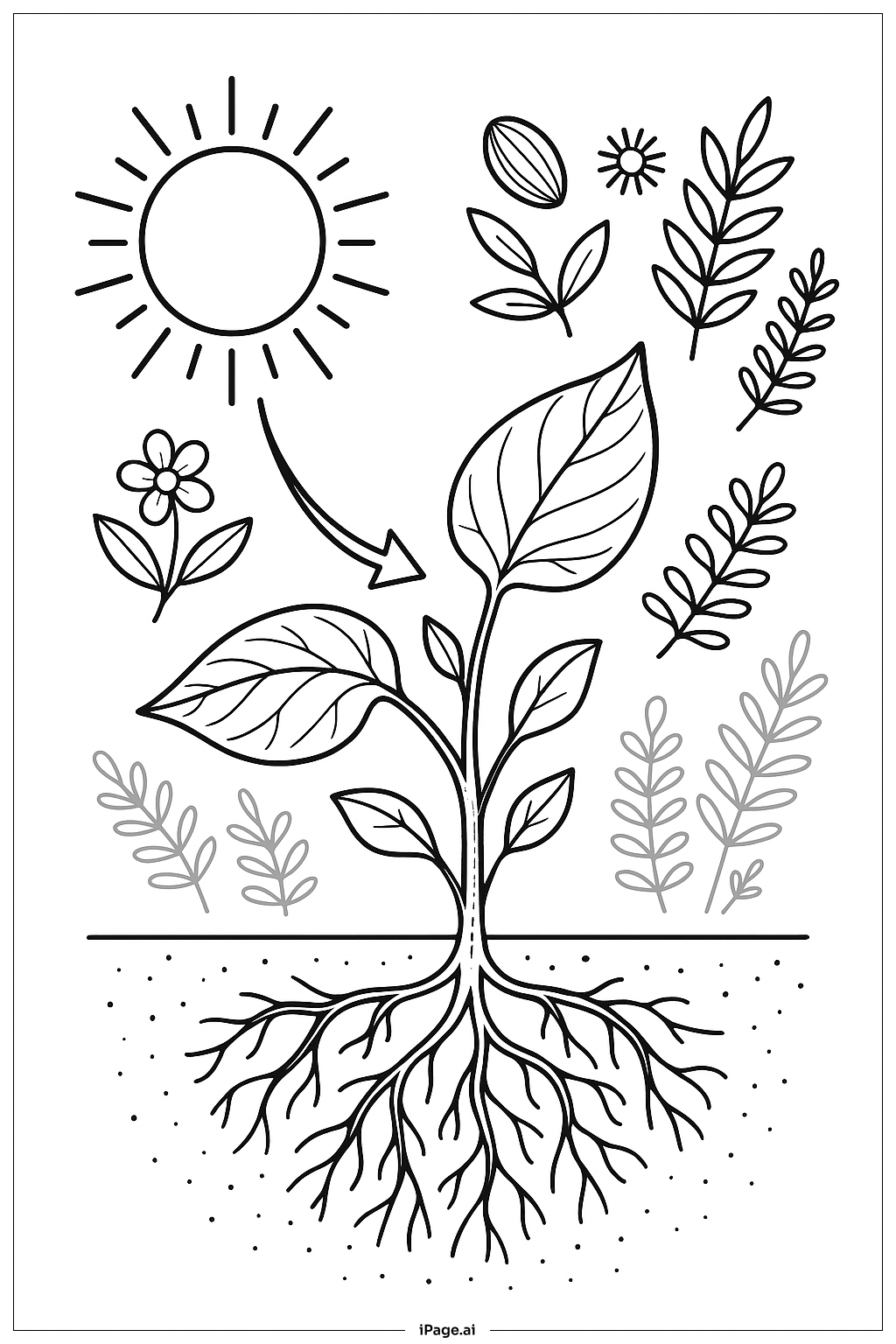
Use different shades of green to color the leaves to show their life and energy. You can color the pot brown, red, or any warm color you like. The windowsill can be light brown or gray. For the window panes, use light blue or light gray to give the feeling of glass. The sun can be bright yellow or orange to show its warmth. Try to keep the colors neat and inside the lines for best results.
Coloring challenges: Which parts are difficult to color and need attention for Photosynthesis Indoor Plant Scene coloring page?
1. The leaves are placed close together, making it a bit tricky to color each one neatly without crossing the lines. 2. The pot and its top rim have two parts to color separately, which may require careful attention. 3. The sun's rays are small and thin, needing precise coloring to avoid overspill. 4. Coloring the window panes evenly can be difficult because of the straight lines dividing them. 5. Balancing the colors so the whole picture looks natural and pleasant, without any part standing out too much, can be a challenge.
Benefits of coloring books: Advantages of drawing Photosynthesis Indoor Plant Scene coloring page
Coloring this indoor plant scene helps children learn about nature and photosynthesis in a fun way. It improves their hand-eye coordination and fine motor skills as they color within small spaces. Choosing colors encourages creativity and teaches them how different colors can express warmth, life, and calmness. This activity also promotes focus and patience, important skills for all learning.