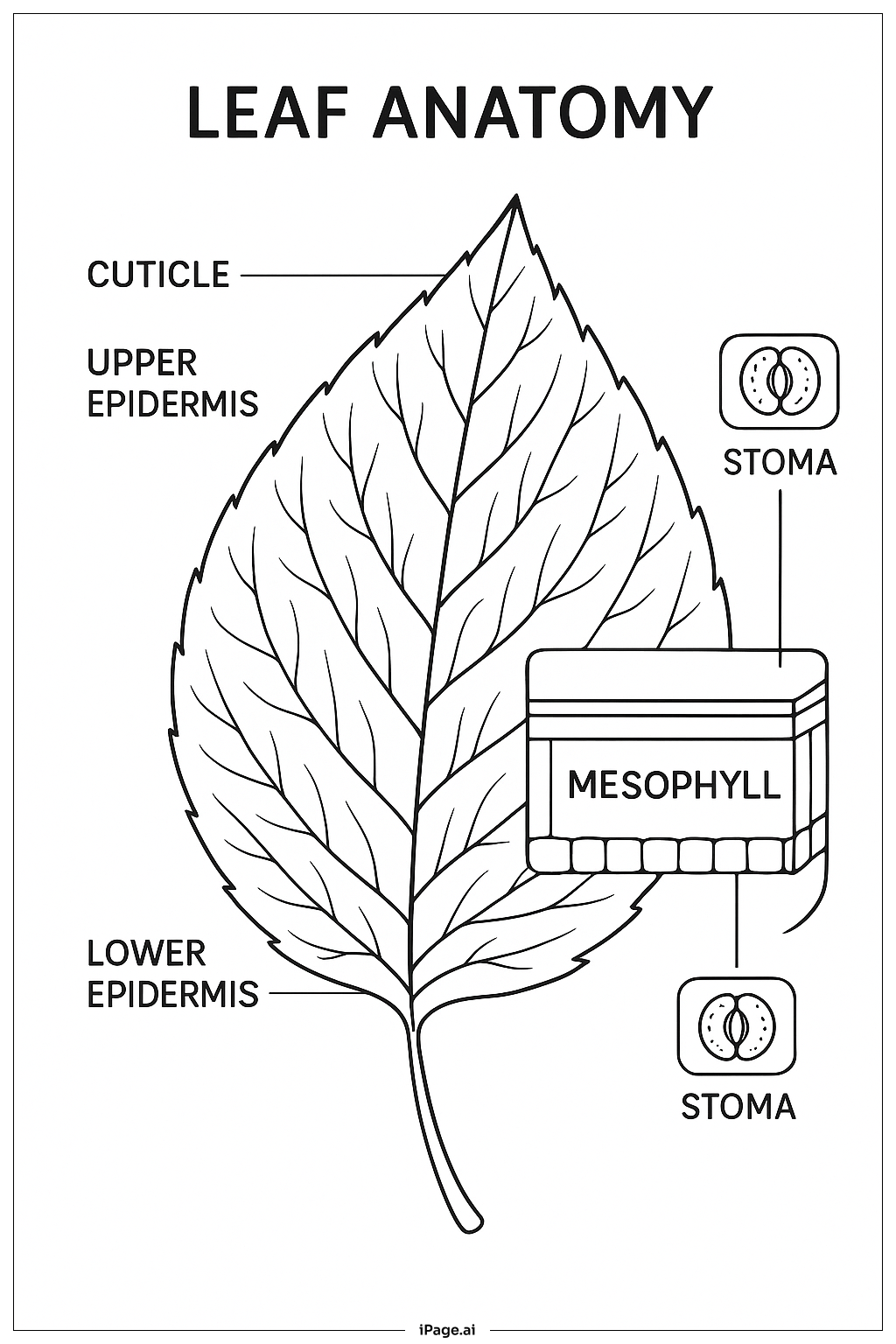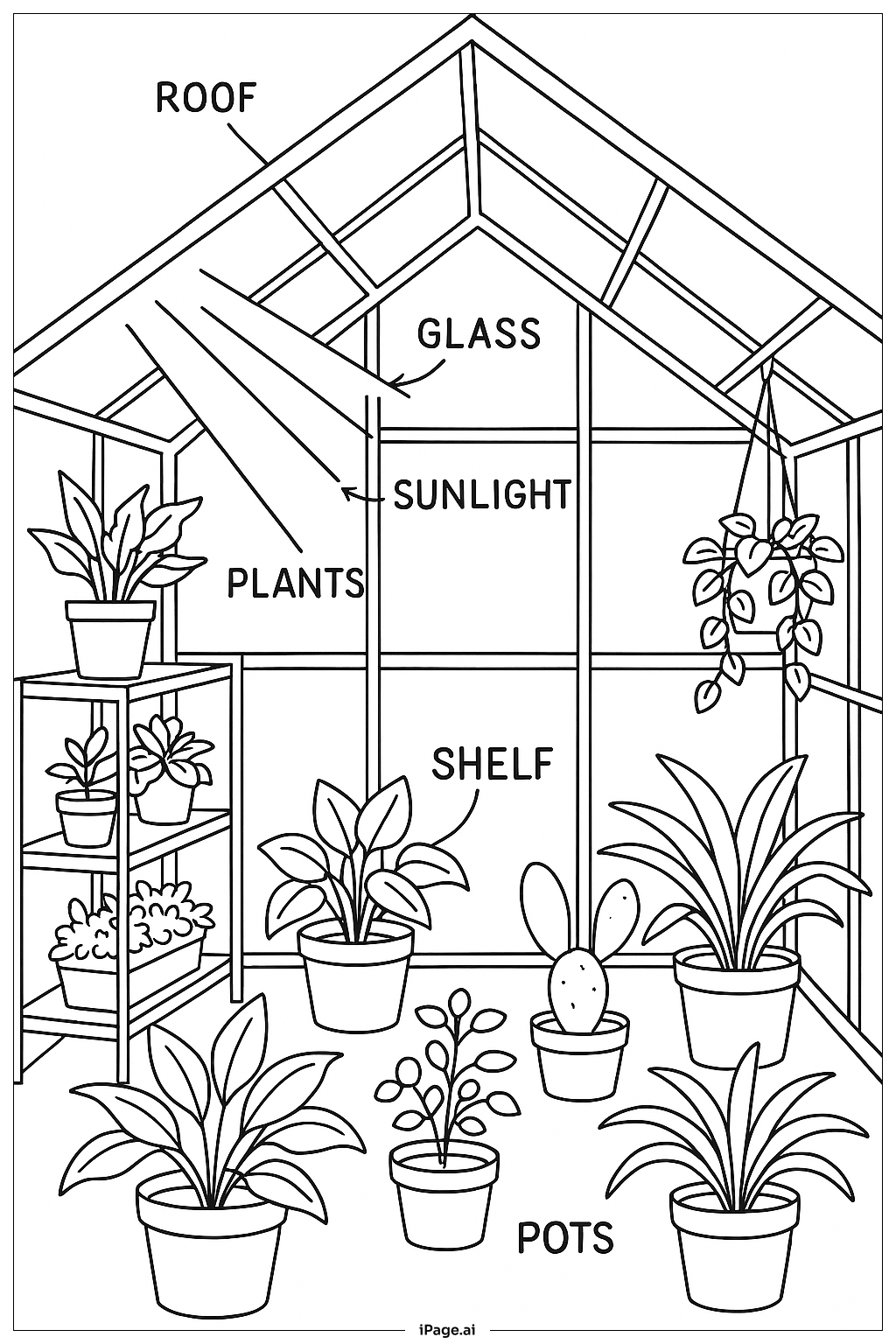
Coloring tips: How to color Photosynthesis Greenhouse Growth Study coloring page well?
Start with the greenhouse structure using light grays and blues for the glass panels to create a translucent effect, while the metal framework can be colored in darker grays or bronze tones. For the plants, use various shades of green—bright lime for new growth, deeper emerald for mature leaves, and yellow-green for areas receiving direct light. Add browns and tans for the soil and pots, varying the shades to create depth. Consider using orange or red accents for any flowers or ripening fruits. The roots visible in transparent containers can be colored in cream or light brown. Don't forget to add yellow sunlight streaming through the glass panels, creating warm highlights on the leaves. Use purple or blue shadows beneath the plants for contrast and dimension.
Coloring challenges: Which parts are difficult to color and need attention for Photosynthesis Greenhouse Growth Study coloring page?
• Greenhouse Glass Panels: The transparent greenhouse structure presents a unique challenge as you must color the glass panels lightly enough to maintain their see-through quality while still making them visible. Balancing the frame lines with the interior details requires careful color selection, ensuring the architectural elements don't overpower the plants inside or disappear entirely.
• Layered Plant Details: Multiple plants at various depths create overlapping leaves and stems that require strategic color variation to distinguish one plant from another. You'll need to use different green tones and shading techniques to show which leaves are in front and which are behind, while maintaining realistic plant coloring throughout the composition.
• Scientific Equipment and Labels: Any measurement tools, growth charts, or educational markers in the scene demand precision coloring within small spaces. These elements often feature fine lines, numbers, or text that require steady hand control and careful color choices to remain legible and not blend into surrounding areas.
• Light and Shadow Contrast: Creating the effect of sunlight filtering through glass panels requires understanding how light behaves in a greenhouse environment. You must show bright, illuminated areas on plant leaves while adding shadows cast by the greenhouse structure, all while maintaining the warm, nurturing atmosphere of a growing space.
Benefits of coloring books: Advantages of drawing Photosynthesis Greenhouse Growth Study coloring page
Coloring this Photosynthesis greenhouse scene offers wonderful educational benefits while developing artistic skills. Children learn about plant biology, growth cycles, and the science of photosynthesis as they color different plant parts—leaves, stems, and roots—helping them visualize how plants function. The architectural elements of the greenhouse teach about structures and geometry through its panels and framework. This page enhances fine motor skills and hand-eye coordination through the detailed linework of leaves and mechanical elements. It encourages color theory exploration as young artists experiment with various green shades and learn about light, shadow, and transparency. The scientific theme promotes curiosity about nature and environmental science, making it perfect for students interested in botany or agriculture. Completing this detailed scene builds patience, concentration, and a sense of accomplishment, while the peaceful greenhouse setting provides a calming, therapeutic coloring experience.