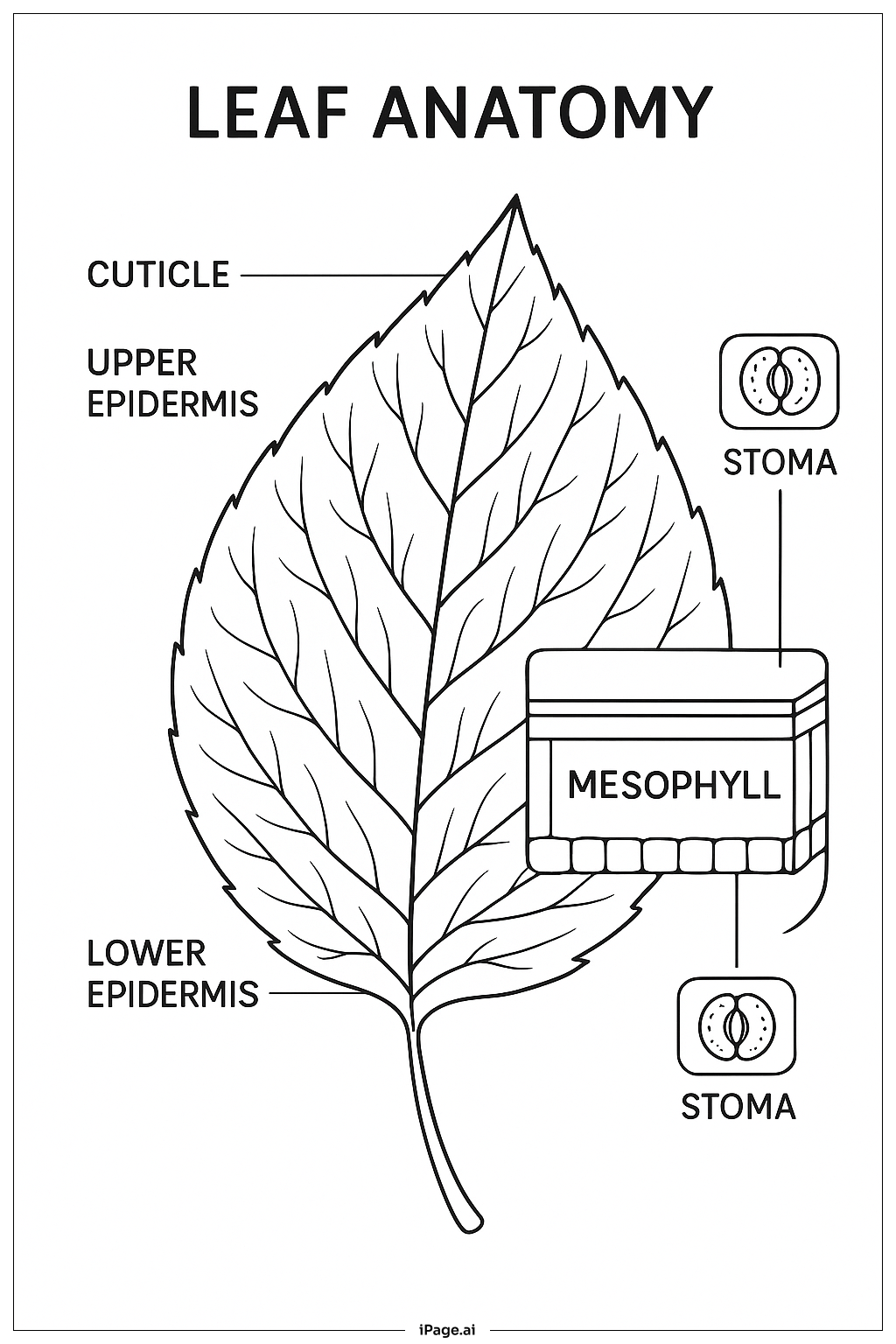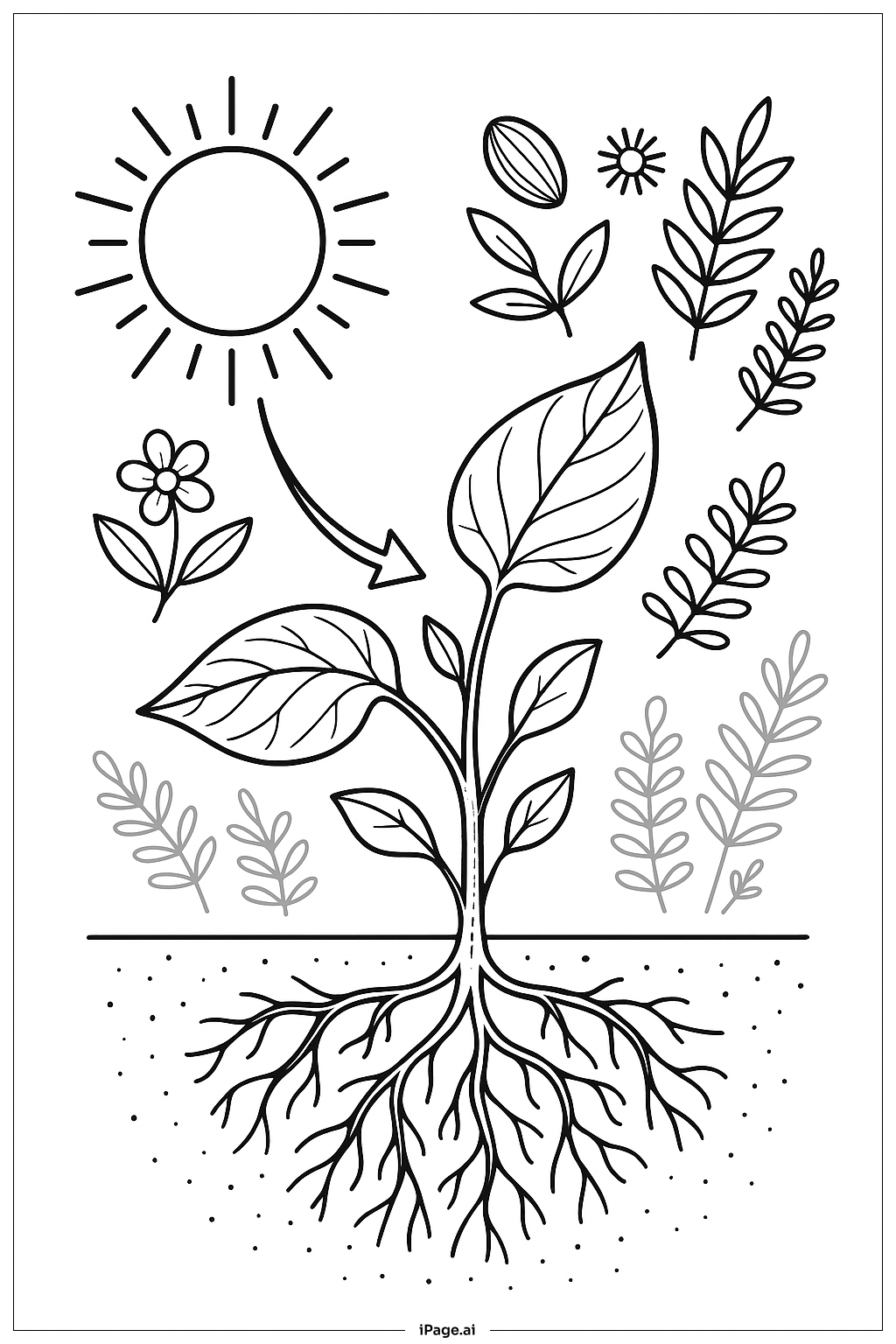
Coloring tips: How to color Photosynthesis Garden with Patches coloring page well?
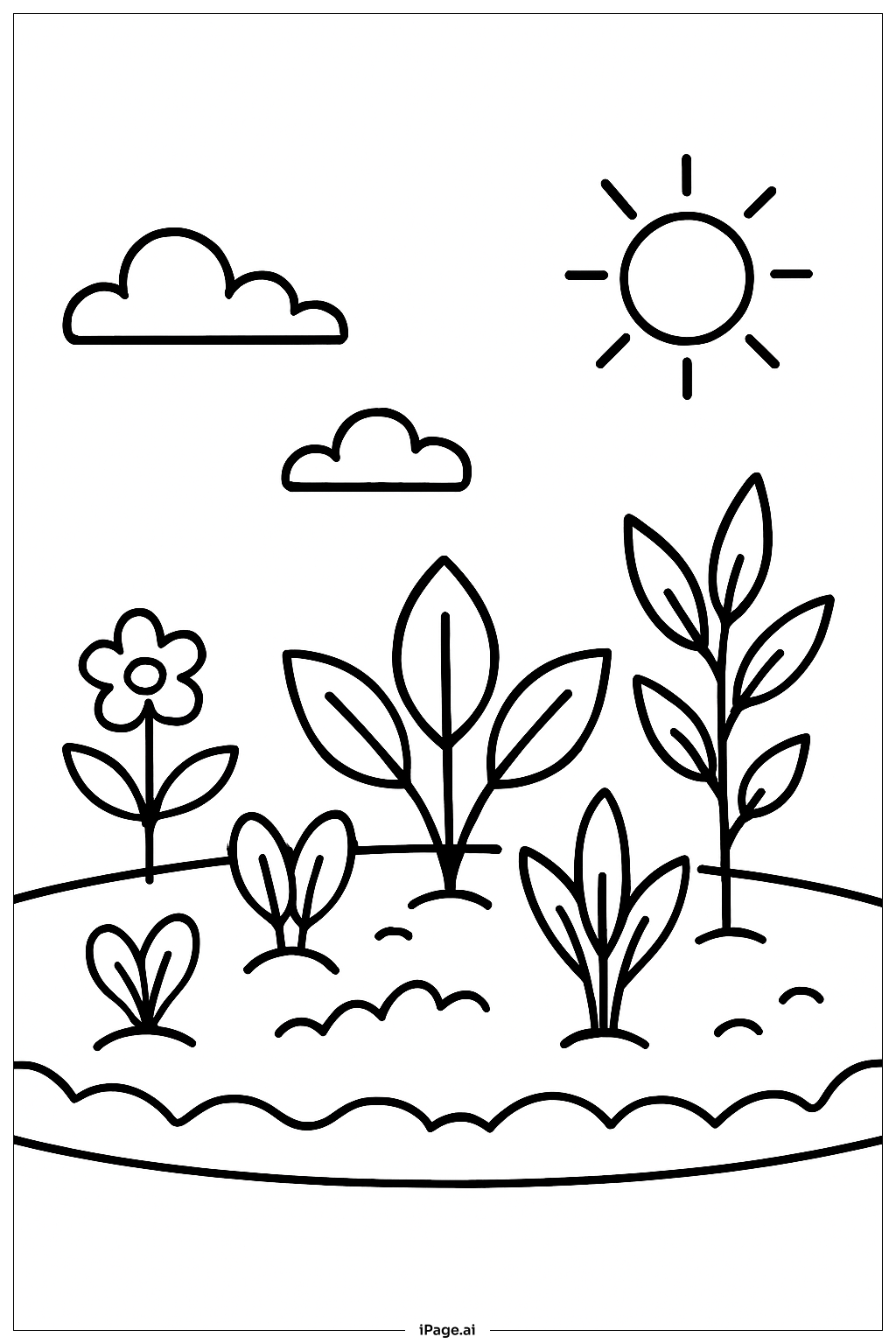
Use different shades of green for the leaves to make the garden look lively. Bright yellow or orange colors are good choices for the sun to show warmth. The flower can be colored with bright colors like red, pink, or purple to make it stand out. For the clouds, soft gray or light blue will create a gentle sky effect. Try to color inside the lines carefully and use lighter colors around the edges of the leaves for a glowing effect.
Coloring challenges: Which parts are difficult to color and need attention for Photosynthesis Garden with Patches coloring page?
1. Coloring the small leaves and flower petals can be tricky because they are small and require careful attention to stay inside the lines.
2. The sun has small lines around it which need steady hand control for neat coloring.
3. Coloring the clouds evenly without making them too dark or too light might be challenging.
4. Blending different shades of green to make the garden look realistic requires some skill.
5. Coloring the soil patches without crossing into the plants needs patience and control.
Benefits of coloring books: Advantages of drawing Photosynthesis Garden with Patches coloring page
Coloring this garden helps kids learn about plants and nature. It improves their fine motor skills by practicing careful coloring. This picture encourages creativity by allowing different color choices for plants and the sun. It also teaches patience and focus since coloring small details takes time. Overall, it’s a fun way to understand photosynthesis and enjoy art together.