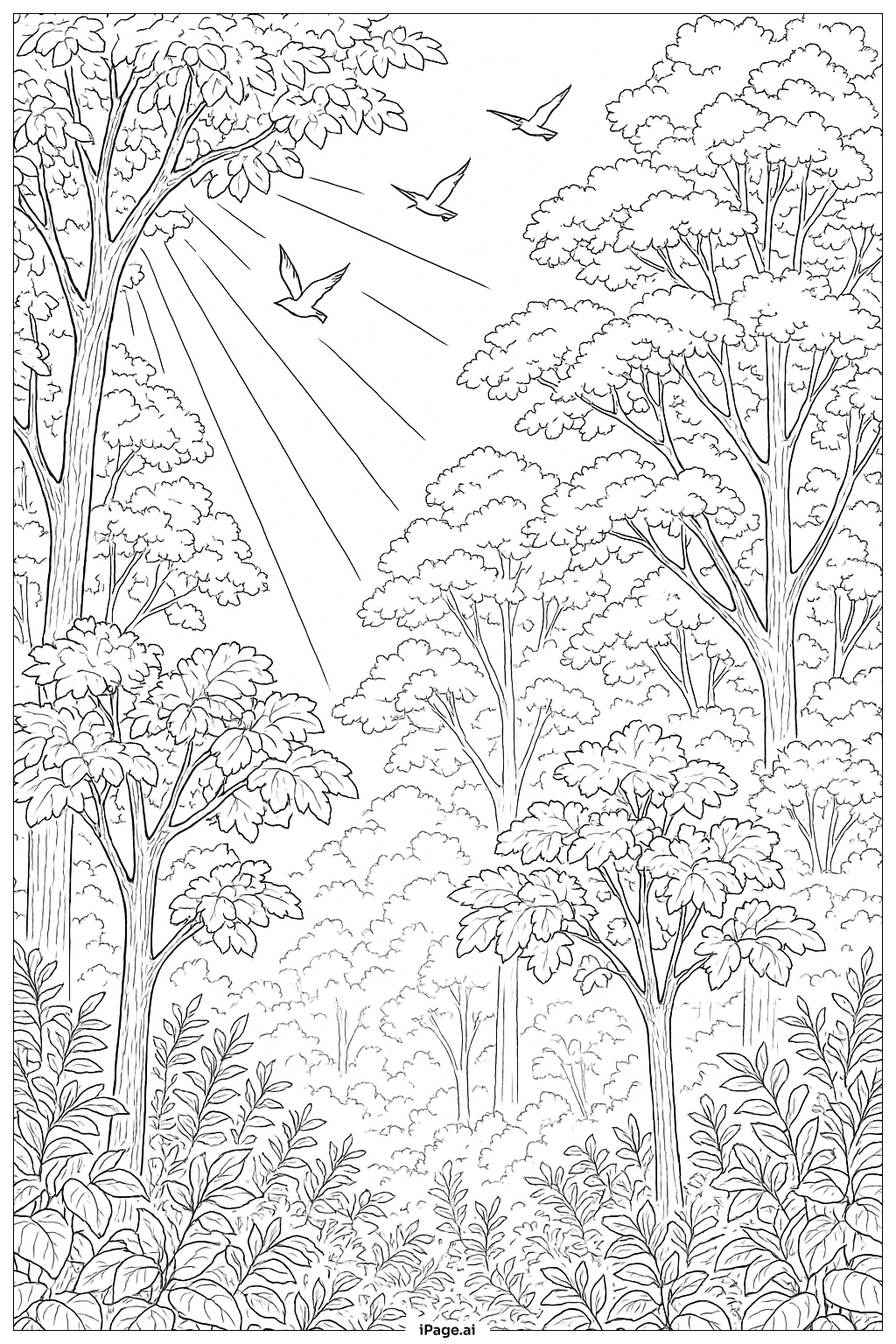
Coloring tips: How to color Photosynthesis Forest Canopy Scene coloring page well?
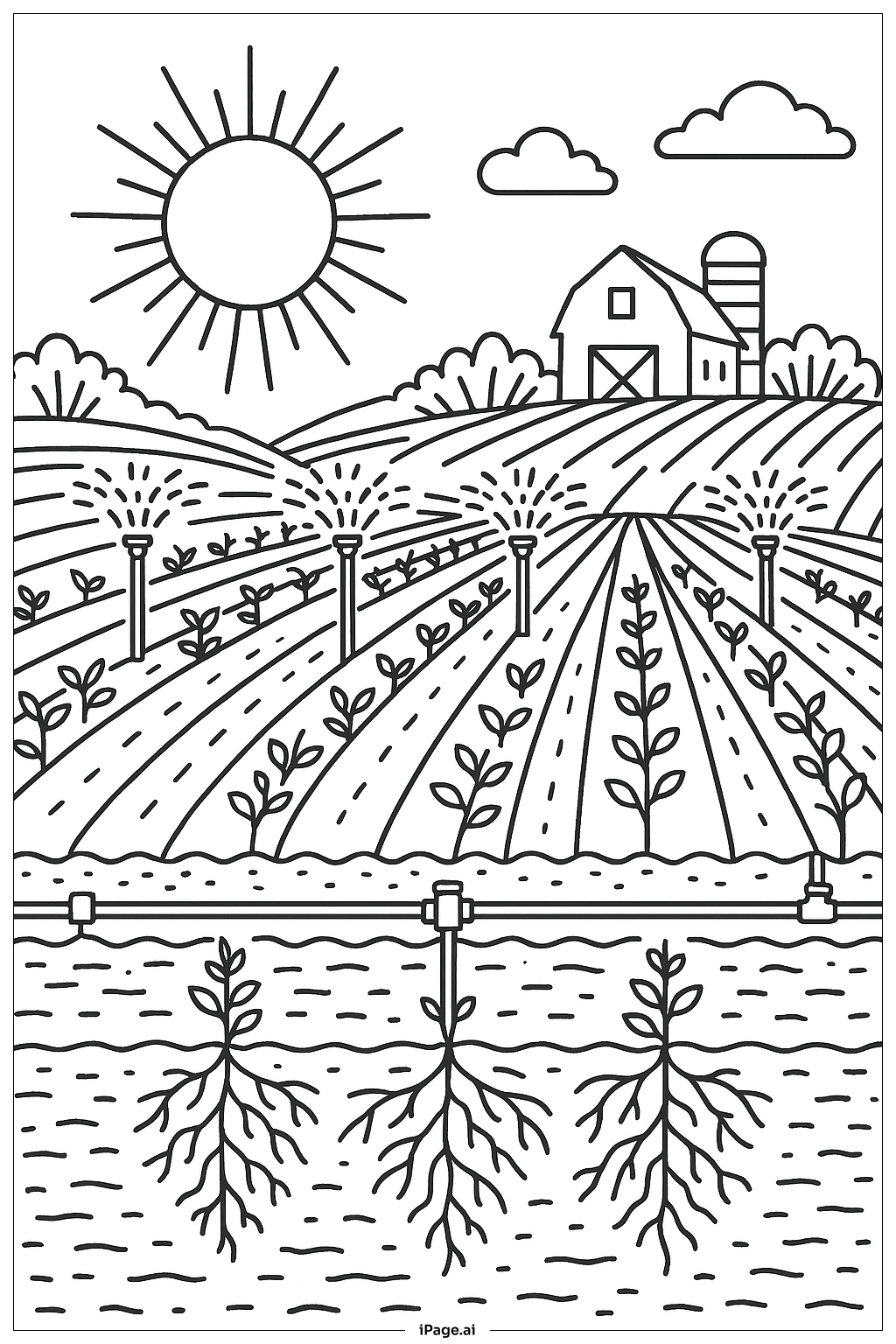
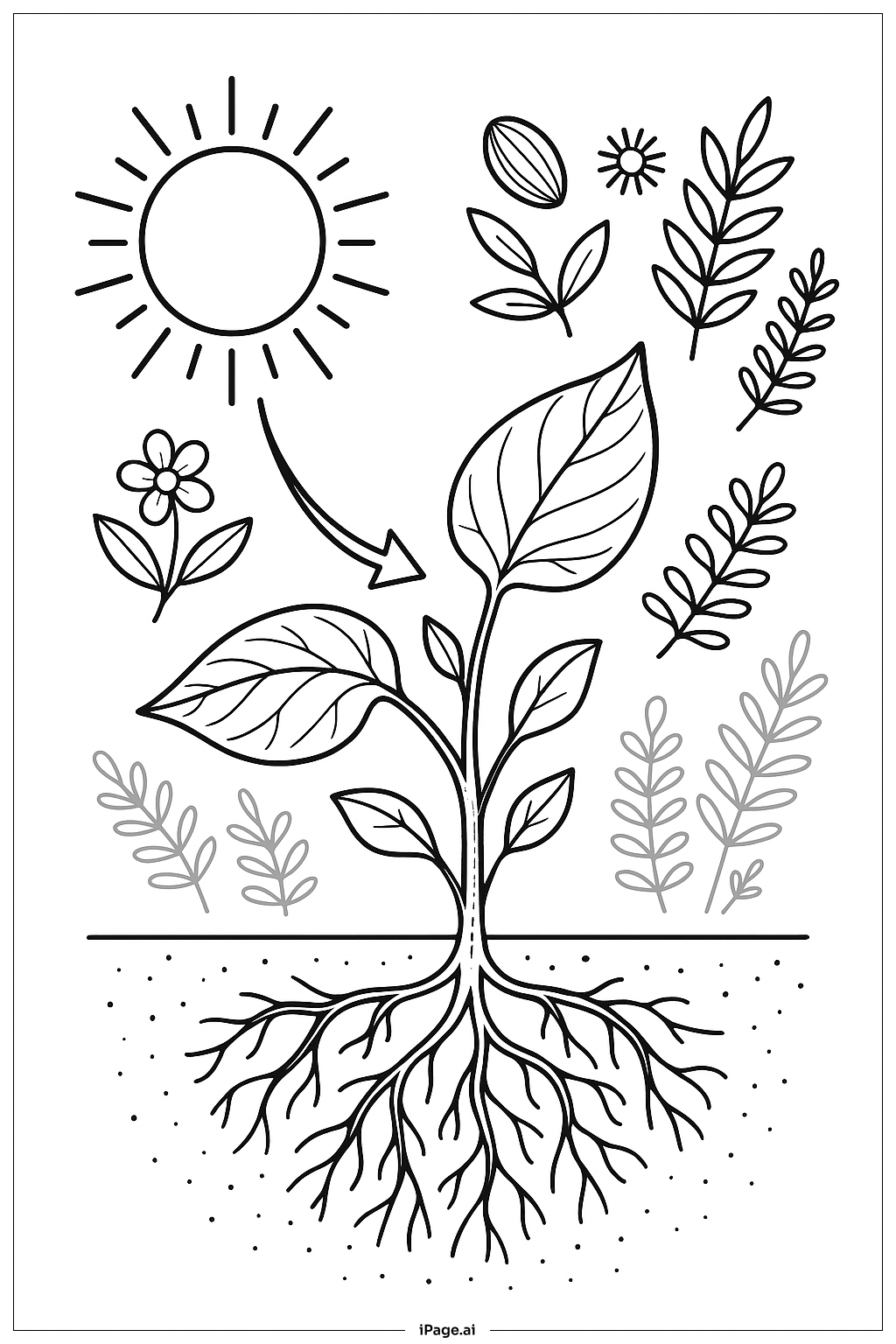
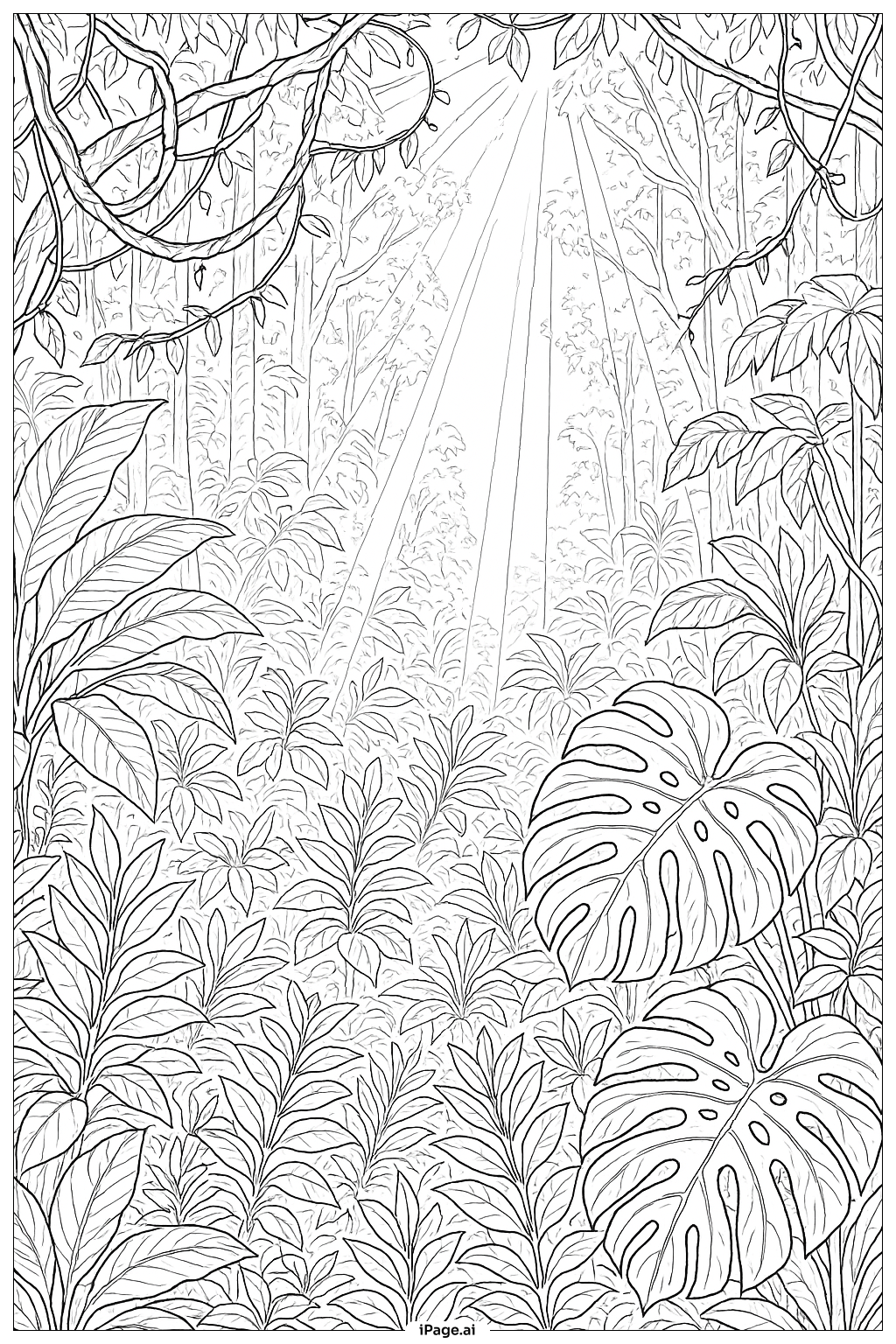
Start by coloring the sun with bright yellow and orange to emphasize its role as the energy source. Use various shades of green for the leaves, from light lime for younger leaves to deep forest green for mature foliage. This creates depth and dimension in the canopy. Color the tree trunks and branches in rich browns with darker shading on one side to show light direction. The sky can be colored in light blue or left partially white to represent bright daylight. For the scientific elements, use blue for water molecules, gray or blue for carbon dioxide, and light green or yellow for oxygen to make them stand out. Add touches of yellow-green where sunlight hits the leaves directly, showing active photosynthesis zones. The soil can be colored in dark brown with hints of orange and red.
Coloring challenges: Which parts are difficult to color and need attention for Photosynthesis Forest Canopy Scene coloring page?
• Layered Canopy Complexity: The overlapping leaves and branches create multiple layers that require careful color differentiation to maintain depth. Children need to decide which leaves are in front and which are behind, applying lighter shades to foreground elements and darker tones to background foliage. This spatial reasoning challenge helps develop their understanding of perspective while avoiding a flat, muddled appearance.
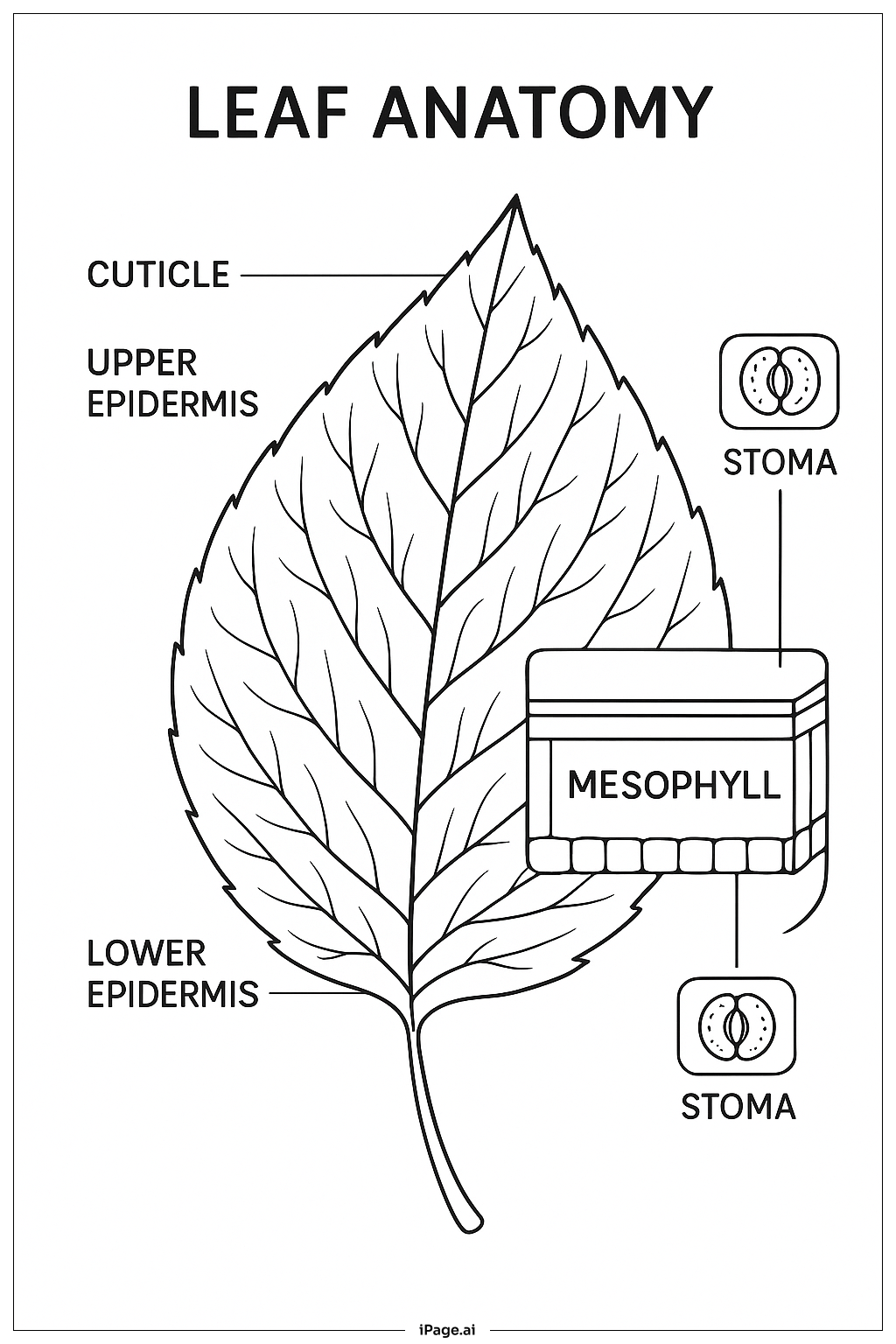
• Leaf Vein Details: Each leaf contains intricate vein patterns that are thin and delicate. Coloring these fine lines without going outside the boundaries requires steady hand control and patience. Younger children may find it challenging to use fine-tipped coloring tools accurately, while older children can practice precision by using different shades for the veins versus the leaf surface to create realistic botanical details.
• Light and Shadow Gradients: Representing how sunlight filters through the canopy requires blending techniques to show gradual transitions from bright to shaded areas. This involves understanding where light hits directly and where shadows naturally fall, then applying pressure variations or color layering to achieve smooth gradients rather than harsh lines between light and dark zones.
• Scientific Element Integration: The molecular representations of carbon dioxide, oxygen, and water need to be colored distinctly from the natural elements while remaining visually harmonious. Children must balance educational accuracy with artistic creativity, ensuring these scientific components stand out for learning purposes without overwhelming the natural beauty of the forest scene.
Benefits of coloring books: Advantages of drawing Photosynthesis Forest Canopy Scene coloring page
Coloring this photosynthesis scene provides excellent educational value by making abstract scientific concepts visually concrete. Children learn about the essential process that sustains life on Earth while engaging in a creative activity. The detailed leaves and branches improve fine motor skills and hand-eye coordination, especially when working on intricate vein patterns and small molecular structures. The layered composition encourages spatial awareness and planning as children decide their color strategy for overlapping elements. This scene also promotes environmental awareness, helping children appreciate how trees produce oxygen and the importance of forests. The combination of natural and scientific elements supports STEM learning in an accessible, artistic format. Additionally, the complexity of the canopy provides varying difficulty levels, allowing children to choose detailed areas for focused work or larger sections for quicker coloring, making it suitable for different age groups and skill levels. The calming nature theme can also reduce stress and promote mindfulness.