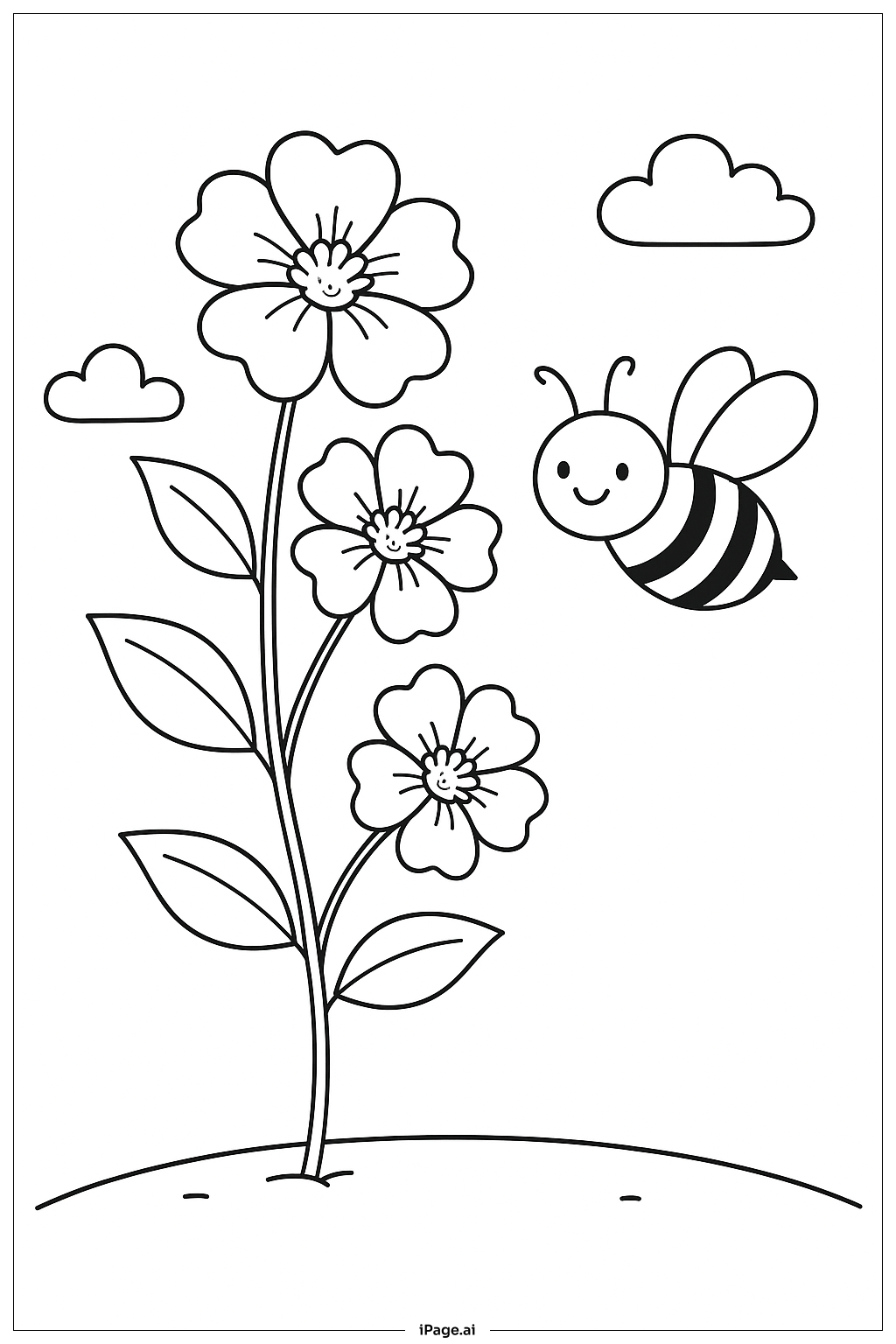
Coloring tips: How to color Photosynthesis Flower and Bee coloring page well?
Use bright colors for the flowers like red, yellow, or pink to make them stand out. Color the leaves green to show healthy plants. For the bee, use yellow and black stripes to make it look realistic. The clouds can be colored light blue or left white to keep the sky bright. Try to color inside the lines carefully to make the picture neat. You can also add your own small details like grass or a sun to make the picture more lively.
Coloring challenges: Which parts are difficult to color and need attention for Photosynthesis Flower and Bee coloring page?
1. The petals of the flowers have small lines and smiling faces, which need careful coloring to avoid overlapping colors.
2. The bee’s stripes are narrow and close together, so coloring them neatly without mixing colors can be tricky.
3. The leaves are small and have thin lines inside that require attention to detail.
4. Coloring inside the small spaces like between the flower petals and bee wings needs steady hand control.
5. Adding colors to make the picture look balanced and natural might be challenging for beginners.
Benefits of coloring books: Advantages of drawing Photosynthesis Flower and Bee coloring page
Coloring this picture helps children improve their hand-eye coordination and fine motor skills. It also encourages creativity by choosing colors for flowers, leaves, and the bee. The image teaches about nature, showing how flowers and bees work together. Coloring the smiling faces on flowers can make the activity fun and engaging, reducing stress and promoting focus. Overall, it is a great way to learn while having fun.



