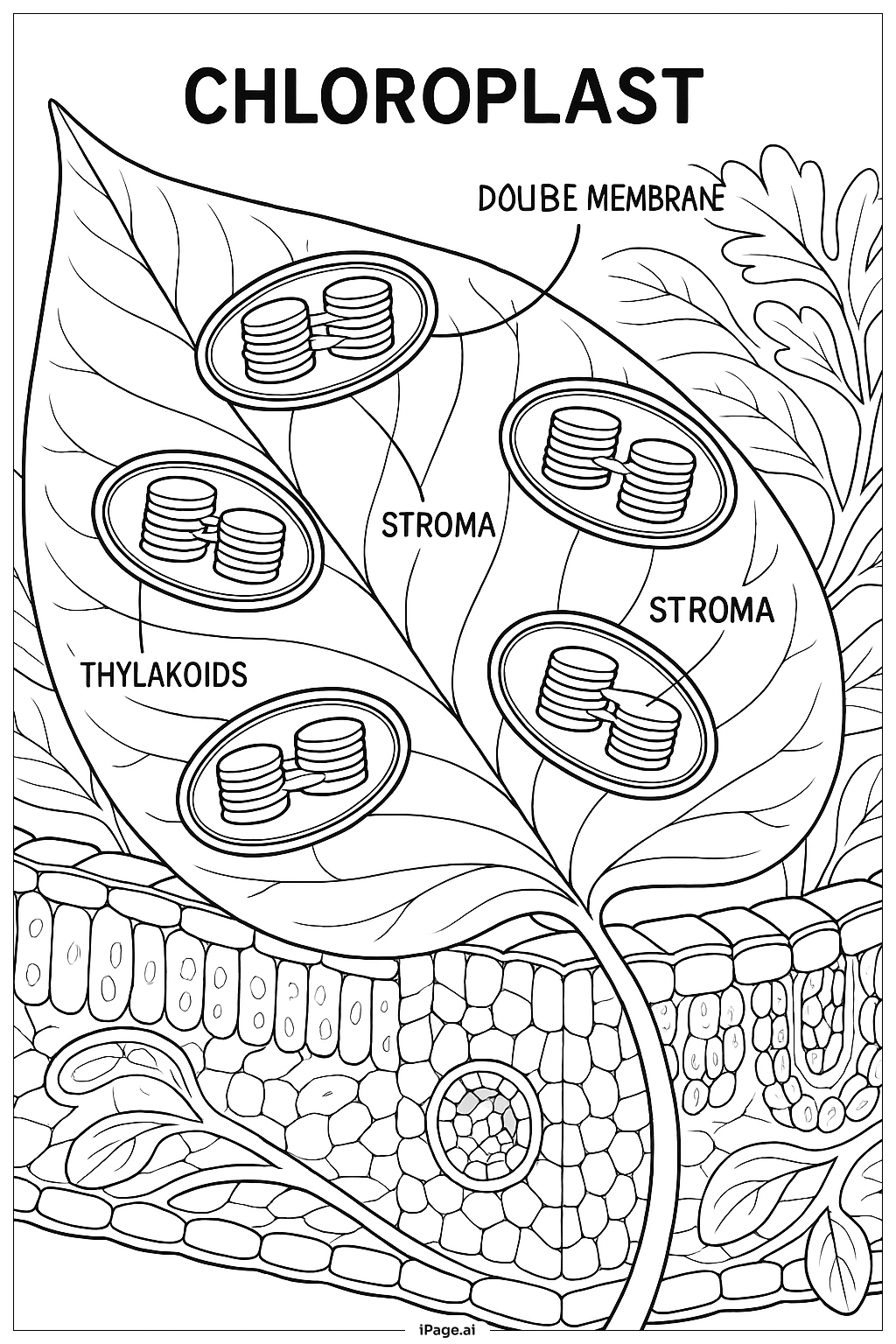
Coloring tips: How to color Photosynthesis Chloroplast View coloring page well?
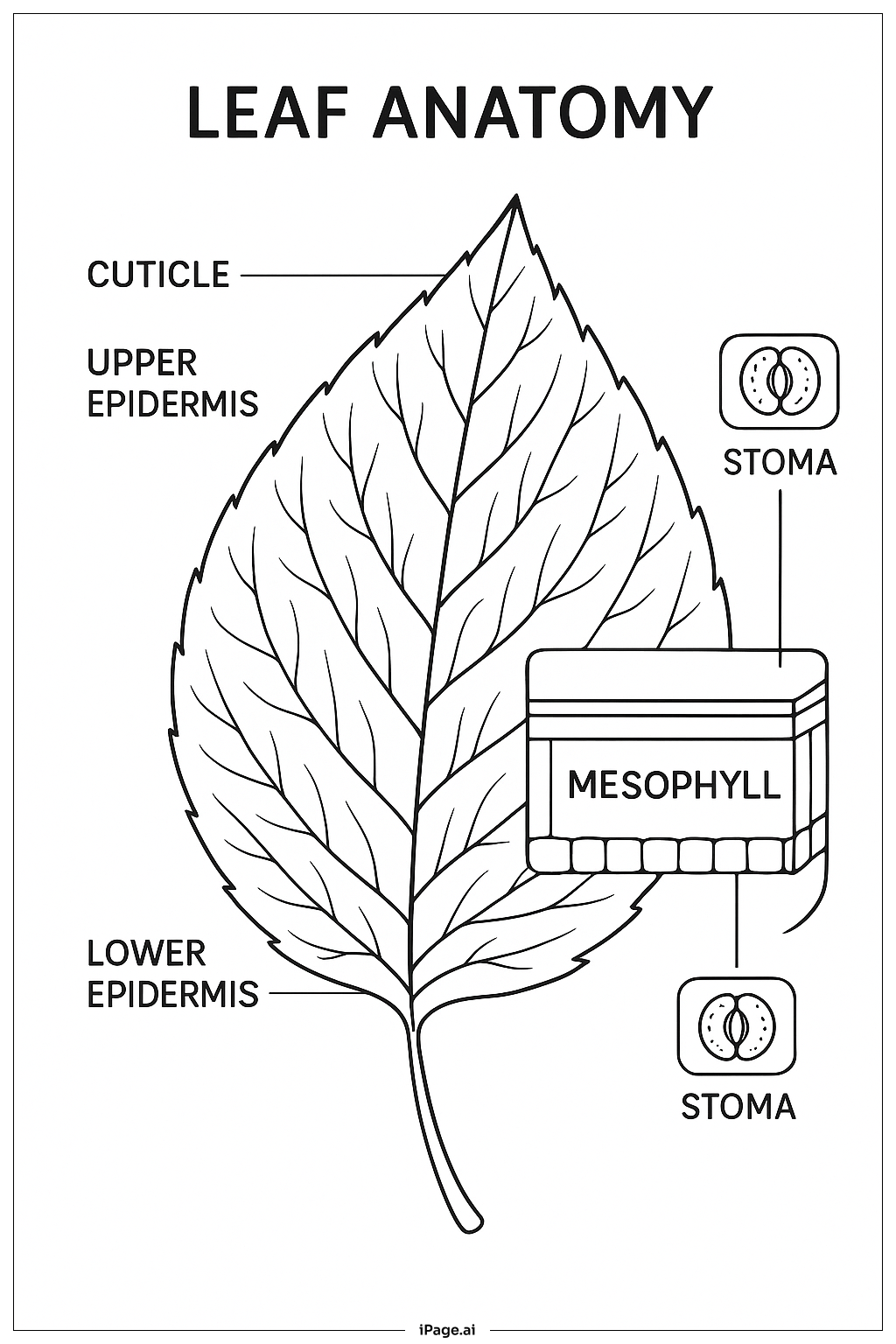
Use green shades for the leaf to give it a natural look. Color the chloroplast membranes in light green or yellow-green to highlight them. The thylakoids stacks inside chloroplasts can be colored in darker green or even light blue for contrast. Use soft brown or light purple for the plant cells at the bottom to show soil or cell structure. Try to color neatly and stay inside the lines to show the detailed parts clearly. You can add shading to give a 3D effect.
Coloring challenges: Which parts are difficult to color and need attention for Photosynthesis Chloroplast View coloring page?
1. Small details in the thylakoids can be tricky to color precisely.
2. The many veins and small cell shapes require careful coloring to avoid mixing colors.
3. Differentiating the double membrane from the rest of the chloroplast may be confusing.
4. The layers of cells at the bottom have many tiny parts and shapes that need attention.
5. Maintaining consistent color tones across the large leaf and small parts needs patience.
Benefits of coloring books: Advantages of drawing Photosynthesis Chloroplast View coloring page
Coloring this picture helps children learn about plant biology and photosynthesis while having fun. It improves hand-eye coordination and fine motor skills. The detailed image encourages focus and concentration. Coloring different parts with different shades teaches attention to detail and color recognition. It also boosts creativity as kids decide how to color the cellular structures. Overall, it makes learning science more enjoyable and interactive.