Coloring tips: How to color Photosynthesis Backyard Plant Scene coloring page well?
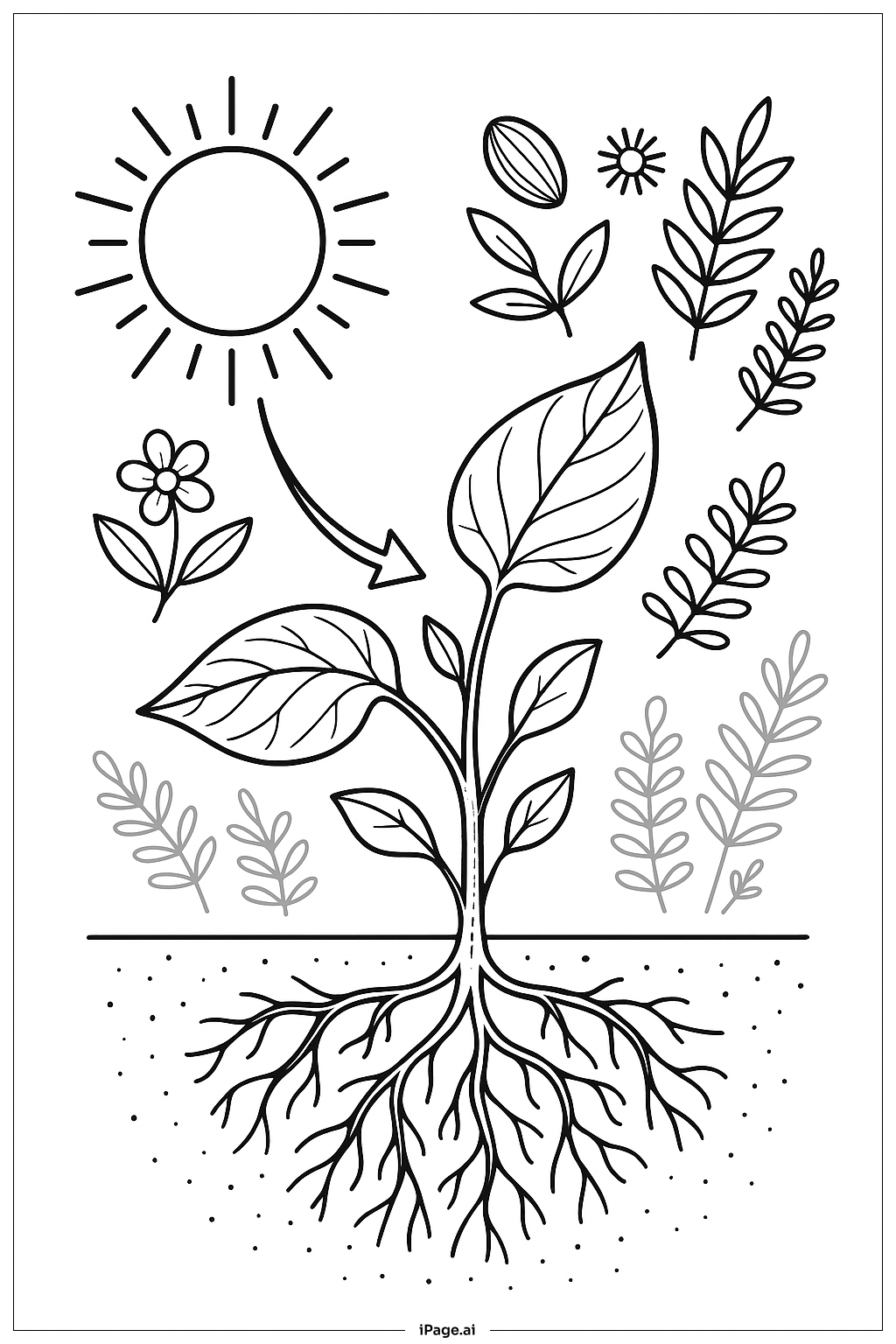
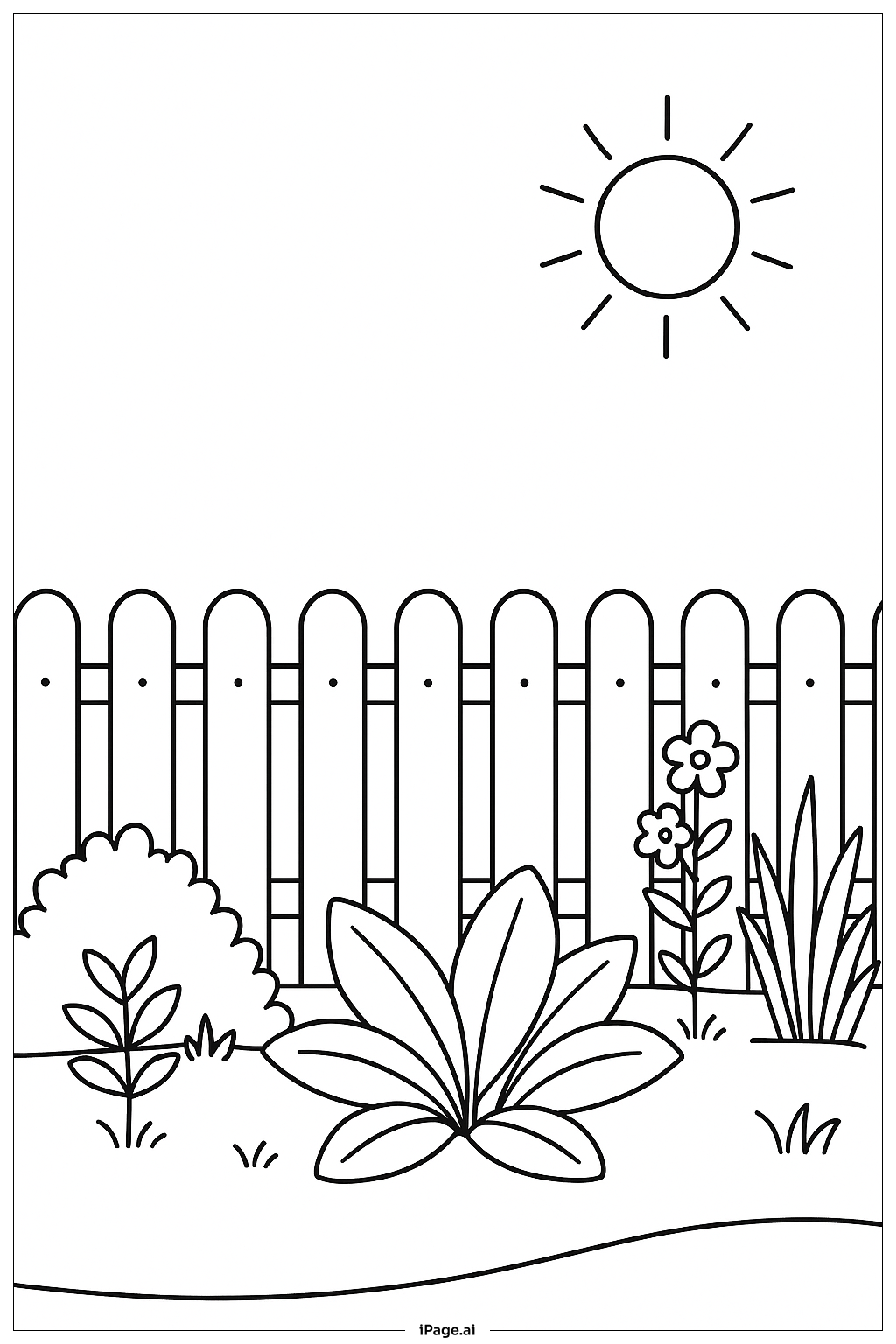
Use bright greens for the leaves and grasses to show healthy plants. For the flowers, try using cheerful colors like yellow, pink, or red to make them stand out. Color the bushy plant with darker greens and the tall grass in lighter green shades. The wooden fence can be brown or beige to look natural. The sun should be bright yellow with orange rays. For the ground, use light brown or green to represent soil and grass. Add some blue in the sky if you want to add more details. Use crayons or colored pencils for better control around the small leaves and flowers.
Coloring challenges: Which parts are difficult to color and need attention for Photosynthesis Backyard Plant Scene coloring page?
1. Small flower shapes require careful coloring to stay within the lines.
2. The thin lines in the sun’s rays may be hard to color without going outside the lines.
3. The overlapping leaves in the big plant need attention to color each leaf differently.
4. Coloring the wooden fence evenly can be challenging because of its many sections.
5. The small grass patches need delicate strokes to avoid messy coloring.
Benefits of coloring books: Advantages of drawing Photosynthesis Backyard Plant Scene coloring page
Coloring this picture helps children learn about nature and plants. It encourages focus and fine motor skills when coloring small and detailed areas. It also promotes creativity in choosing colors for different plants and the sun. This activity can teach kids about photosynthesis by connecting the sunny scene with how plants grow. Overall, coloring this garden scene is fun and educational, helping children relax while learning.