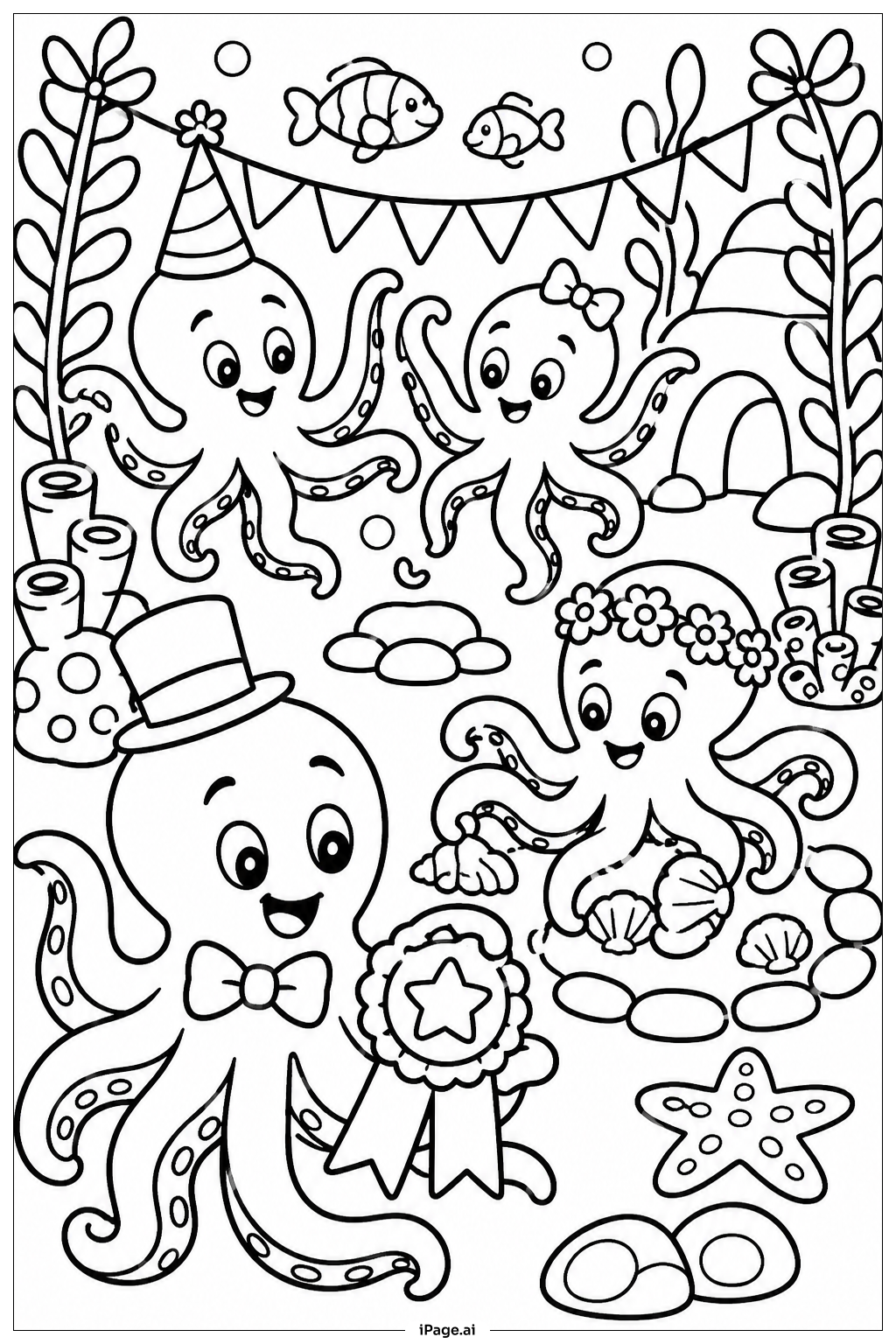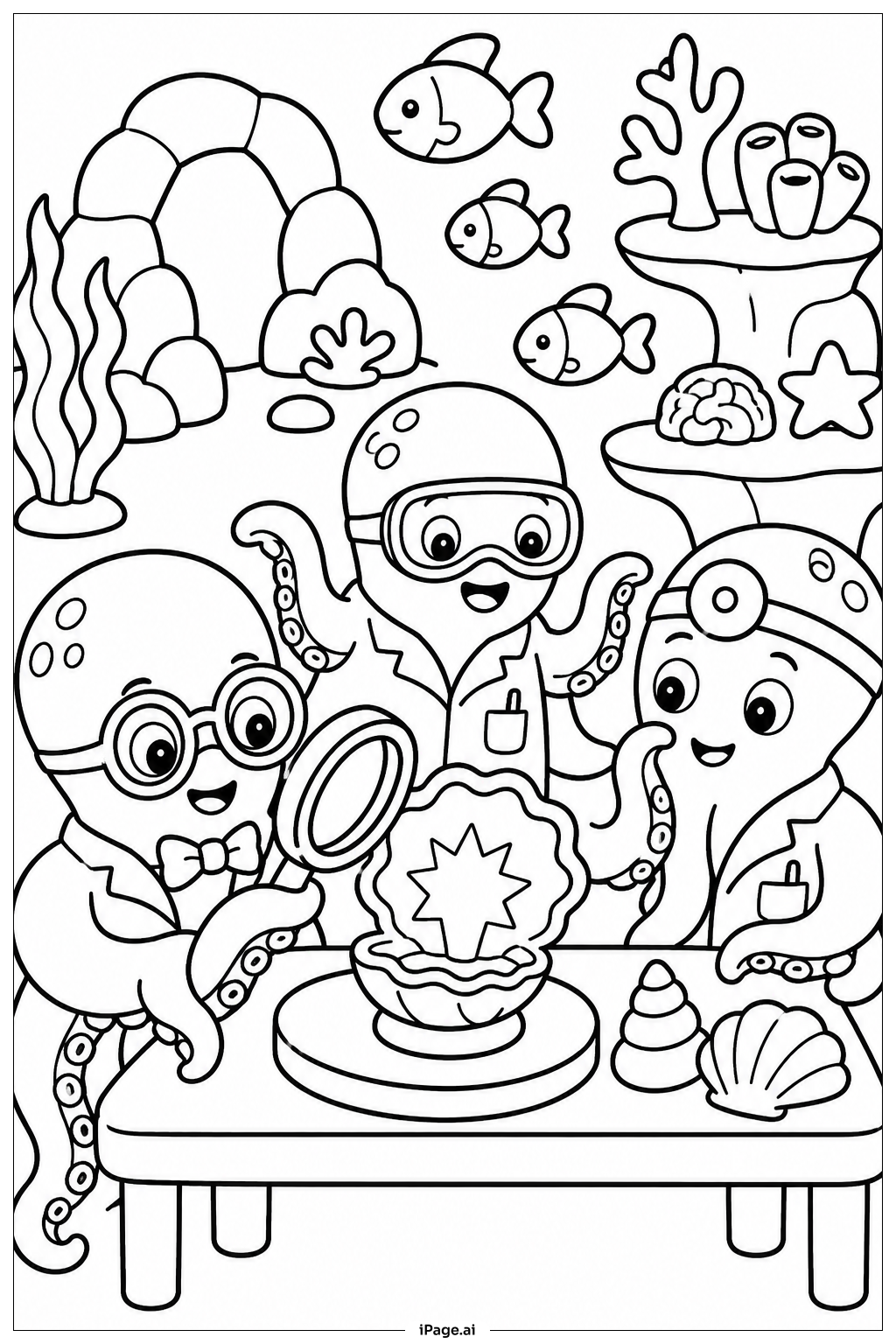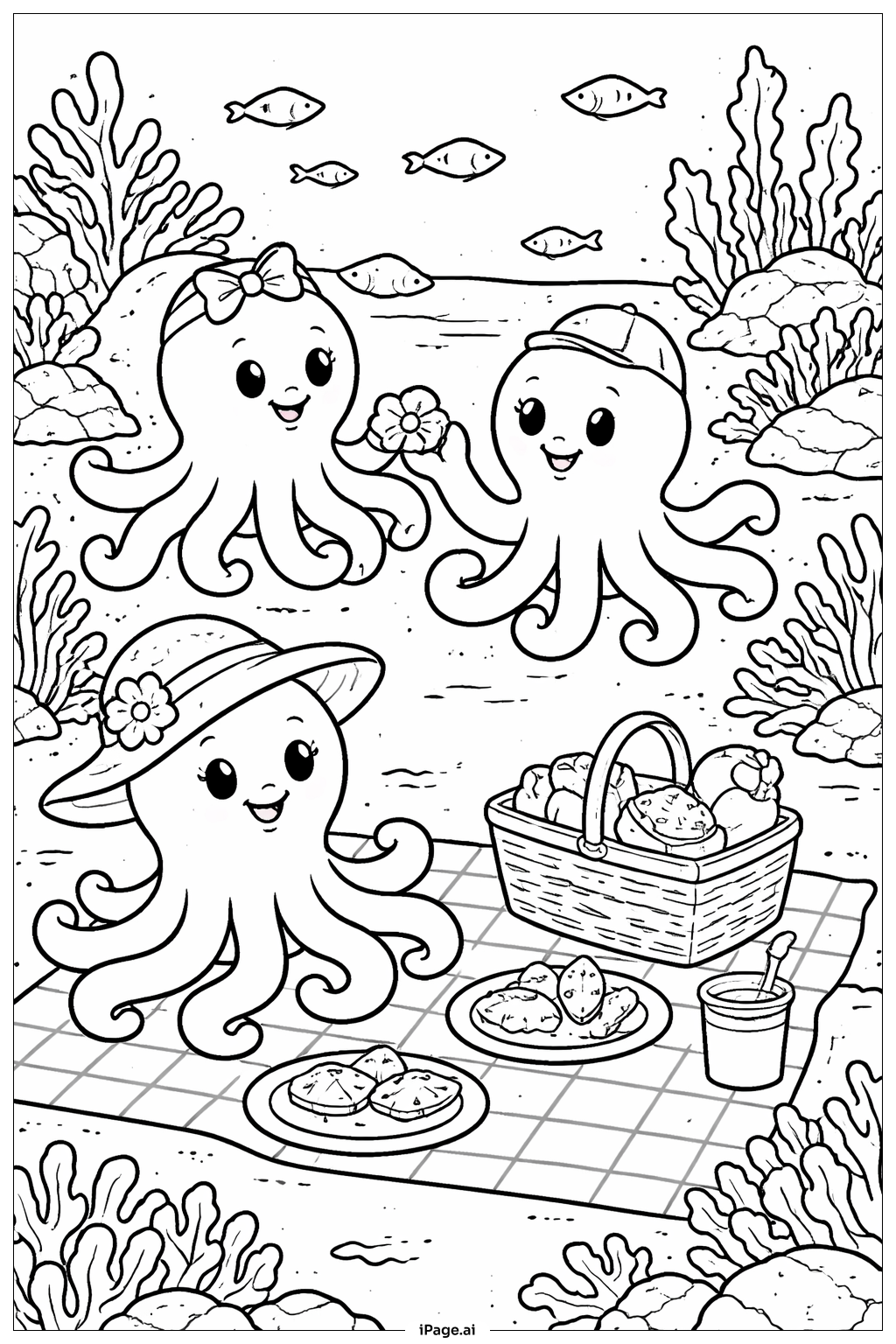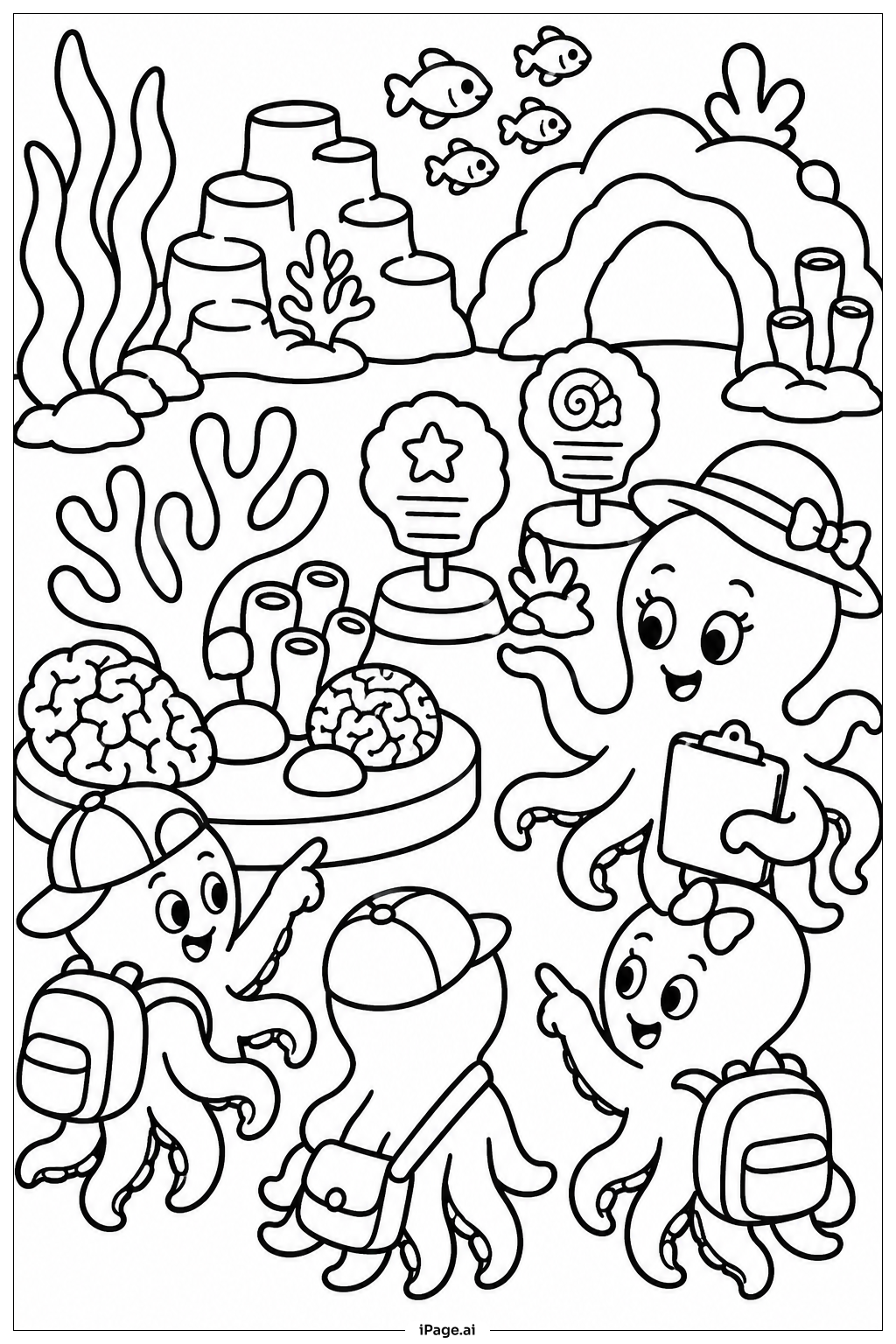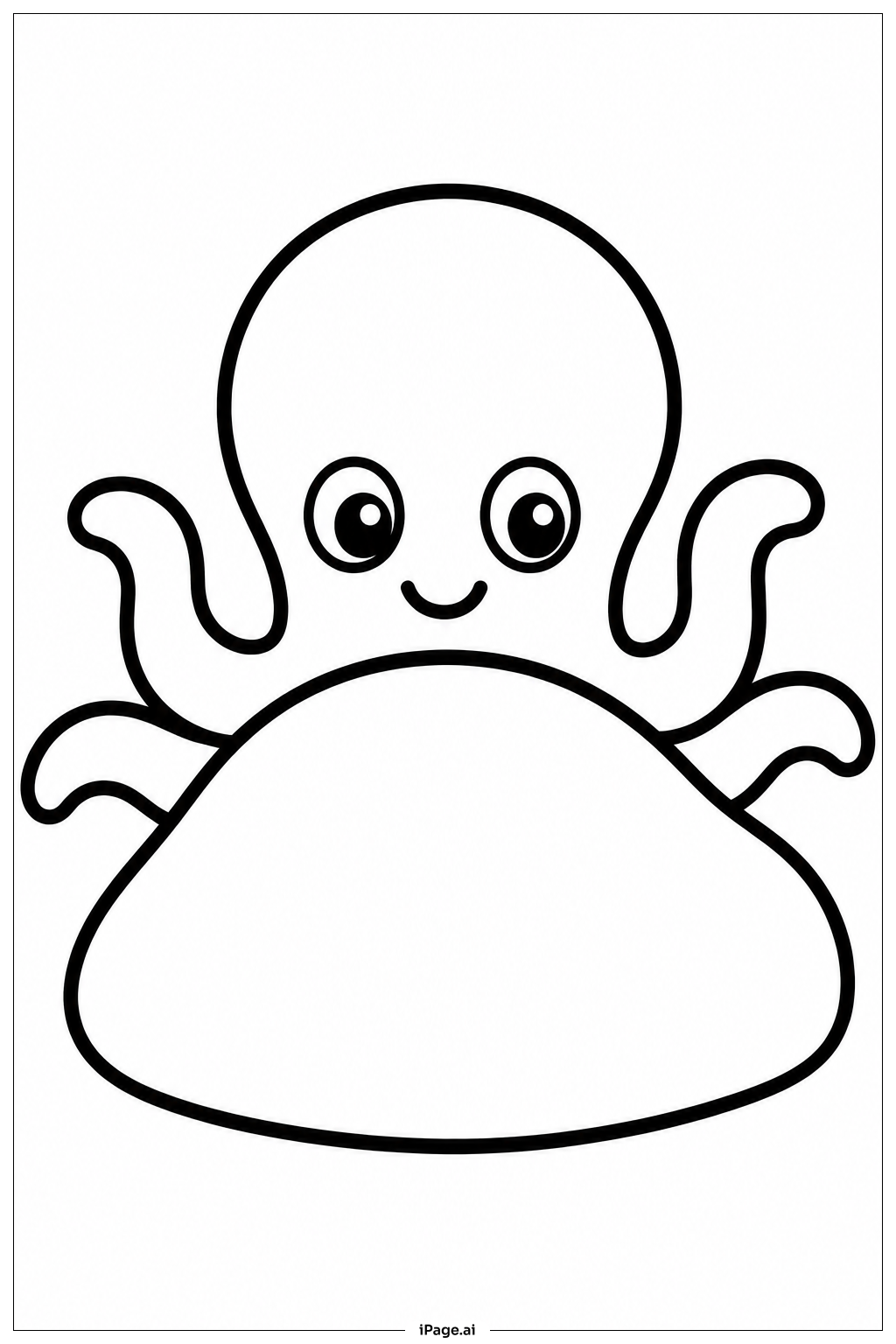
Coloring tips: How to color Octopus Peeking coloring page well?
Start with the octopus's body and head. Octopuses can be many colors — try a classic orange or red, or go creative with purple, pink, or even blue! Use a slightly darker shade on the underside of the tentacles to show depth. Color the suction cups in a lighter tone, like pale yellow or cream, to make them stand out. For the eyes, use bright white for the whites and a deep color like brown or black for the pupils. Add a fun sparkle dot in white to make the eyes look alive. Color the rock or coral in earthy grays, browns, or warm sandy tones. Use greens and dark teals for the seaweed. Fill the water background with soft light blue or aqua. Add bubbles in pale blue or leave them white with a light outline. Feel free to mix colors and experiment — there are no wrong choices in coloring!
Coloring challenges: Which parts are difficult to color and need attention for Octopus Peeking coloring page?
Coloring this image comes with a few fun challenges to keep in mind:
• **Tentacle Details and Suction Cups:** The octopus's tentacles are filled with rows of small suction cups. Staying inside these tiny circular shapes requires a fine-tipped colored pencil or marker. Rushing through this section can cause colors to bleed outside the lines, so take your time and work slowly from one suction cup to the next.
• **Creating Depth on the Body:** An octopus has a rounded, three-dimensional body. To make it look full and lifelike rather than flat, you'll need to use at least two shades of the same color — a lighter tone for the top and a darker tone for the sides and underside. Blending these smoothly can be tricky, especially for younger colorists.
• **The Rock or Coral Formation:** The rock has an uneven, textured surface with many small bumps and crevices. Coloring each section individually while keeping the overall shape looking natural takes patience. Using short, light strokes in different directions can help mimic the rough texture of real rock.
• **Layering the Background:** The underwater background involves multiple overlapping elements — water, bubbles, seaweed, and the ocean floor. Deciding which element goes in front of another and keeping colors from clashing requires some planning before you start. Lightly sketching which areas get which color first can help avoid mistakes.
• **Small Facial Features:** The octopus's eyes and smile are small but expressive. Coloring them neatly without smudging the surrounding areas is a precise task, especially when using markers or paint.
Benefits of coloring books: Advantages of drawing Octopus Peeking coloring page
Coloring this fun octopus page offers a wonderful range of benefits for kids and beginners alike.
**Builds Fine Motor Skills:** Carefully coloring the tiny suction cups and curling tentacles trains hand muscles and improves pencil control — skills that directly support handwriting and drawing.
**Sparks Creativity:** There is no single "right" color for an octopus! Kids are free to choose wild, imaginative color combinations, which builds creative confidence and encourages self-expression.
**Teaches Ocean Science:** As children color, parents and teachers can share fun facts about real octopuses — like how they can change color, have three hearts, and are incredibly intelligent. Learning through art makes facts stick.
**Improves Focus and Patience:** Working through the detailed tentacles and background elements requires sustained attention. This gentle practice helps children develop the ability to concentrate on a task from start to finish.
**Reduces Stress:** The calm, repetitive motion of coloring is naturally soothing. It helps children (and adults!) slow down, breathe, and enjoy a quiet, screen-free activity.
**Encourages Color Theory:** Choosing shades for the water, rock, and octopus introduces basic color concepts like warm vs. cool tones and light vs. shadow in a hands-on, enjoyable way.