Coloring tips: How to color Octopus Science Team coloring page well?
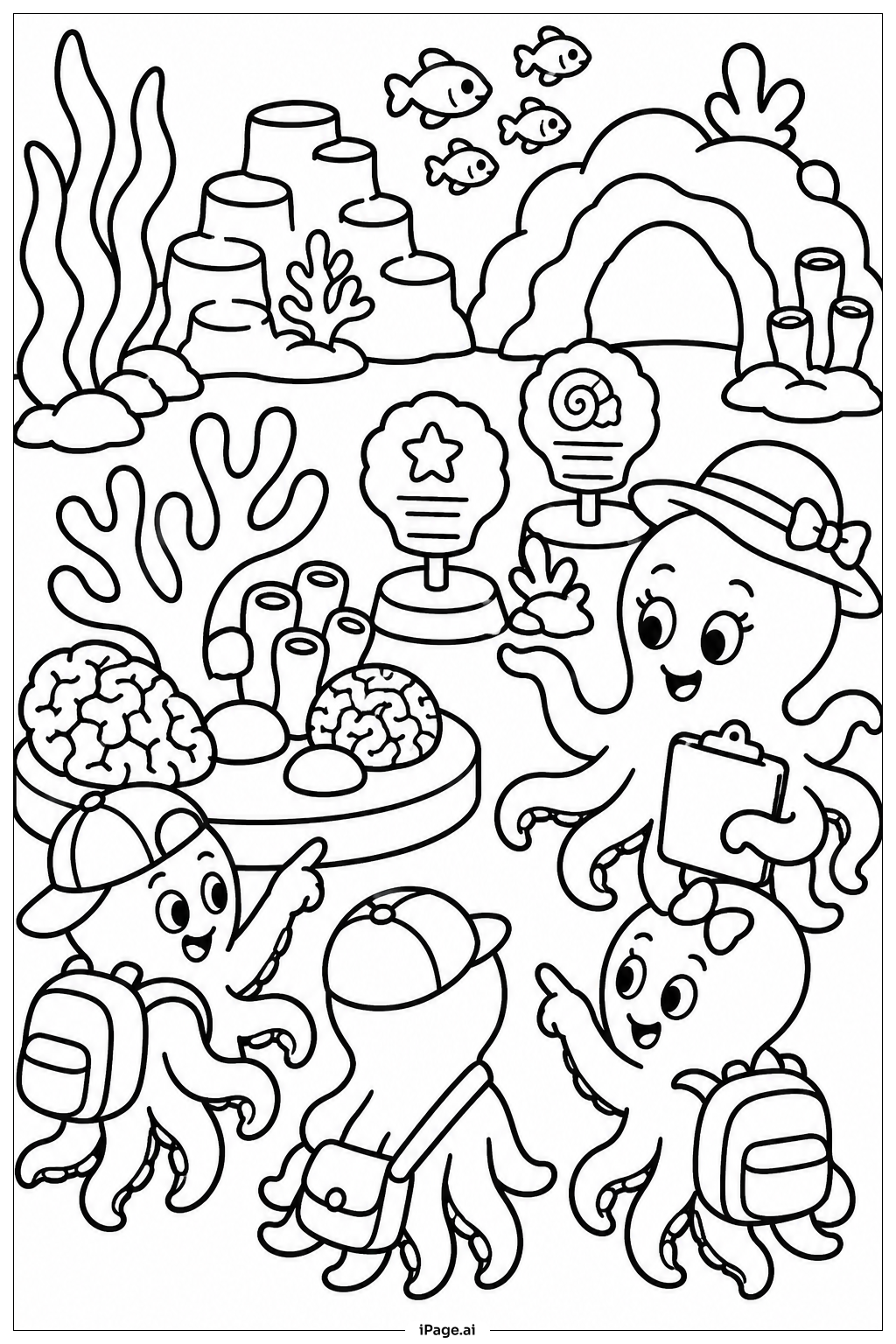
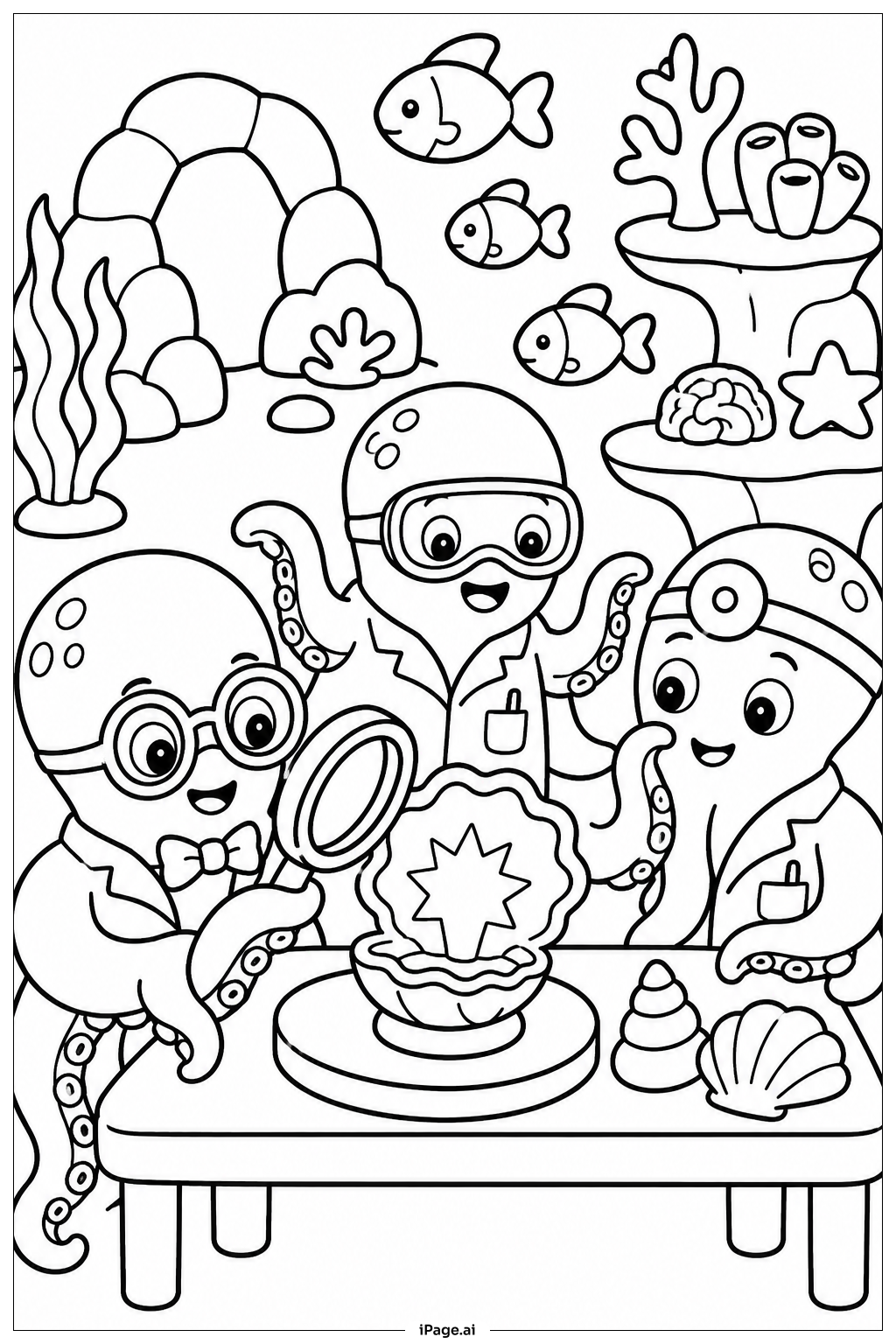
Start with the octopuses' bodies. You can make each one a different color — try purple, orange, pink, or teal to give each scientist its own identity. Use a lighter shade for the belly area to add depth. Color the lab coats white or light gray, with tiny colored buttons or pockets for fun details. The goggles can be yellow or light blue to make them pop. Use bright colors for the science tools — red and orange for test tubes, green for beakers, and yellow for stars or chemical symbols. The background bubbles look great in pale blue or soft lavender. Try to use many different colors throughout so the whole scene feels energetic and cheerful. Colored pencils work well for small details, while markers are great for filling in larger areas of the octopus bodies.
Coloring challenges: Which parts are difficult to color and need attention for Octopus Science Team coloring page?
• Tentacle Complexity: Each octopus has multiple tentacles, and many of them are holding different objects. Staying inside the lines while coloring each individual tentacle can be tricky, especially where they overlap or curl around tools. Take your time and use a sharpened colored pencil for these areas.\n\n• Small Science Tools: The beakers, test tubes, magnifying glasses, and notebooks are drawn at a small scale. Filling these tiny objects with accurate colors without going outside their outlines requires a fine-tipped tool and a steady hand. Consider using thin markers or fine-point colored pencils.\n\n• Lab Coat Details: The white lab coats sit right against the octopuses' bodies. Keeping the coat white while adding shading or tiny details like buttons and pockets takes careful planning. You may want to lightly shade the coat edges with pale gray to show folds without losing the white feel.\n\n• Overlapping Characters: The octopuses are grouped together, and their tentacles and accessories overlap in several places. Deciding which element goes in front and coloring accordingly — using slightly darker tones for areas in shadow — helps create a sense of depth and keeps the image from looking flat.\n\n• Background Decoration: Bubbles, stars, and floating symbols fill the background around the characters. These small scattered elements need to be colored carefully so they stand out without overpowering the main characters. Light, airy colors work best here to keep the focus on the science team.
Benefits of coloring books: Advantages of drawing Octopus Science Team coloring page
Coloring this Octopus Science Team page offers a wonderful mix of fun and learning for kids of all ages. Working through the many details — tentacles, lab coats, and tiny science tools — helps build fine motor skills and improves hand-eye coordination. Choosing colors for each octopus encourages creative thinking and sparks imagination. Kids can explore color theory by experimenting with shading and contrast between the characters and the background. The science theme also gently introduces children to the idea of curiosity and discovery, making it a great conversation starter about scientists and how we learn about the world. For older children and teens, the layered details provide a satisfying challenge that builds patience and focus. Completing a detailed page like this gives a real sense of accomplishment and boosts confidence. For younger children, the large expressive faces and chunky shapes are easy to engage with and keep them entertained. Overall, this page turns coloring time into a creative, educational, and joyful experience.