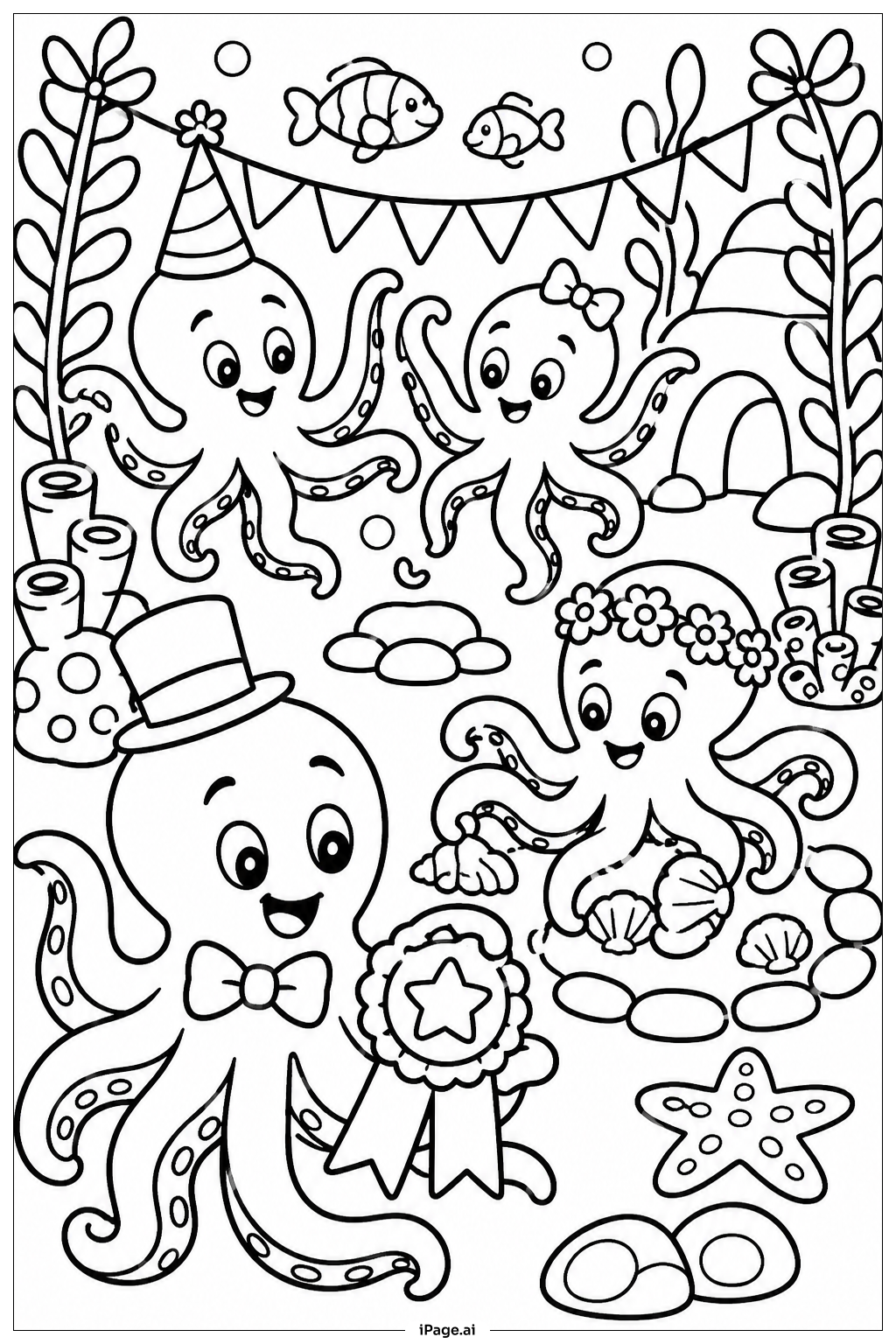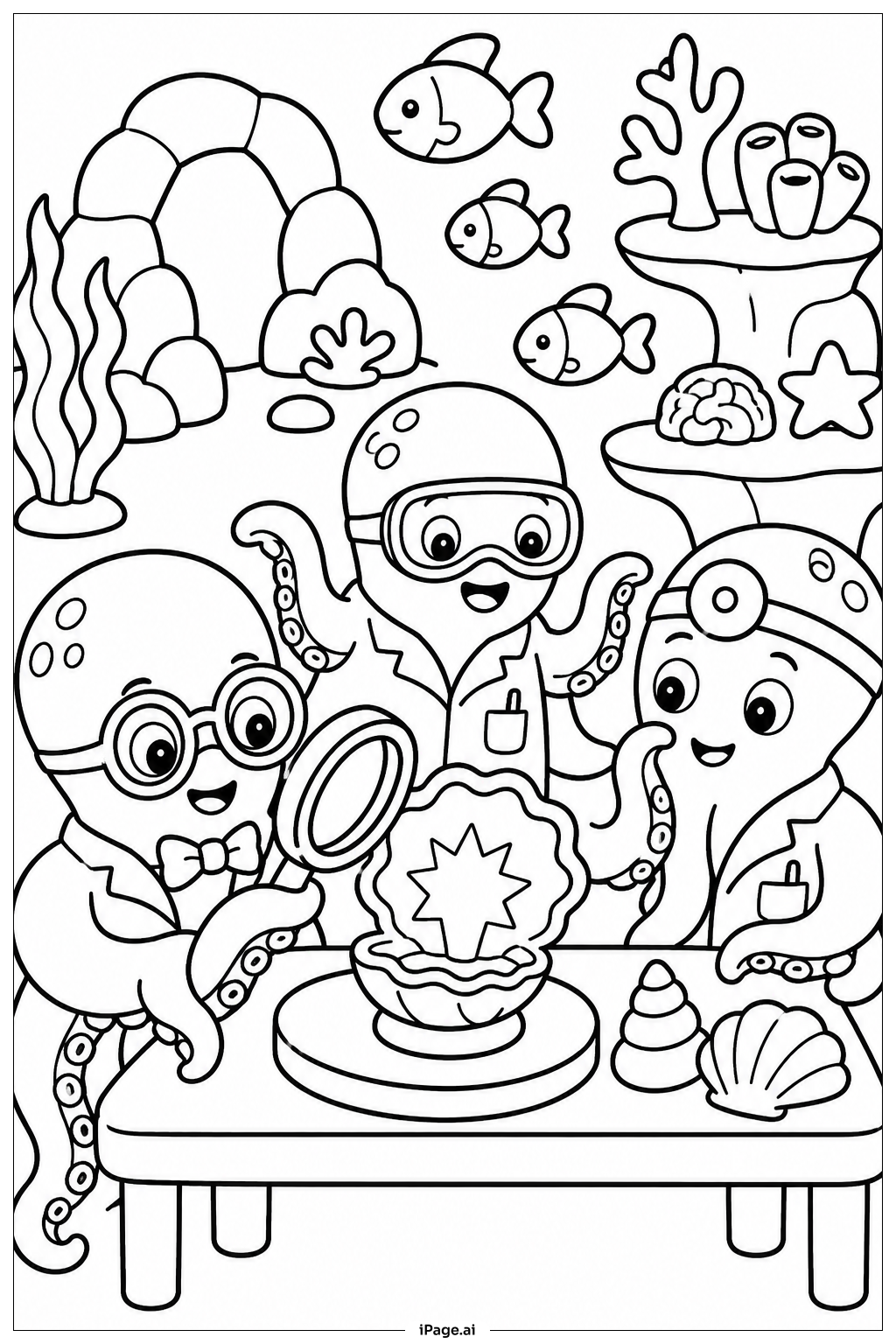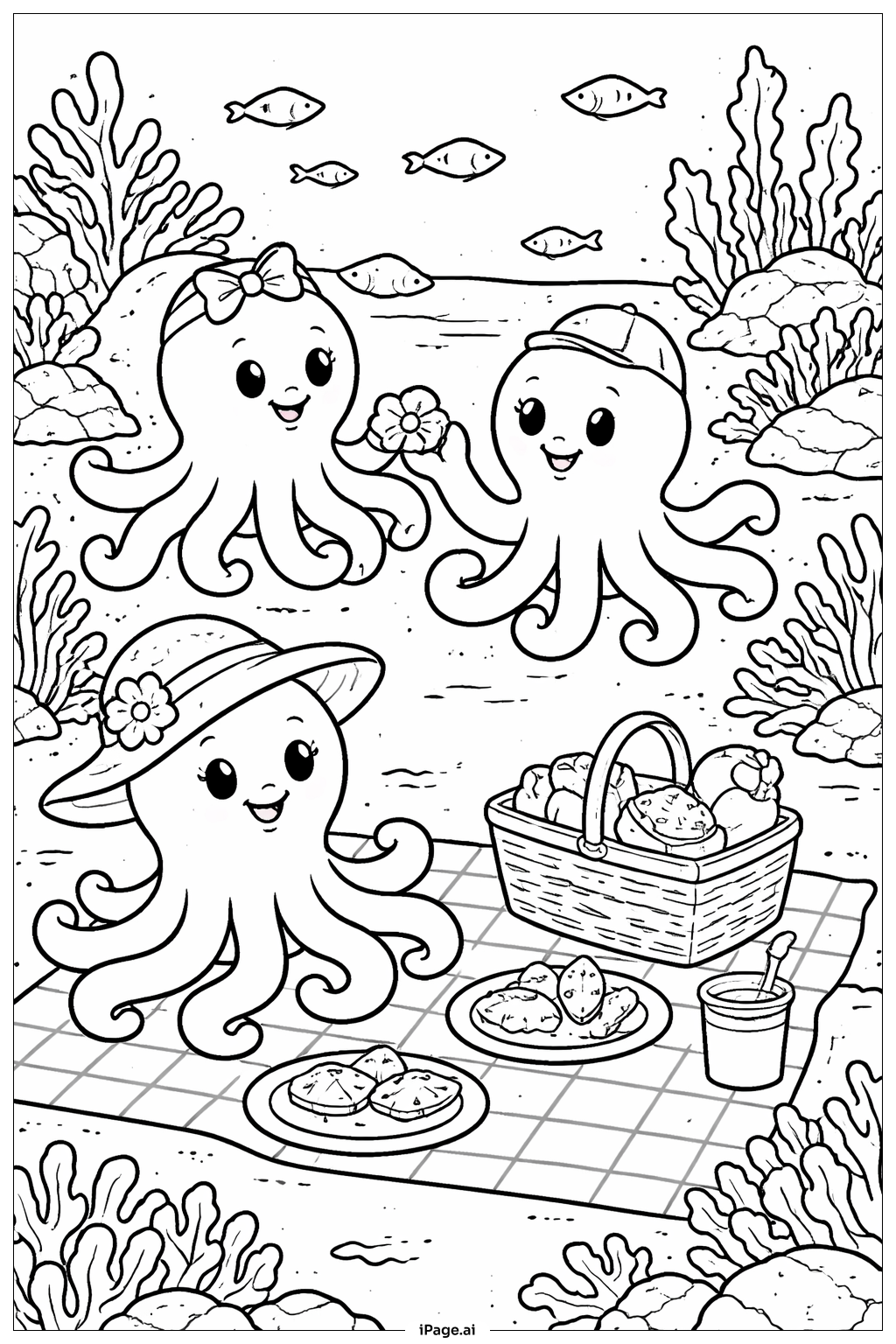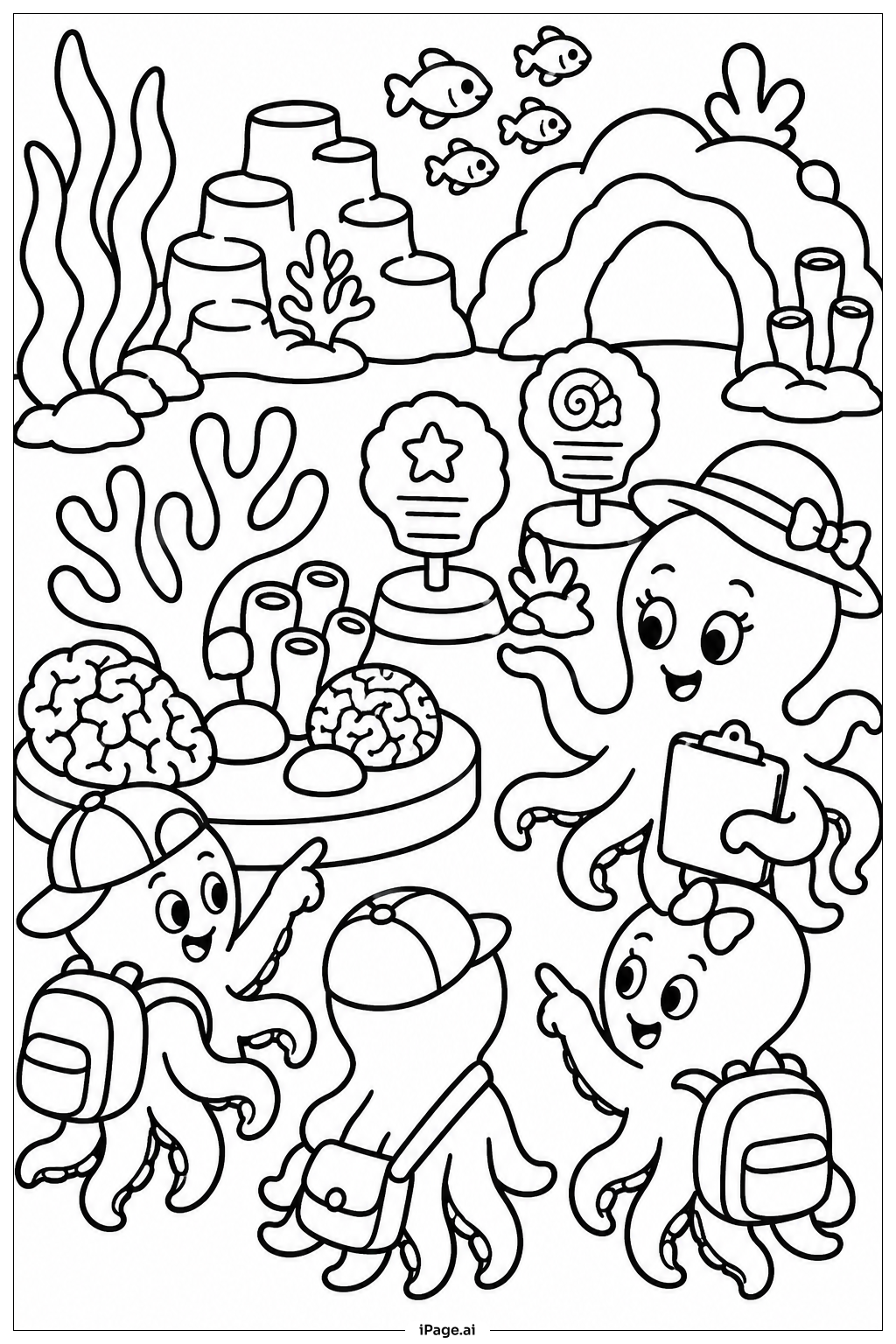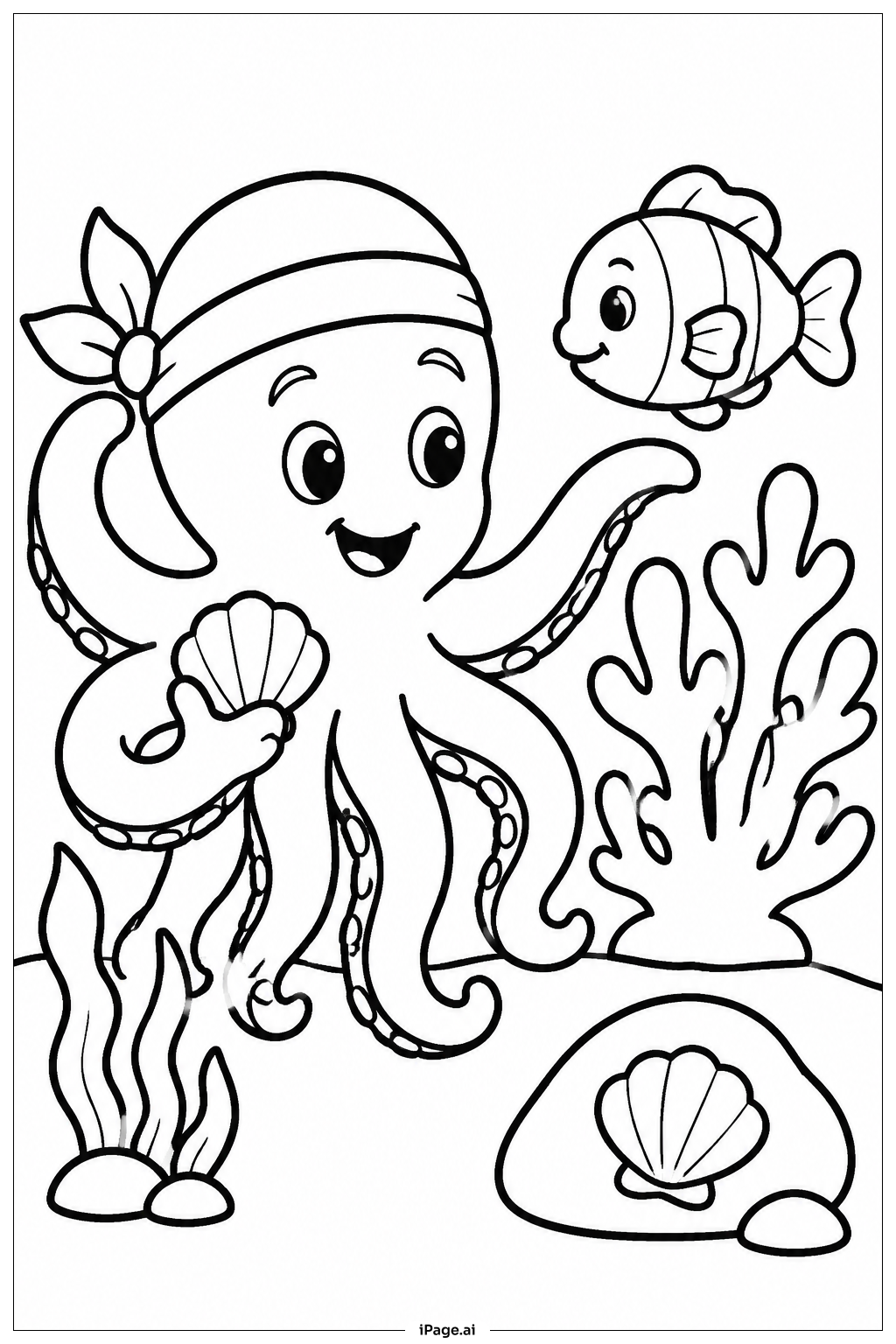
Coloring tips: How to color Octopus At Coral Reef coloring page well?
Start with the octopus body first. Use a warm orange or reddish-brown for a classic look, or go wild with purple, pink, or even blue — octopuses can change color, so anything goes! Use a slightly darker shade on the underside of the tentacles to add depth. For the suckers, try a pale yellow or cream color.
Next, move to the coral reef. Use a mix of bright colors — red, orange, pink, and yellow for the corals, and green or teal for the sea plants. Vary the shades so each coral stands out from the others.
Fill the background with light blue or aqua to suggest the ocean water. Add darker blue near the edges to create a sense of depth. Color the small fish in bright, contrasting colors like yellow and black or orange and white. Use white or light blue for the bubbles, leaving a small highlight spot to make them look round and shiny.
Coloring challenges: Which parts are difficult to color and need attention for Octopus At Coral Reef coloring page?
Coloring this underwater scene is a fun challenge, but there are a few tricky parts to watch out for:
• **Tentacle details and suckers:** The octopus has eight long, curling tentacles covered in rows of small suckers. Staying inside the lines on each sucker without smudging nearby areas takes patience and a fine-tipped tool. Using a thin marker or a sharpened colored pencil works best here.
• **Overlapping elements:** The tentacles weave around coral branches and sea plants, creating many overlapping layers. It can be hard to decide which element sits "on top" and which is "behind." Planning your color choices in advance — and using lighter shades for background elements — helps create a convincing sense of depth.
• **Coral variety and color balance:** The reef contains many different coral shapes packed closely together. Choosing colors that are distinct enough to separate each coral, while still looking harmonious as a whole, requires some thought. Avoid placing two very similar colors side by side, and try alternating warm and cool tones across the reef.
• **Small background details:** Tiny fish, bubbles, and sea anemones are scattered throughout the scene. These small elements are easy to accidentally skip or color over. Take your time and use a very fine tool to fill them in neatly.
• **Smooth background gradient:** Creating a natural-looking ocean background that fades from lighter blue near the surface to deeper blue at the edges is difficult with crayons. Colored pencils or watercolors blended gently give the best results for this effect.
Benefits of coloring books: Advantages of drawing Octopus At Coral Reef coloring page
Coloring this octopus and coral reef scene offers a wonderful range of benefits for kids and adults alike.
For younger children, tracing around the tentacles and tiny coral details helps build fine motor skills and hand-eye coordination. Choosing colors for the reef encourages creative thinking and color recognition in a playful, low-pressure way.
For older kids and teens, the complex layering of the scene makes it a great exercise in planning and patience. Deciding how to shade the tentacles or blend the ocean background introduces basic art concepts like depth, contrast, and color harmony.
For adults, the detailed patterns of the coral reef make this page a calming, meditative activity. Focusing on small sections at a time helps quiet a busy mind and reduce stress — similar to the benefits of mindfulness practice.
Beyond relaxation, this image also sparks curiosity about ocean life. Kids may find themselves wanting to learn more about real octopuses, coral reefs, and the creatures that live there, turning a simple coloring session into a gateway for nature education.
Overall, this page is a joyful, enriching activity that blends creativity, focus, and a love of the natural world.