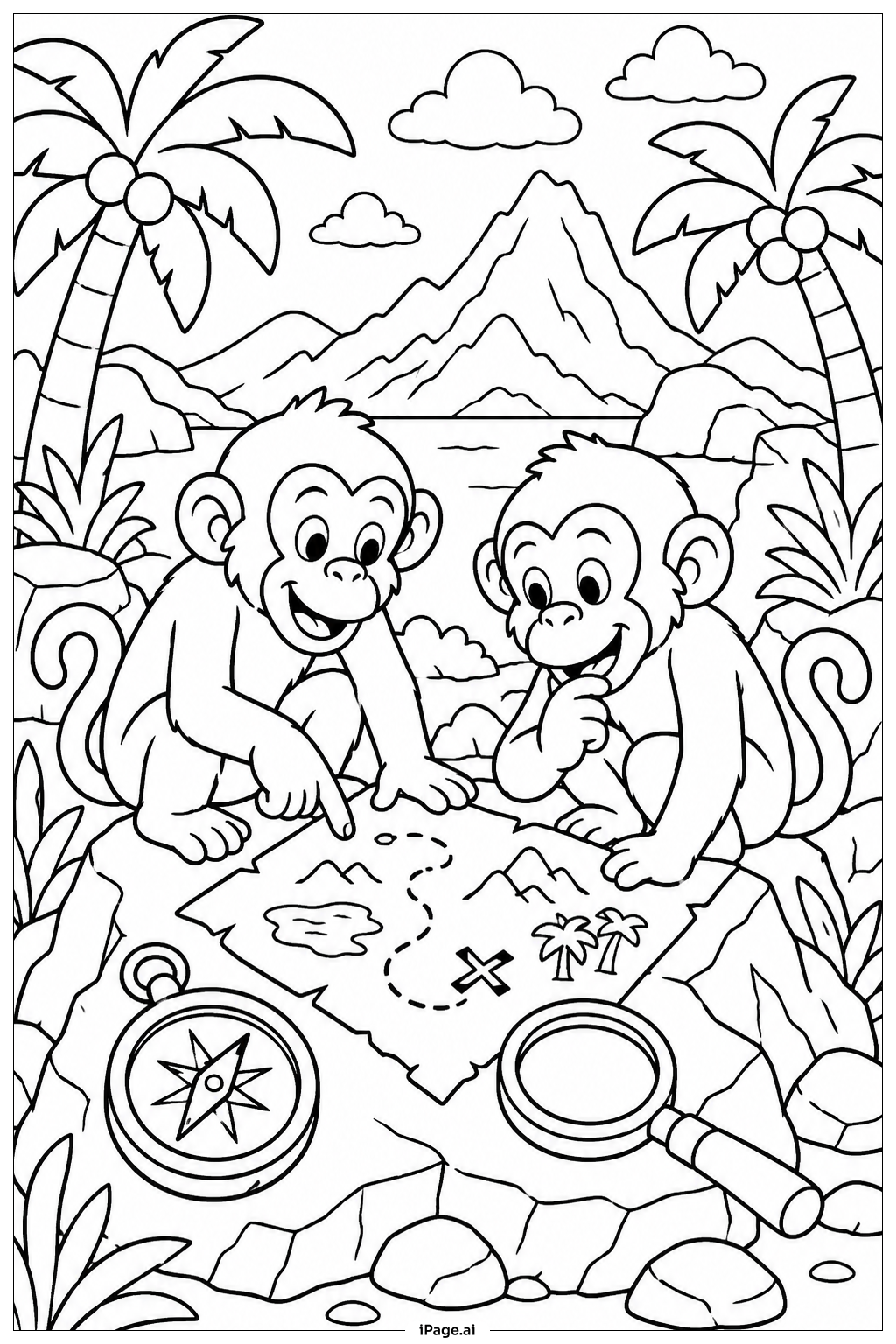
Coloring tips: How to color Monkey Explorer With Map coloring page well?
Start with the monkey's fur. Use warm shades of brown, tan, or golden yellow. You can add lighter tones on the face, belly, and hands to give the fur depth and a soft, fluffy look.
For the explorer outfit, try khaki or sandy beige for the vest and hat — classic adventure colors! The boots can be dark brown or earthy red. Use a darker shade for the vest's pockets and buttons to make them stand out.
The map is a great place to get creative. Color it in aged parchment tones like light yellow or warm beige. Use red or blue for the compass and path lines to make them pop.
For the background jungle leaves and vines, use many shades of green — bright lime green for sunlit leaves and deep forest green for the shaded areas. Add small splashes of color with tropical flowers in red, orange, or pink.
Don't forget the monkey's expressive face! Use peach or light tan for the inner face area, and add a rosy blush on the cheeks for a fun, lively touch. Keep the eyes bright and wide with dark pupils and a tiny white highlight to bring the character to life.
Coloring challenges: Which parts are difficult to color and need attention for Monkey Explorer With Map coloring page?
• Fur Texture and Shading: The monkey's fur is one of the trickiest parts to color well. To make it look realistic and three-dimensional, you need to blend at least two or three shades of brown or tan. Lighter tones go on the face, chest, and inner arms, while darker shades define the edges and create shadow. Young colorists may find it challenging to blend smoothly without making the fur look flat or patchy.
• Explorer Outfit Details: The vest, hat, and boots are filled with small details like pockets, buttons, buckles, and stitching lines. These tiny elements require careful control of your coloring tool to stay within the lines. Using a fine-tipped colored pencil or a thin marker works best here. Rushing through these areas can cause colors to bleed into each other and lose the detail.
• The Map Design: The open map held by the monkey contains intricate line work including paths, borders, compass roses, and landmark symbols. Coloring these small interior sections without going over the lines is a real challenge, especially for younger children. Using a very sharp pencil or a fine-tip marker will help keep everything neat and readable.
• Jungle Background Elements: The leaves and vines surrounding the monkey vary in size and overlap in complex ways. Choosing the right mix of green shades and knowing where to place light versus shadow across layered leaves takes patience and planning. Coloring each leaf individually rather than rushing through the background will produce a much more satisfying result.
• Facial Expressions: The monkey's face has expressive eyes, a wide smile, and defined facial features. Getting these right requires precision, as even a small mistake can change the character's mood and energy. Use light, controlled strokes in this area.
Benefits of coloring books: Advantages of drawing Monkey Explorer With Map coloring page
Coloring this Monkey Explorer With Map page offers a wonderful mix of fun and learning for kids and young artists.
First, it builds fine motor skills. Carefully coloring the small details on the outfit, map, and jungle background trains the hand muscles and improves pencil control — skills that directly support handwriting and other school tasks.
Second, it sparks creativity and imagination. Choosing colors for the explorer's outfit or designing the look of the adventure map encourages kids to make their own creative decisions. There's no single right answer, and that freedom builds confidence.
Third, it introduces kids to the concept of adventure and exploration. The image naturally sparks curiosity about maps, travel, and the natural world. It can be a fun starting point for conversations about geography, animals, and nature.
Fourth, it develops focus and patience. Staying within the lines of a detailed image like this one teaches children to slow down, concentrate, and work carefully toward a goal — a habit that benefits them in school and in everyday life.
Finally, finishing the page gives kids a real sense of accomplishment. Seeing a completed, colorful artwork that they created themselves builds self-esteem and a love for creative activities. It's a simple but powerful way to nurture a child's artistic growth.