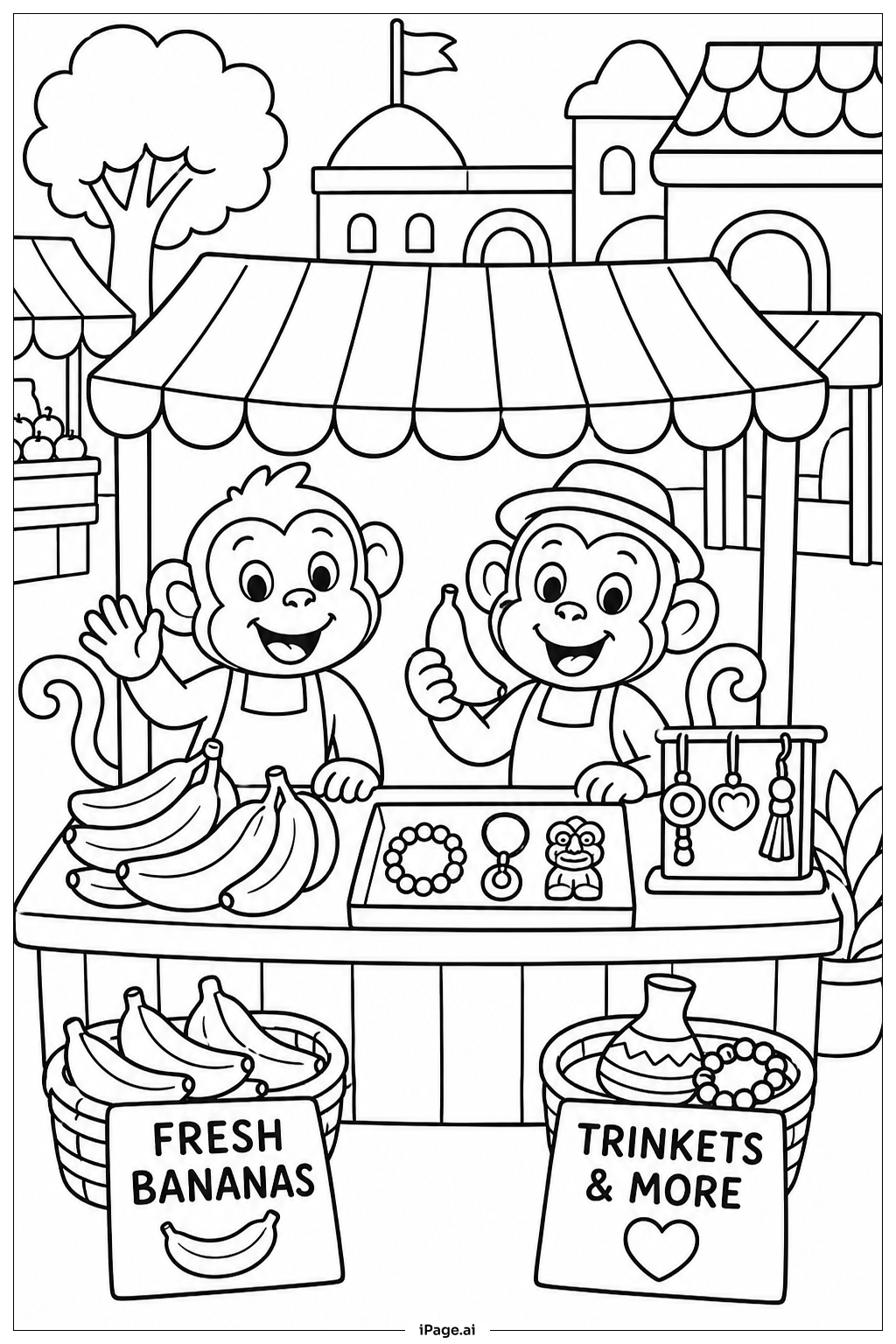
Coloring tips: How to color Monkey Market Stall coloring page well?
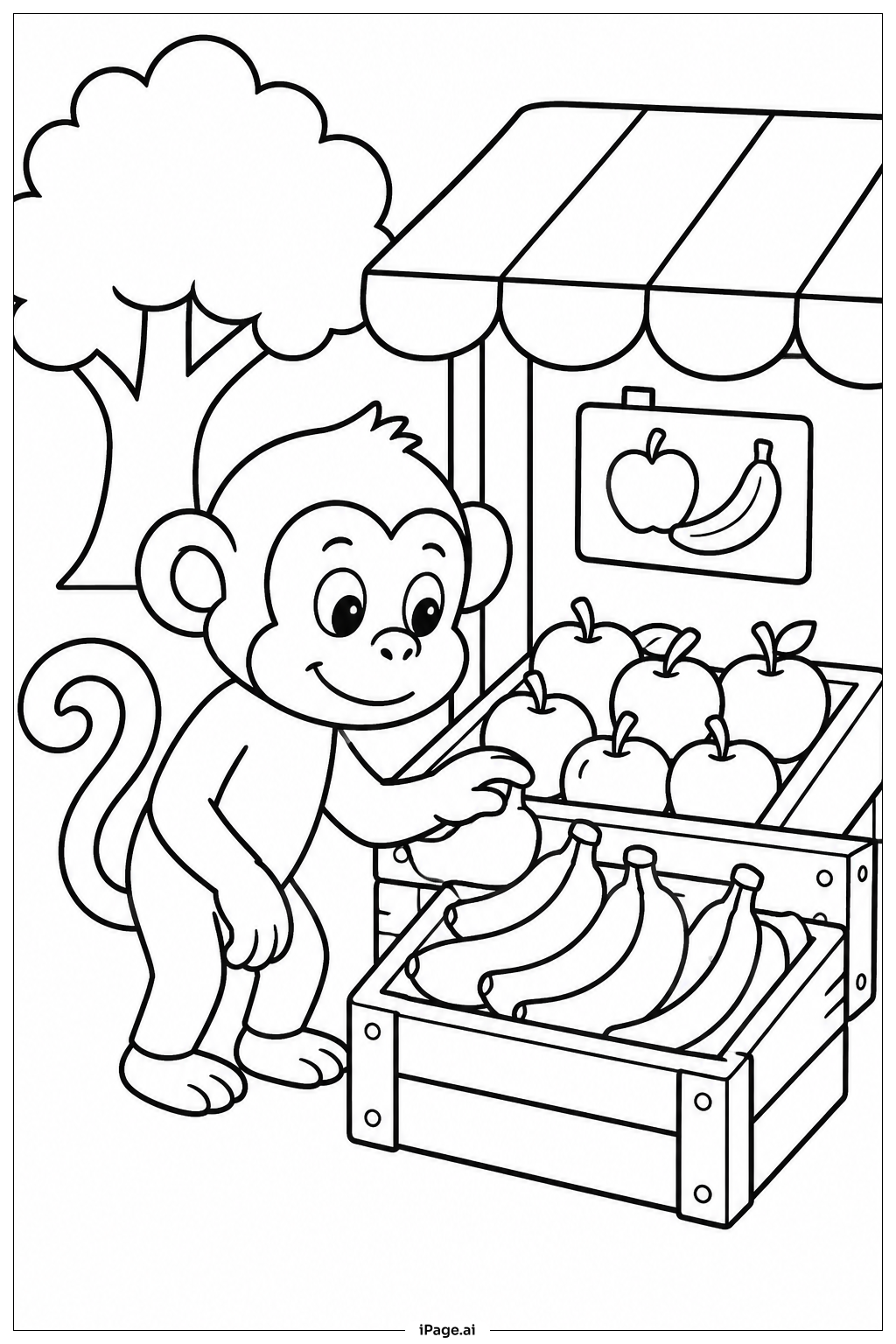
Start with the monkey's fur. Use warm brown or golden tan shades. Add darker brown to the face, hands, and ears for natural depth. Color the apron a bright, cheerful color like red or blue. For the fruits, use classic colors — yellow for bananas, red for apples, orange for oranges, and purple for grapes. Make the pineapple yellow-green. Use rich greens for the leafy vegetables. Color the wooden crates and shelves in light tan or beige. Give the canopy bold stripes using two contrasting colors like red and white or blue and yellow. Use soft blues or light gray for the background sky to make the stall pop. Price signs can be cream or white with bold lettering. Keep the baskets in warm earthy tones. This scene gives you lots of freedom to mix bright and natural colors together for a fun, lively result.
Coloring challenges: Which parts are difficult to color and need attention for Monkey Market Stall coloring page?
• Monkey's Fur Texture: The monkey's fur has many fine lines and layered areas that require careful shading. Blending two or three shades of brown smoothly can be tricky, especially around the face, ears, and hands where the fur transitions to bare skin tones. Take your time layering lightly to avoid harsh edges.
• Fruit Details and Variety: The stall is packed with many different types of fruit, each requiring its own unique color and shading approach. Small fruits like grapes need gentle circular shading, while larger items like pineapples have complex surface patterns. Keeping each fruit visually distinct without the colors bleeding into each other takes patience and a steady hand.
• Wooden Crates and Shelves: The overlapping wooden planks and crates have narrow lines between them. Coloring neatly within each plank while maintaining consistent wood-grain shading is a challenge, particularly for younger colorists. Using a fine-tipped tool for the edges helps a lot.
• Striped Canopy: The canopy at the top of the stall features alternating stripes that must stay evenly spaced and cleanly colored. Keeping two colors from overlapping at the stripe borders requires careful control, especially with markers or thick crayons.
• Background Depth: Balancing the busy foreground stall against the background without making the scene look flat is a subtle challenge. Using lighter, cooler tones in the back while keeping the front vibrant and saturated helps create a natural sense of depth and distance in the overall composition.
Benefits of coloring books: Advantages of drawing Monkey Market Stall coloring page
Coloring this Monkey Market Stall page offers a wonderful mix of fun and learning for kids and beginners alike. The scene features a wide variety of objects — fruits, vegetables, crates, banners, and a lively monkey character — giving colorists plenty of practice working with different shapes, textures, and color families all in one page.
For younger children, identifying and coloring real fruits in their natural colors builds early recognition skills and reinforces what they learn about food and nature. It also encourages healthy curiosity about where food comes from.
The detailed stall setting challenges older kids to practice color mixing, shading, and spatial awareness. Deciding how to separate overlapping items with color is a great way to develop visual thinking.
Working through a busy, detail-rich scene like this also builds focus and patience. Completing each section step by step teaches kids to break a big task into smaller, manageable parts — a skill that extends well beyond the coloring page.
The cheerful monkey character adds a sense of joy and imagination to the activity, making it easy for children to stay engaged and motivated from start to finish. Overall, this page supports creativity, fine motor skills, and color confidence in a warm and playful way.