Coloring tips: How to color May Child Watering Plants coloring page well?
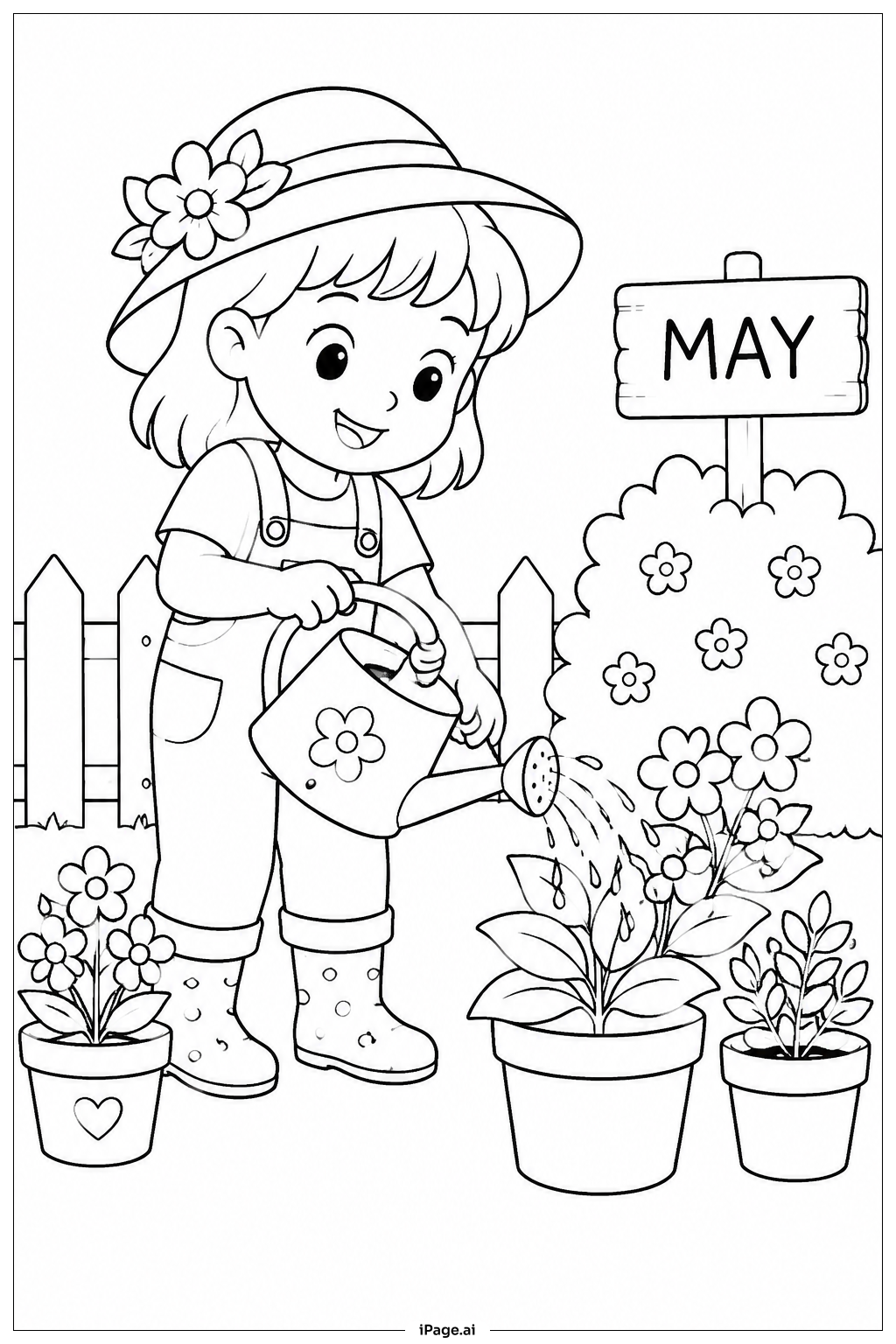
For this picture, try using bright and fresh colors to bring spring to life. Use different shades of green for the plants and leaves to show variety. You can color the flowers in cheerful colors like yellows, pinks, reds, or purples. The child’s clothes can be colorful to match the sunny mood — maybe a blue shirt and orange shorts. Color the watering can silver or blue for a classic look. Consider using light brown or beige for the soil and rich browns for the flower pots. Don’t forget the sky or background if you want to add that—it can be light blue with a few fluffy white clouds to complete the spring day.
Coloring challenges: Which parts are difficult to color and need attention for May Child Watering Plants coloring page?
• Small details like leaves and flower petals may be tricky to color neatly because they are close together and require careful hand control. • The watering can’s shape has curved edges and the spout, which might be challenging to shade smoothly without crossing lines. • The child’s facial features and fingers need delicate coloring to stay inside the lines but still show expressions and natural skin tones. • Different textures such as the soil, smooth flower pots, and leafy plants demand varying coloring techniques which can be hard to master for beginners. • Balancing bright and realistic flower colors while keeping the overall page harmonious might be difficult when choosing colors in advance.
Benefits of coloring books: Advantages of drawing May Child Watering Plants coloring page
Coloring this picture helps children improve their fine motor skills by practicing careful coloring within small spaces like leaves and flowers. It encourages creativity as they pick different colors to represent the lively garden scene. The theme of caring for plants teaches patience and responsibility, inspiring kids to appreciate nature. Coloring the child watering plants is also calming and can enhance focus, making it a relaxing activity. For older kids, it offers a chance to explore shading and color blending, boosting their artistic confidence.