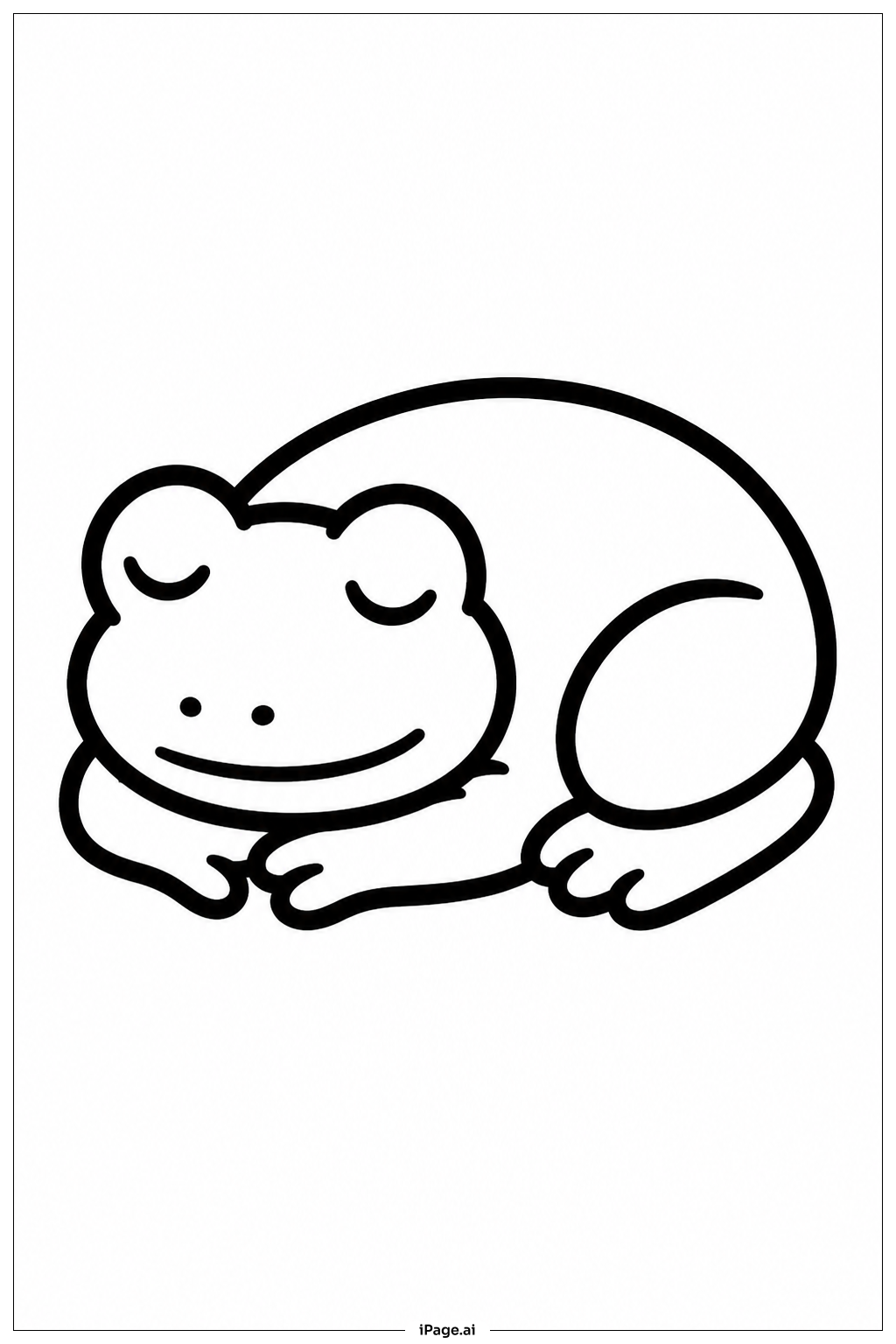
Coloring tips: How to color Sleeping Frog coloring page well?
Start with the frog's body using shades of green. Try a medium green for the base and add a lighter yellow-green on the belly and inner legs to create a soft, rounded look. Use darker green along the back and sides to add depth and shape.
For the lily pad or resting surface, use a rich leafy green with darker veins drawn in. You can add a touch of brown or tan at the edges to show age or texture.
The frog's face is the star of this image. Use very light colors around the closed eyes to keep the sleeping expression gentle and peaceful. A soft pink or peach blush on the cheeks adds a sweet, sleepy touch.
Background elements like water, leaves, or moss can be colored in cool blues and deep greens. This contrast makes the frog pop off the page.
Feel free to get creative. A purple or blue frog can look magical and fun. Add patterns like dots or stripes to make your frog unique. There are no rules — just enjoy the coloring process and make it your own!
Coloring challenges: Which parts are difficult to color and need attention for Sleeping Frog coloring page?
• Smooth Body Gradients: The frog's round, plump body requires smooth color transitions from light to dark green. Blending these gradients without leaving harsh lines or streaks can be tricky, especially for younger colorists. Taking time to layer colors slowly and use gentle circular strokes will help achieve a soft, three-dimensional look.
• Tiny Facial Details: The frog's sleeping face has small, delicate features — closed eyes, a curved smile, and subtle expression lines. These tiny details require a fine-tipped marker or a sharpened colored pencil to fill in neatly without accidentally coloring outside the lines or losing the peaceful expression.
• Lily Pad Texture: The surface the frog rests on, whether a lily pad, leaf, or mossy ground, has fine vein lines and subtle texture details. Keeping these lines visible while still adding color around them takes patience and careful control of your coloring tool.
• Layering Light and Shadow: Creating a believable sense of light and shadow on a rounded frog body means adding darker tones beneath the belly and under the chin, and brighter tones on the top of the back. Understanding where the light source comes from helps, but this concept can be challenging for beginners.
• Background Balance: The background elements like water ripples, leaves, or grass must be colored in a way that complements without overpowering the frog. Choosing colors that contrast well with the frog's green tones while keeping the background calm and secondary is a creative challenge that rewards careful color planning.
Benefits of coloring books: Advantages of drawing Sleeping Frog coloring page
Coloring this Sleeping Frog image offers a wide range of wonderful benefits for kids and adults alike.
For children, it builds fine motor skills as they carefully stay within the lines and control their coloring tools. The cute, simple subject matter keeps young colorists engaged and motivated, helping to extend their attention span and develop patience.
The peaceful sleeping theme encourages calm, focused energy. Coloring this image can actually feel soothing and relaxing, much like the frog itself. It is a great activity before bedtime or during quiet time to help children wind down.
Choosing colors for the frog, lily pad, and background sparks creative thinking and decision-making. Kids learn about color combinations, light and shadow, and how colors can create mood and emotion in an image.
For older children and adults, the subtle challenges of blending greens, adding texture, and balancing the composition turn this into a satisfying artistic exercise. It encourages mindfulness and provides a screen-free way to unwind.
Completing the image also gives a strong sense of accomplishment and pride. Every finished coloring page is a small personal artwork worth displaying. Overall, this sweet Sleeping Frog page is a joyful, beneficial activity for colorists of all ages and skill levels.