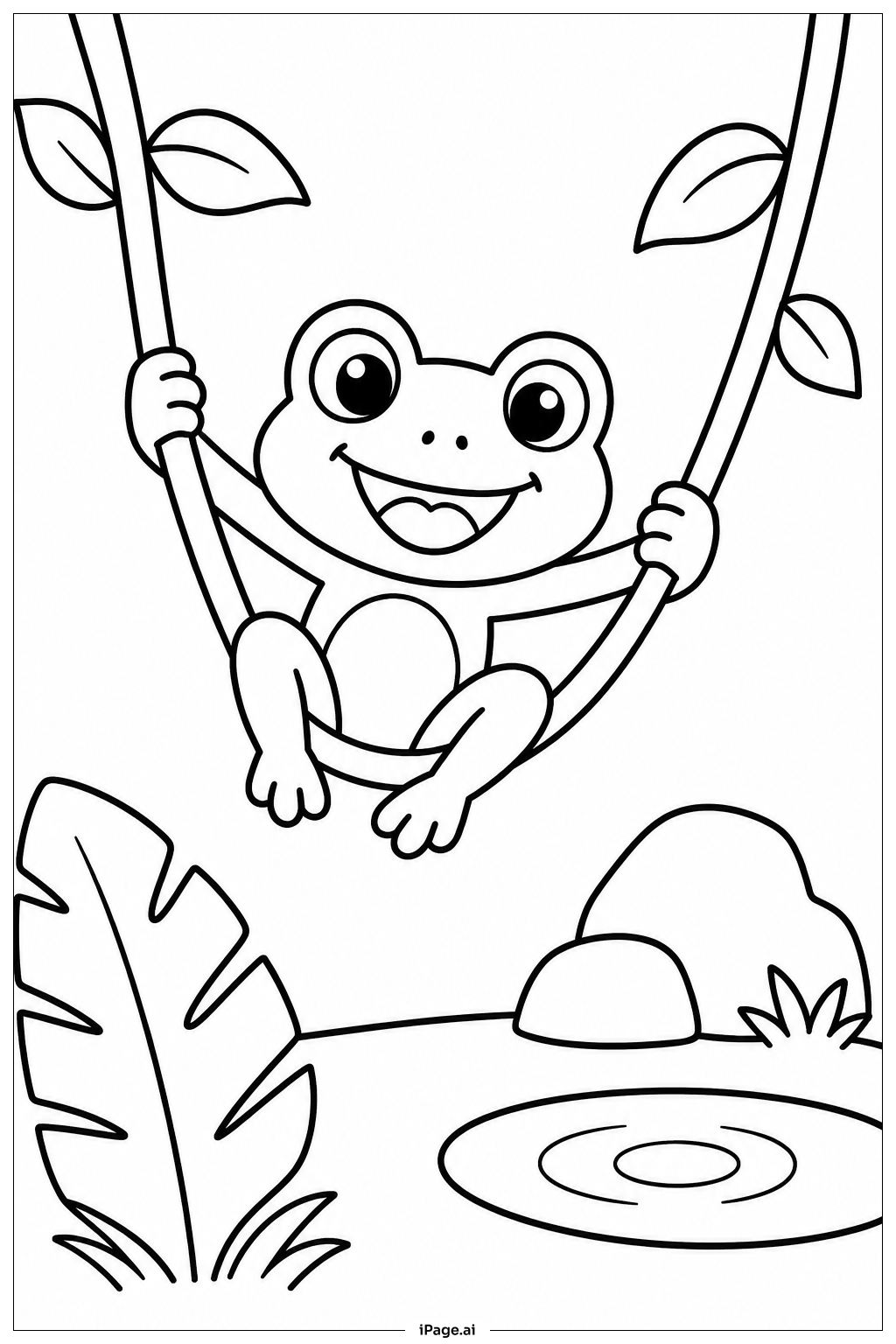
Coloring tips: How to color Frog On Swinging Vine coloring page well?
Start with the frog's body. Bright green is the most natural choice, but you can try lime green, teal, or even a fun mix of yellow-green. Use a slightly darker shade on the belly to show depth. Add spots or stripes if you want to make your frog unique. For the vine, use brown or tan, with darker streaks to show the rough texture of the bark. The leaves and background plants look great in many shades of green — mix light and dark greens to make the jungle feel real and full. You can also add splashes of yellow or orange to some leaves to bring extra warmth to the scene. Use light blue or soft purple in the background to suggest sky or shade filtering through the canopy. For beginners, stick to flat colors and simple shading. For more advanced colorists, try blending and layering colors to give the image a rich, three-dimensional feel.
Coloring challenges: Which parts are difficult to color and need attention for Frog On Swinging Vine coloring page?
• Frog's Body Texture: The frog's skin has small bumps and surface details that require careful coloring. Staying within the fine lines while adding shading or spots can be tricky, especially for younger children. Use a thin-tipped colored pencil or marker to handle these small areas without going over the edges.
• Vine Grip and Overlap: The frog's feet wrap around the vine, creating overlapping shapes where the body and vine meet. It can be hard to keep the colors separate in this tight space. Work slowly and color each section one at a time. Let each area dry before moving to the next if you are using markers.
• Dynamic Pose and Foreshortening: The swinging pose makes the frog's limbs appear at different angles, which makes it harder to apply even color. Some parts of the legs look shorter or wider due to the perspective. Pay attention to each limb individually and shade accordingly to reinforce the sense of movement.
• Background Foliage Density: The leaves, tendrils, and plants in the background are layered and overlapping, creating many small enclosed sections. Coloring each leaf section neatly without accidentally blending into neighboring areas takes patience and focus. Using different shades of green for each leaf layer helps separate them visually.
• Achieving Depth and Contrast: Balancing the foreground frog against the busy background is a real challenge. If everything is colored at the same brightness, the frog can get lost in the scene. Try using bolder, brighter colors on the frog and softer, muted tones in the background to create a natural sense of depth and make the frog stand out clearly.
Benefits of coloring books: Advantages of drawing Frog On Swinging Vine coloring page
Coloring this playful frog scene brings a wide range of benefits for kids and adults alike. For children, tracing the outlines of the frog's curved body and the flowing vine helps develop fine motor skills and hand-eye coordination. Learning to stay within the lines and switch between colors builds focus and patience in a fun, low-pressure way.
The nature-themed image also sparks curiosity about the natural world. Kids may start asking questions about frogs, jungle habitats, and the plants around them, turning a creative activity into a learning moment.
For older children and adults, the layered details of the scene offer a satisfying creative challenge. Choosing color combinations, experimenting with shading, and making the image their own encourages artistic thinking and personal expression.
Coloring is also a well-known stress reliever. The repetitive, gentle motion of filling in shapes calms the mind and helps reduce anxiety. Spending even a short time on an image like this frog on a vine can feel refreshing and restorative.
Finally, finishing the page gives a real sense of accomplishment. Seeing a completed, colorful piece of art created by your own hand is rewarding for colorists of every age and skill level.