Coloring tips: How to color Flower Border Frame coloring page well?
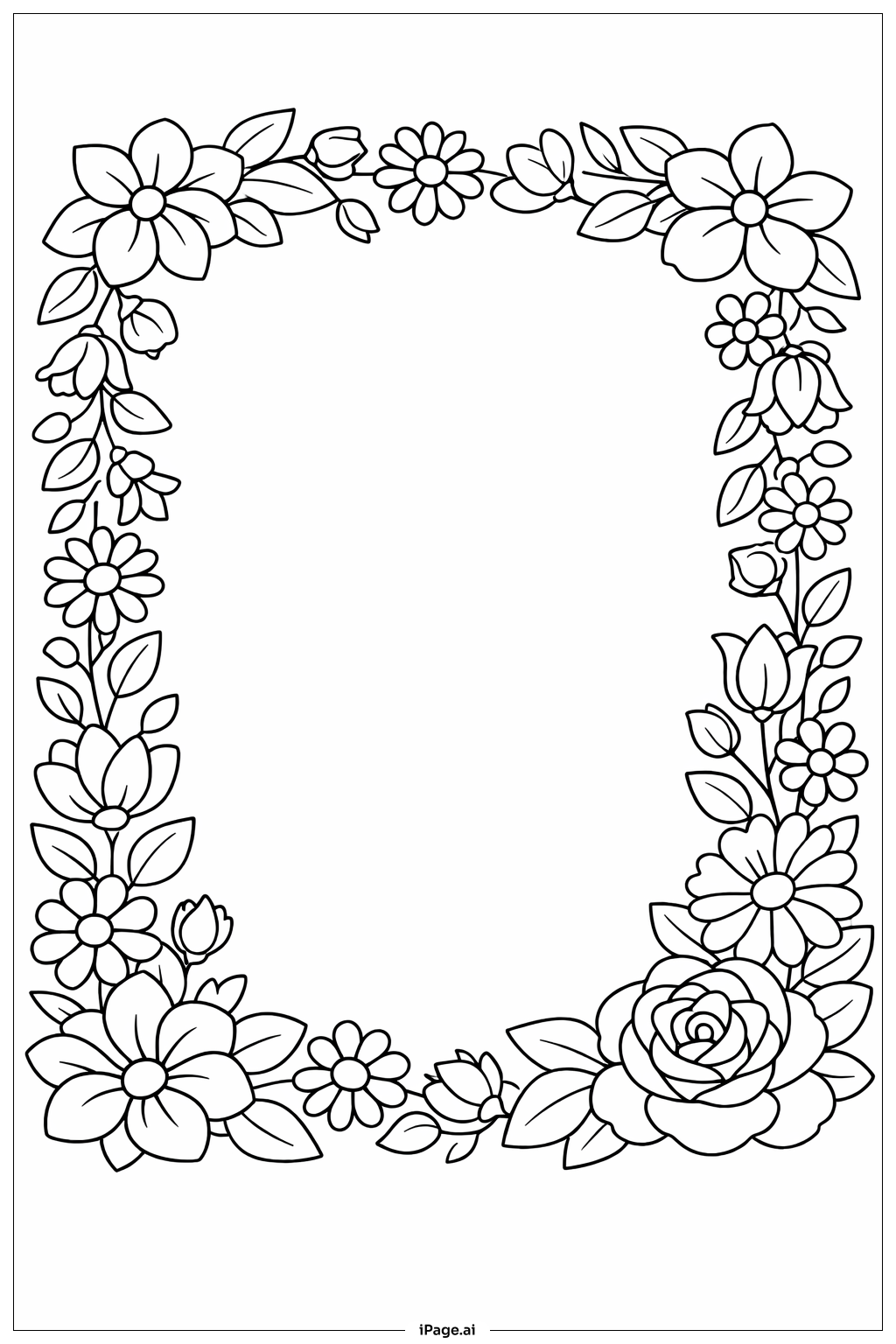
Start with the largest flowers first. Pick bold, bright colors like red, pink, yellow, or orange for the roses, tulips, and daisies. This helps the flowers stand out right away. Use different shades of green for the leaves and vines. Light green works well for small leaves, and darker green adds depth to the larger ones. For smaller wildflowers, try soft purple, lavender, or white with a light yellow center. Try to vary your colors around the frame so the same color does not appear too close to itself. This keeps the design looking balanced and lively. You can also use warm tones like coral and peach to make the frame feel soft and cheerful. If you want a more dramatic look, go with deep jewel tones like burgundy, violet, and forest green. The open center can be left blank or filled with a soft background color to make the whole frame pop. Have fun mixing and matching colors to make the design your own!
Coloring challenges: Which parts are difficult to color and need attention for Flower Border Frame coloring page?
• Petal Layering: Many of the flowers in the border have multiple overlapping petals. Keeping each petal a slightly different shade to show depth can be tricky. If all petals are the same color, the flower can look flat. Try using a lighter shade on the outer petals and a deeper tone toward the center to give each bloom a natural, three-dimensional appearance.
• Small Flower Details: The border includes tiny wildflowers and decorative buds between the larger blooms. These small elements have very little space inside them, making it hard to color neatly without going outside the lines. Using a fine-tipped colored pencil or a thin marker works best for these tight areas.
• Leaf and Vine Variety: The frame contains many leaves in different shapes and sizes, all tangled with curling vines. Deciding which green tones to use for each leaf without making the whole border look too uniform is a real challenge. Try alternating light, medium, and dark greens to create natural contrast throughout.
• Color Balance Across the Frame: Because the border wraps around all four sides, keeping the colors evenly distributed is important. If you use too much of one color on one side, the frame can look unbalanced. Planning your color choices before you start, or lightly sketching color notes, can help keep things even.
• Corner Clusters: The corner sections tend to have the most complex arrangements of flowers and leaves all packed together. These dense areas require extra patience and careful coloring to make sure each element is clearly defined and readable.
Benefits of coloring books: Advantages of drawing Flower Border Frame coloring page
Coloring this flower border frame offers a wide range of benefits for kids and adults alike. Working through the detailed blooms and vines helps build fine motor skills and improves hand control, which is especially valuable for younger children still developing their grip and precision. The repetitive, focused nature of coloring helps calm the mind and reduce stress. It encourages you to slow down, breathe, and stay in the moment, making it a great activity after a long or busy day. Because the frame includes so many different flower types and sizes, it also sparks creativity. Choosing which colors to use, how to balance them, and how to make each flower unique gives colorists a real sense of creative ownership. For older kids and teens, this kind of detailed coloring builds patience and attention to detail, skills that carry over into schoolwork and other tasks. Finishing the full frame also gives a strong sense of accomplishment. Seeing a beautifully colored border come together from start to finish is genuinely rewarding. Overall, this is a fun, calming, and skill-building activity for all ages.