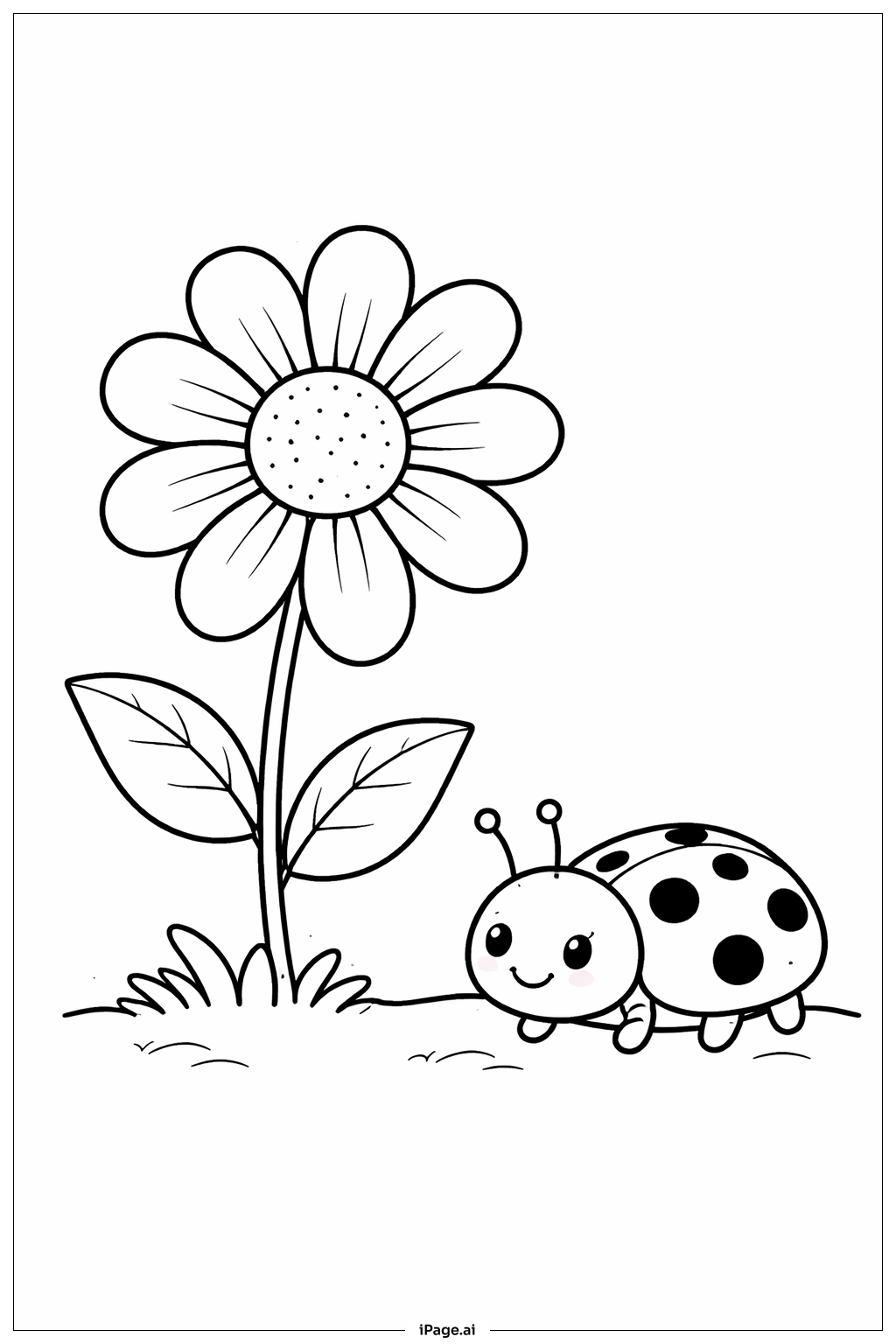
Coloring tips: How to color Flower and Ladybug coloring page well?
Start with the ladybug to make it pop. Color its body bright red and fill in the spots with solid black. Use a fine black marker to outline its shell and head for extra sharpness. For the flower petals, try soft pinks, warm yellows, or light purples. You can blend two shades on each petal — lighter near the center and deeper toward the tips — to create a glowing effect. Color the flower's center orange or golden yellow, and add small brown or dark yellow dots for texture. For the leaves, use two shades of green: a brighter green for the top surfaces and a darker green for the undersides. This gives the whole image a natural, lively feel. If you want a fun, bold look, go with bright, saturated colors. For something softer and more dreamy, use pastel tones throughout. There is no wrong choice — just pick colors that make you happy!
Coloring challenges: Which parts are difficult to color and need attention for Flower and Ladybug coloring page?
• Small Ladybug Details: The ladybug is small compared to the flower, which makes coloring its tiny spots and body sections tricky. You need a fine-tipped tool to fill in the spots neatly without going outside the lines. Take your time and work slowly on this part.
• Petal Shading and Blending: Each petal has subtle line details that invite shading, but blending two colors smoothly on a curved surface can be hard. If the colors are applied too heavily or unevenly, the petals can look flat or muddy instead of soft and dimensional.
• Flower Center Texture: The circular center of the flower has a bumpy or dotted texture. Filling this area while keeping each small section distinct requires patience and a steady hand. Using a small brush or pencil tip helps a lot here.
• Leaf Contrast: The leaves sit close to the petals in the composition. Choosing colors that make the leaves stand out from the petals without clashing takes some planning. If both areas are colored similarly, the image can lose its depth and look confusing.
• Keeping Lines Clean: Because the outlines are smooth and flowing, any color that goes outside the lines is noticeable. This is especially true around the ladybug and the petal edges. Younger colorists may find it helpful to outline each section lightly in pencil before applying color.
Benefits of coloring books: Advantages of drawing Flower and Ladybug coloring page
Coloring this Flower and Ladybug page offers a wonderful mix of fun and learning for kids and beginners alike. Working on the large flower petals helps build steady hand control and teaches kids how to stay within lines, which supports fine motor development. Choosing colors for the petals, center, and ladybug encourages creative thinking and helps children explore how colors work together. The ladybug section introduces the idea of working carefully in small spaces, which builds patience and focus. Trying to shade or blend colors on the petals is a gentle introduction to artistic techniques like color mixing, which can spark a real love for art. Because the image is warm and nature-inspired, coloring it can feel calming and relaxing. It gives children a quiet moment to slow down and enjoy a simple, satisfying activity. Finishing the page also gives a sense of achievement that builds confidence. Whether a child colors it quickly with bold, bright tones or takes their time with careful blending, this page rewards every approach and makes the coloring experience genuinely enjoyable.