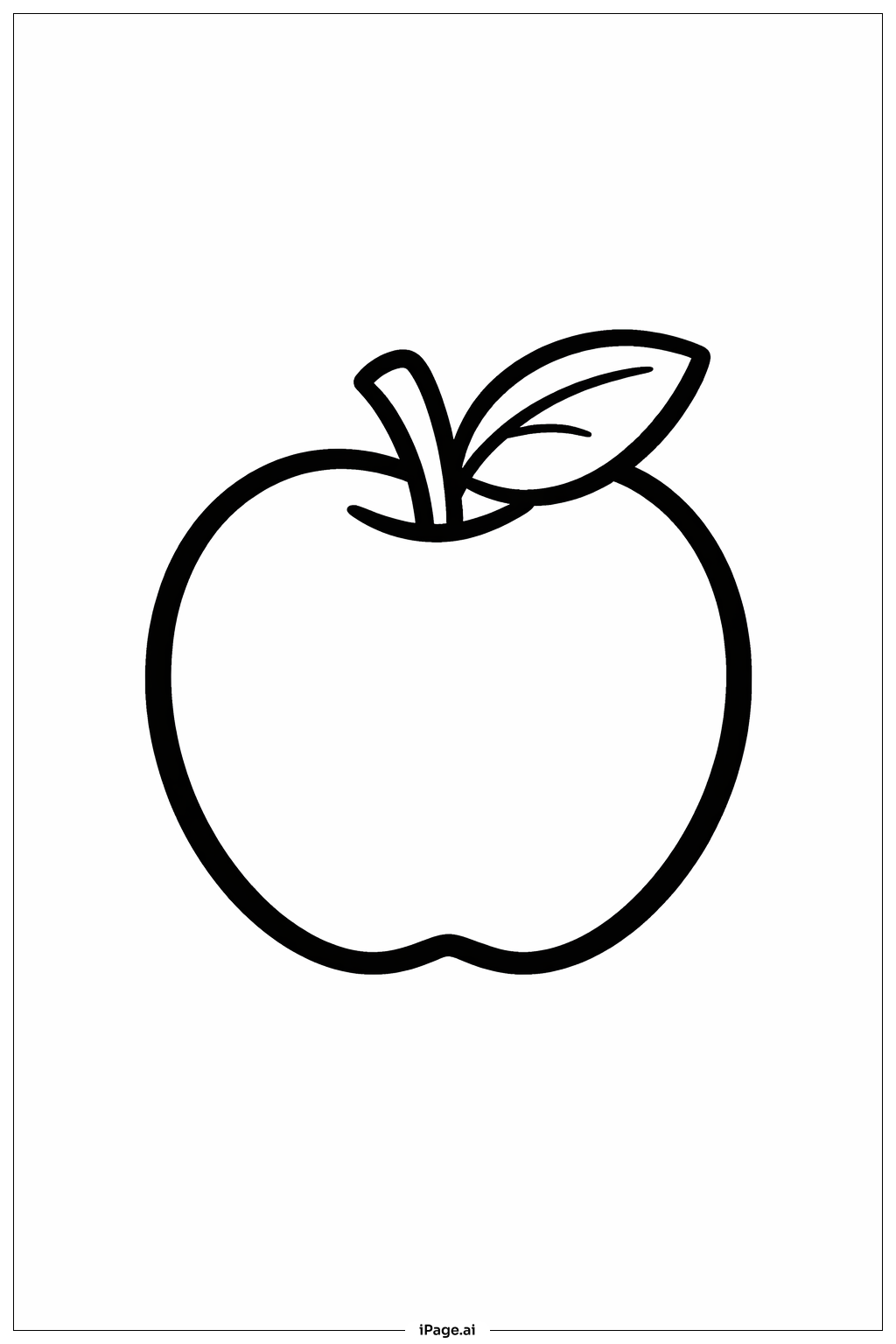
Coloring tips: How to color Fall Apple coloring page well?
Start with the apple itself. Use a bold red or a warm crimson for a classic look. You can also try deep burgundy or golden yellow for a fun twist. Add a small patch of lighter pink or white on one side to show a shiny highlight.
Color the stem in brown and the leaf in bright green or olive. For the fall leaves around the apple, use a mix of orange, yellow, red, and brown — these are the true colors of autumn. Try blending two colors on a single leaf to make it look more realistic.
Use a warm tan or light brown for the acorns, and a darker brown for their caps. For the background or swirling lines, soft beige or cream works beautifully. You can also leave the background white to keep the focus on the apple and leaves.
Take your time layering colors to build depth. Light pressure first, then go darker. This makes everything look rich and full of life.
Coloring challenges: Which parts are difficult to color and need attention for Fall Apple coloring page?
• Apple Surface Shading: The apple looks round, which means you need to show its curved shape using shading. Applying color evenly across the whole apple will make it look flat. Instead, try pressing harder at the edges and lighter toward the center, or leave a small uncolored oval near the top to suggest a shiny highlight. This is tricky for beginners who are still learning how to blend and layer.
• Tiny Leaf and Stem Details: The stem is narrow and the attached leaf has small veins running through it. Staying inside these fine lines requires a sharp colored pencil or a thin marker. Using a tool that is too thick will result in color bleeding outside the lines, making the details look muddy or unclear.
• Multiple Fall Leaves: The scattered maple leaves around the apple each have pointed tips and jagged edges. Coloring these neatly without going over the outlines takes steady hand control and patience. Choosing different colors for each leaf adds variety, but it also means planning ahead so no two touching leaves end up the same color.
• Acorn Textures: The acorns have two distinct parts — a smooth body and a textured cap. Showing this difference in color and technique is a real challenge. You will need at least two shades of brown and perhaps a crosshatch or stippling effect on the cap to make it look different from the smooth lower part.
• Balancing the Overall Color Palette: Because this image has many elements — apple, leaves, acorns, and swirling lines — keeping the colors balanced is important. Too many bright colors used at full strength can make the page look chaotic. Planning which areas should stand out and which should stay soft takes some thought and artistic decision-making.
Benefits of coloring books: Advantages of drawing Fall Apple coloring page
Coloring this Fall Apple page is a wonderful activity for kids and adults alike. It brings together creativity, learning, and relaxation all in one.
For younger children, tracing around the apple and leaves builds fine motor skills and hand-eye coordination. Picking colors and staying inside the lines helps develop focus and patience — skills that are valuable in school and everyday life.
For older kids and teens, the shading and blending challenges offer a chance to practice real artistic techniques. Learning how to show light and shadow on the apple's surface, or how to mix colors for a realistic autumn leaf, builds genuine artistic confidence.
The fall theme also makes this page a great teaching moment. While coloring, children can talk about the seasons, why leaves change color, and how apples grow. It turns a fun activity into a small lesson about the natural world.
For adults, coloring this image is a calming, mindful break from daily stress. The repetitive motion of filling in shapes helps quiet a busy mind and brings a sense of calm focus.
Finishing the page gives colorists of all ages a real sense of achievement. A completed, beautifully colored apple is something to be proud of — and a lovely piece of seasonal art to display or share.