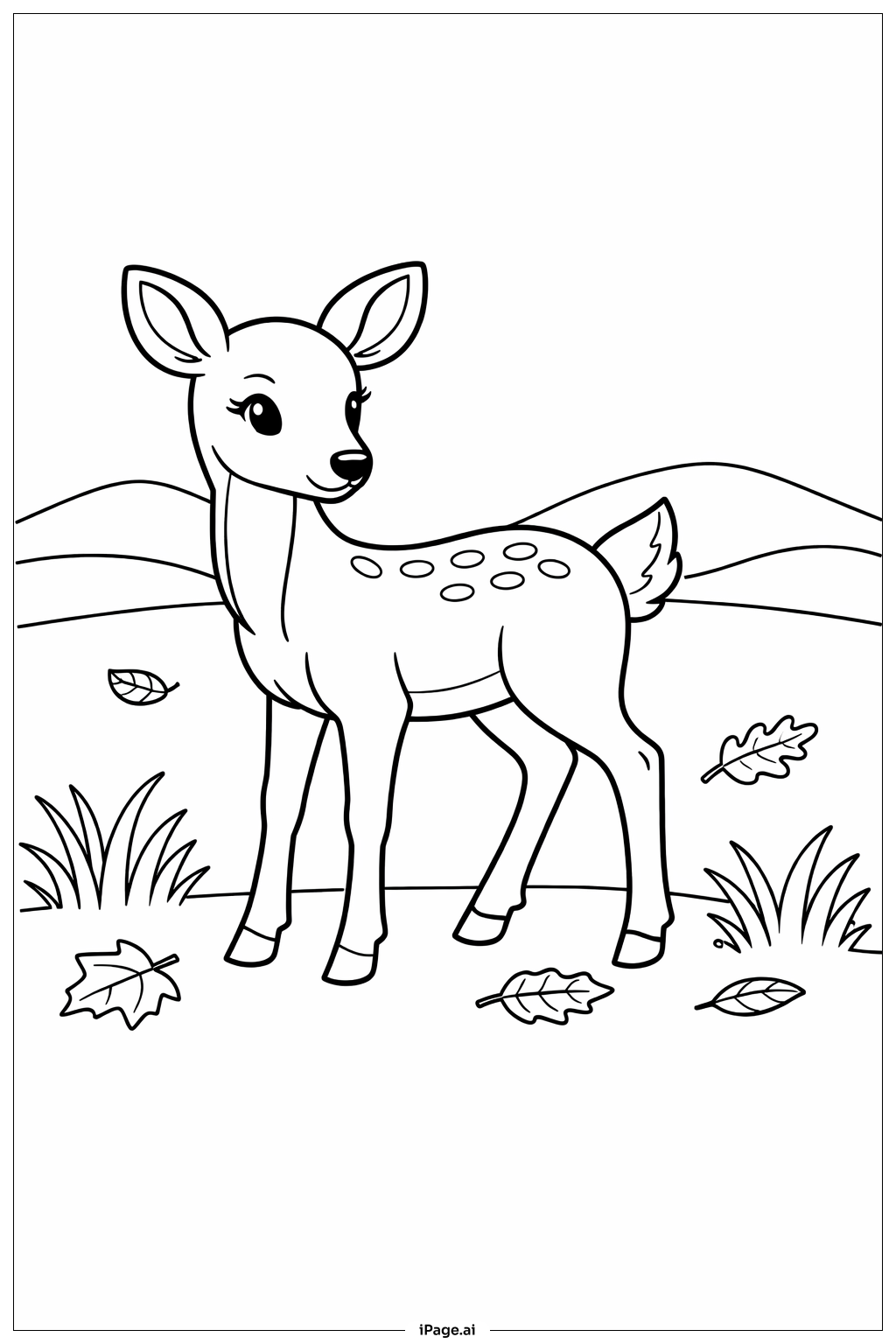
Coloring tips: How to color Deer In Fall Meadow coloring page well?
Start with the deer's body. Use warm tan or light brown for the main coat. Add darker brown along the back and sides to create depth. Leave the belly and inner legs a pale cream color. Use soft pink for the nose and inside the ears. Color the eyes dark brown with a small white highlight to make them look alive. For the meadow, use several shades of green and yellow-green for the grasses. Add golden yellow, orange, and red to the fallen leaves on the ground. Color the background trees with warm fall shades like rust, amber, and burnt orange. Use earthy brown for tree trunks and branches. Paint the mushrooms in red or orange with white spots for a fun pop of color. A light blue or soft purple sky peeking through the trees adds a nice finishing touch. Try blending colors where they meet to make the scene feel soft and natural.
Coloring challenges: Which parts are difficult to color and need attention for Deer In Fall Meadow coloring page?
• Deer Fur Texture: The deer's coat needs careful shading to look realistic. You have to blend multiple shades of brown and tan smoothly. The transition from the darker back to the lighter belly can be tricky. Younger colorists may find it hard to blend without making the colors look patchy or too sharp at the edges.
• Facial Details: The deer's face has small, delicate features like the eyes, nose, and ears. These areas are tiny and close together. Coloring them neatly without going outside the lines takes steady hands and a fine-tipped tool. Getting the eyes to look soft and gentle instead of stiff is a common challenge.
• Layered Background: The scene includes trees, grasses, leaves, and sky all at once. Keeping each element visually separate while making the whole background feel connected requires thoughtful color choices. If too many similar colors are used side by side, the background can look flat or confusing.
• Fall Leaf Details: Fallen leaves and foliage often have multiple colors in one leaf, such as green fading into yellow or orange turning into brown. Capturing this natural color blending on small leaf shapes is difficult, especially for younger children who may not yet be comfortable mixing or layering colors.
• Ground Texture: The meadow floor has grasses, leaves, mushrooms, and small plants all layered together. Deciding which element to color first and how to prevent colors from blending into one muddy tone takes planning and patience, which can be challenging for beginner colorists.
Benefits of coloring books: Advantages of drawing Deer In Fall Meadow coloring page
Coloring this peaceful deer in a fall meadow offers many wonderful benefits for kids and adults alike. For younger children, it helps build fine motor skills as they carefully fill in the deer's body, small facial features, and the many details of the meadow. Staying within the lines trains hand-eye coordination and focus. Choosing colors for the fall scene encourages creative thinking. Kids learn about warm autumn colors like orange, red, and golden yellow, which connects art to nature and the changing seasons. This can spark curiosity about animals and wildlife too. For older children and teens, the detailed background with layered trees, grasses, and scattered leaves offers a satisfying challenge. Blending shades and planning a color scheme builds artistic skill and patience. Completing a detailed piece like this gives a real sense of accomplishment. For adults, the calm and quiet nature of the scene makes it a relaxing activity that helps reduce stress. Focusing on a simple, beautiful image quiets the mind and encourages mindfulness. Overall, this image is a great way for all ages to enjoy creativity, connect with nature, and take a peaceful break from the busy everyday world.