Coloring tips: How to color Fairy At Campfire coloring page well?
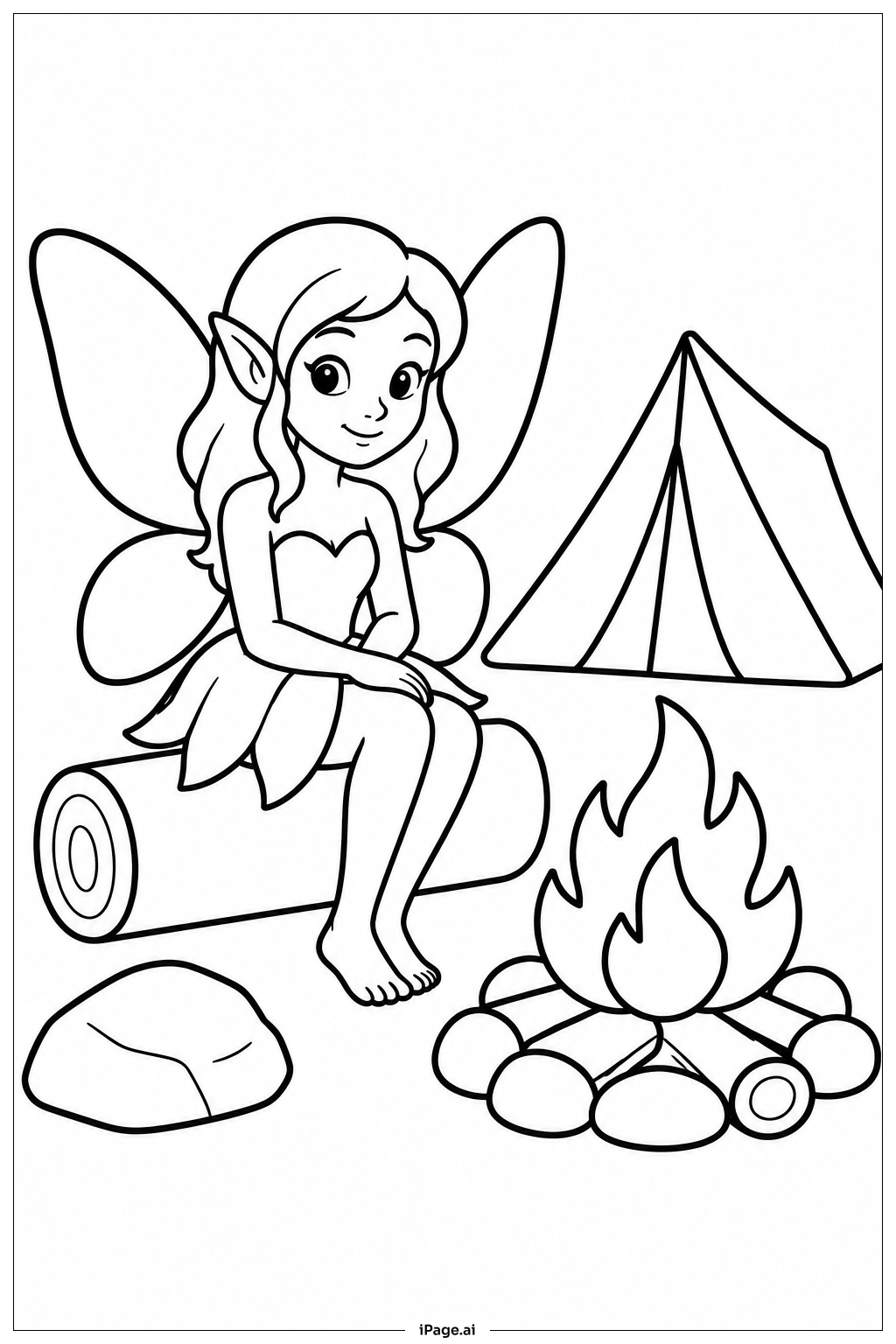
For this image, try using gentle and bright colors to bring out the fairy’s magical feel. Use soft pastels or light shades for the fairy’s dress and wings, such as pale pinks, blues, or lavender. The campfire can be colored with warm tones like oranges, reds, and yellows to show the glow and warmth. For the forest background, use different shades of green for the leaves and brown for the tree trunks. You can make the mushrooms bright and colorful to add fun spots of red or purple. Don’t forget to color the fairy’s hair with a shade that stands out, maybe golden yellow or silver. Feel free to add little touches with colored pencils or markers to give the firelight a glowing effect.
Coloring challenges: Which parts are difficult to color and need attention for Fairy At Campfire coloring page?
• Detailed Wings: The fairy’s wings have many small shapes and curves, which require careful coloring to stay inside the lines and keep the wings looking delicate. • Campfire Flames: The flames of the campfire have layers and flickers that can be tricky to shade correctly. Blending reds, oranges, and yellows smoothly can be challenging. • Small Background Elements: The mushrooms, leaves, and grass are small and detailed, needing patience to color them neatly without missing spots. • Light and Shadow: Showing the glow of the campfire on the fairy and surroundings requires attention to where light and shadow fall, which is a good practice but not easy for beginners. • Layers of Clothing: The fairy’s dress has folds and pleats that require careful shading to show depth without making the colors too dark or muddy.
Benefits of coloring books: Advantages of drawing Fairy At Campfire coloring page
Coloring this Fairy At Campfire image helps develop fine motor skills by practicing precise coloring within small details like wings and mushrooms. It encourages creativity through choosing colors for magical elements like the fairy’s dress, hair, and glowing campfire. Working on light and shadow zones fosters a better understanding of how light affects objects, building artistic skills. Filling in different textures, such as soft wings, flowing cloth, and rough tree bark, enhances observation and concentration. Lastly, this coloring activity promotes relaxation and imagination by immersing children in a peaceful, enchanted forest scene.