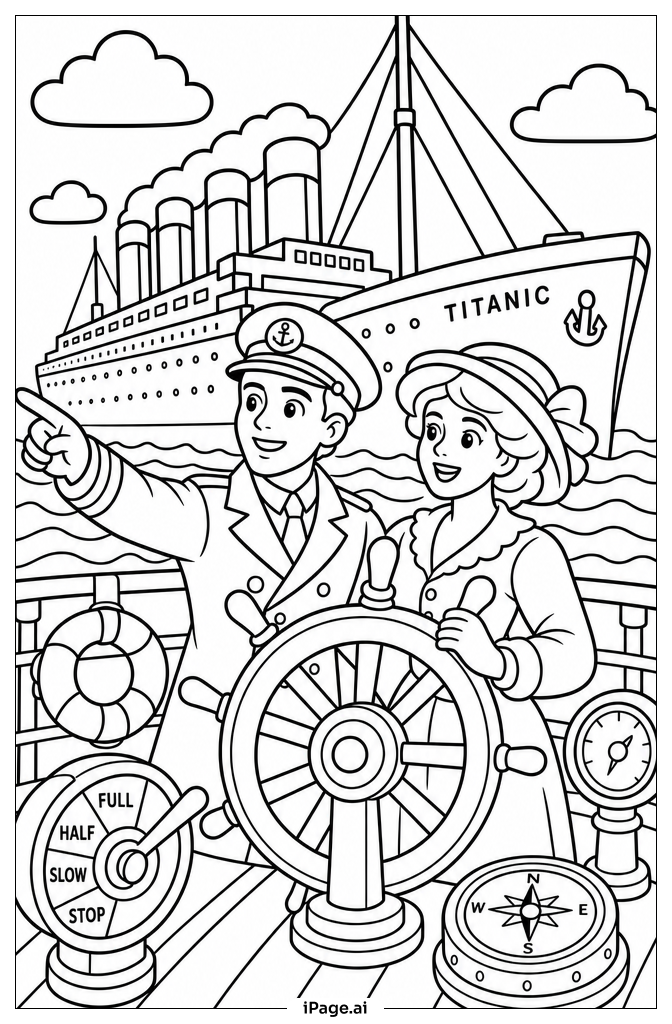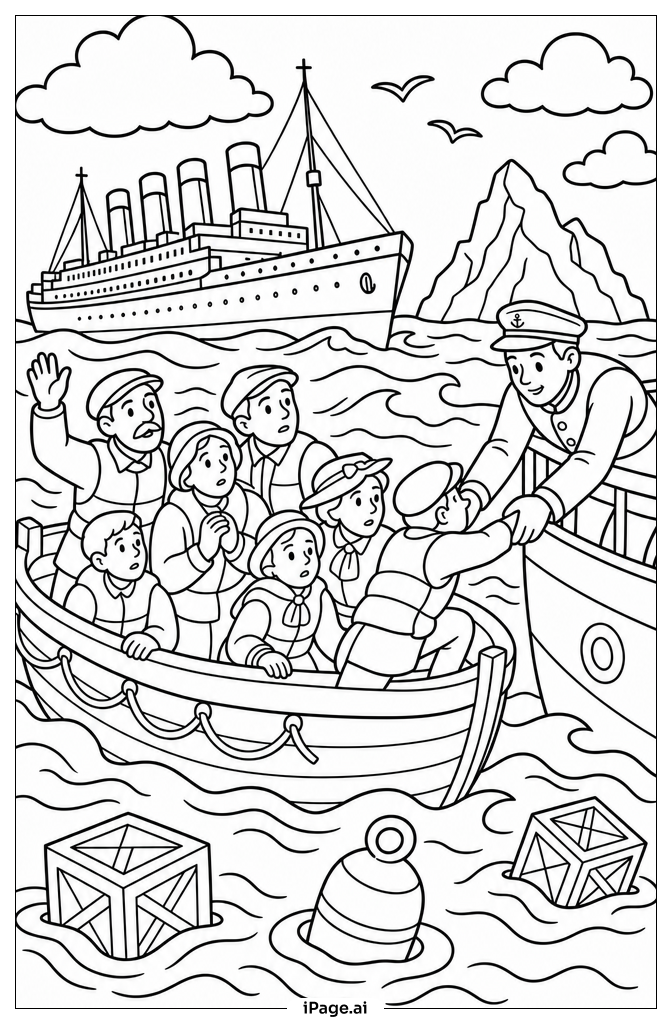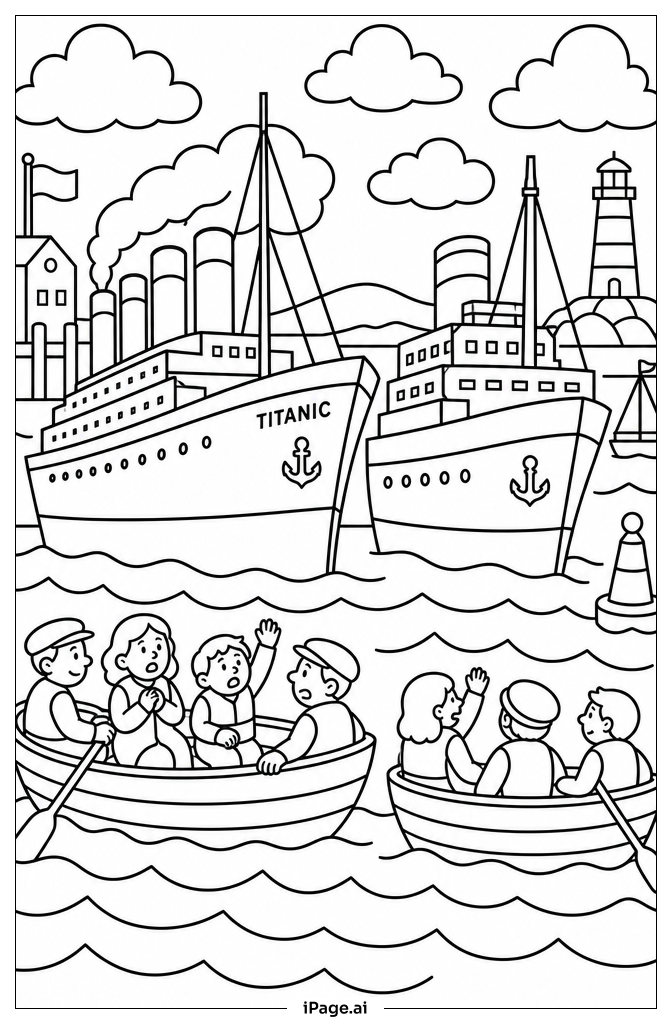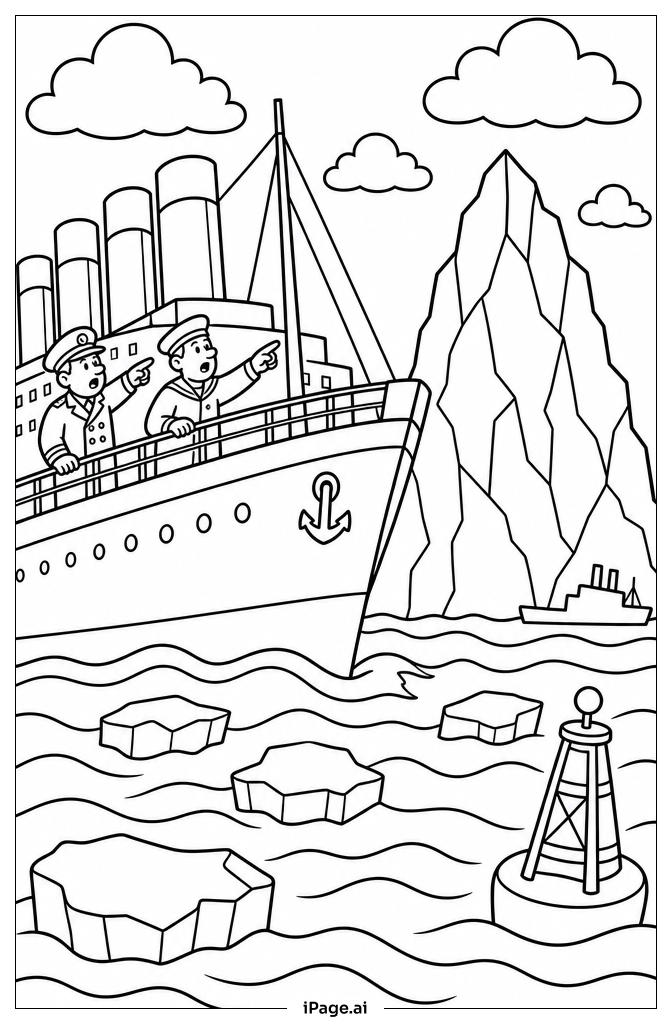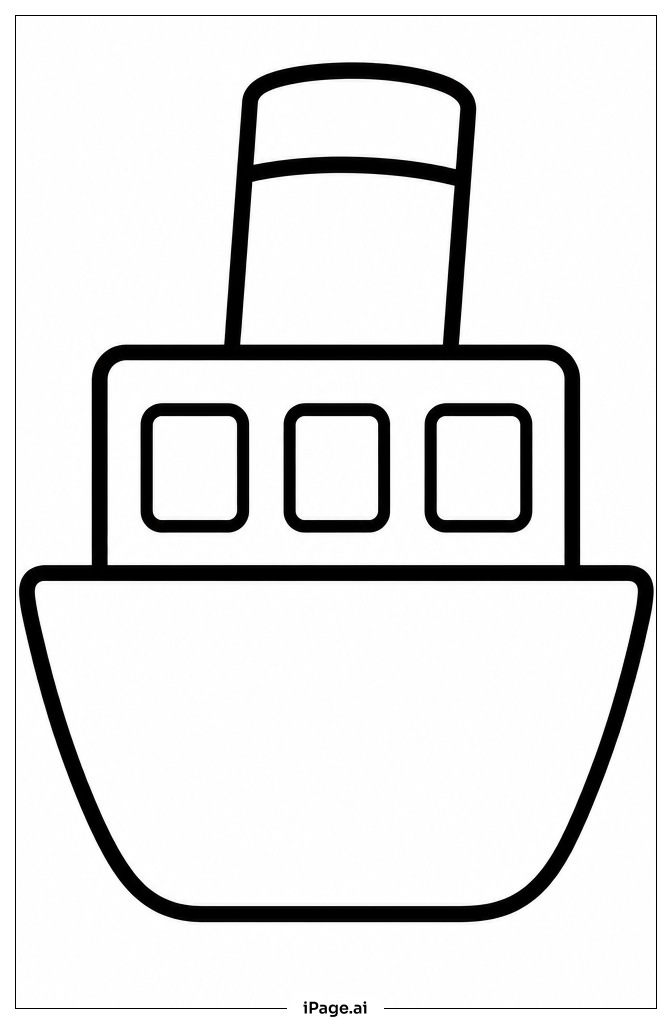
Coloring tips: How to color Titanic Single Deck coloring page well?
Start with the large hull of the ship. Use a deep navy blue or dark gray for the lower hull and a lighter gray or cream for the upper sections. The deck planks look great in warm tan or light brown tones. Paint the railings and metal structures in silver or dark charcoal. For the lifeboats, try a classic white or off-white. The portholes can be filled with a soft yellow or golden color to suggest warm interior lighting. Add a pale blue or aqua tone to any water visible at the base of the hull. Use darker shades to add shadows under the railings and along the deck edges. This helps give the image a three-dimensional feel. Keep your colors consistent across repeating elements like the portholes and railing posts for a clean, polished look.
Coloring challenges: Which parts are difficult to color and need attention for Titanic Single Deck coloring page?
Coloring this Titanic single deck image comes with several challenges that require patience and attention to detail:
• **Repetitive Small Elements:** The deck features many evenly spaced porthole windows and railing posts. Coloring each one consistently without smudging neighboring areas can be tricky, especially for younger colorists. Using a fine-tipped marker or a sharpened colored pencil helps keep these small shapes neat.
• **Long, Straight Lines:** The deck planking runs in long parallel lines across the image. Staying within these narrow strips while applying color requires a steady hand. Colored pencils work best here, as they offer better control than broad markers or crayons.
• **Shading and Depth:** The hull and deck have many flat surfaces that benefit from shading to look realistic. Blending light and dark tones on the hull, under the railings, and along the deck edges adds dimension but can be difficult for beginners. Practicing gradual pressure with colored pencils creates a smooth gradient effect.
• **Lifeboat Details:** The lifeboats hanging from the davits are small and contain fine structural lines. Coloring inside these tiny shapes without going outside the lines takes care and a pointed tool. A white gel pen can also be used to add highlights after coloring.
• **Color Consistency Across the Full Length:** Because the deck stretches across the entire page, maintaining the same color tone from one end to the other can be challenging. Running out of a specific color mid-way can cause uneven results, so it helps to prepare enough of each color before starting.
Benefits of coloring books: Advantages of drawing Titanic Single Deck coloring page
Coloring this Titanic single deck page offers a wonderful mix of fun and learning for kids and history lovers alike.
**Builds Focus and Patience:** The many small details — portholes, railings, and deck planks — encourage children to slow down, concentrate, and work carefully. This strengthens attention span over time.
**Sparks Historical Curiosity:** Engaging with an image of the Titanic naturally leads to questions about the ship, its voyage, and its story. Coloring becomes a gateway to exploring real history in an enjoyable way.
**Develops Fine Motor Skills:** Staying within the lines of small, repeating shapes like portholes and railing posts helps young colorists refine hand-eye coordination and pencil control — skills that support writing and drawing development.
**Encourages Creative Expression:** Choosing colors for the hull, deck, and lifeboats lets children make their own artistic decisions. There is no single right answer, which builds confidence and creative thinking.
**Provides a Calming Activity:** The rhythmic, repetitive nature of coloring long deck lines and evenly spaced details has a soothing effect. It helps reduce stress and provides a healthy, screen-free way to unwind for both kids and adults.