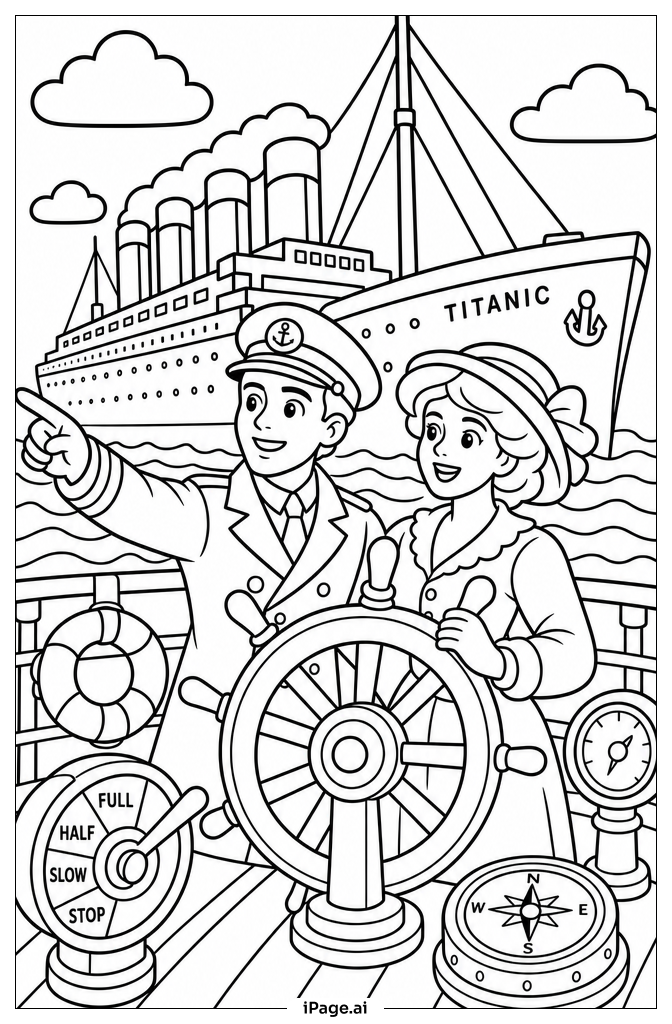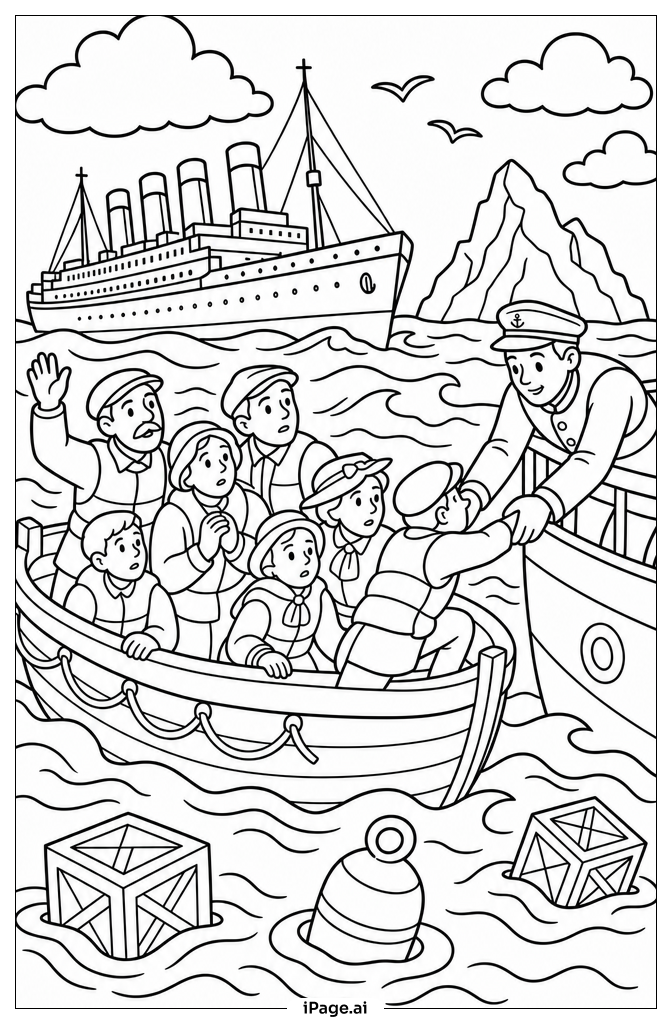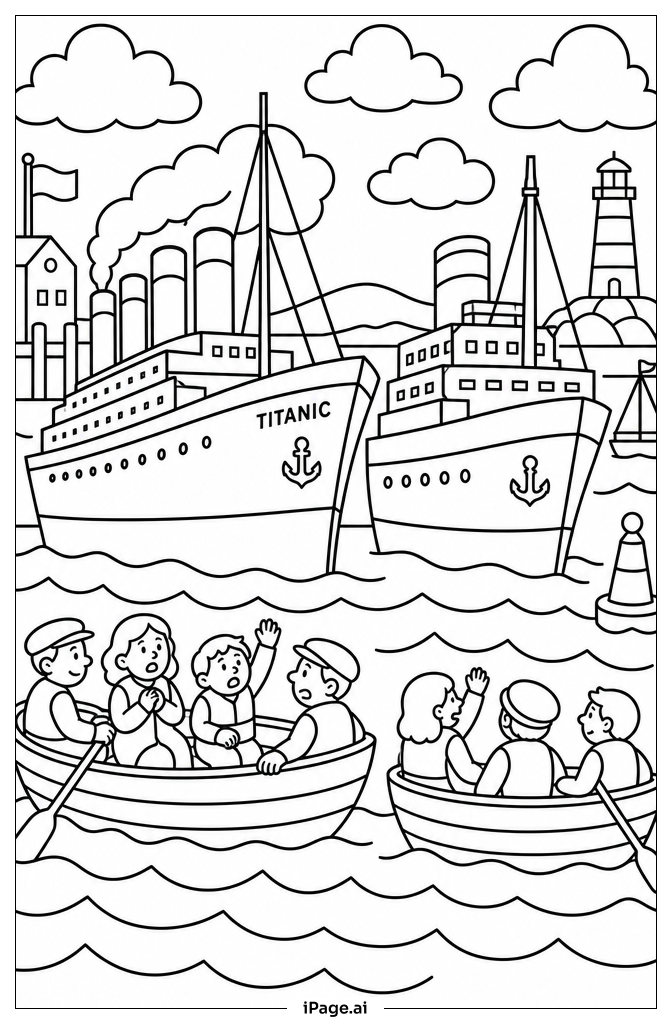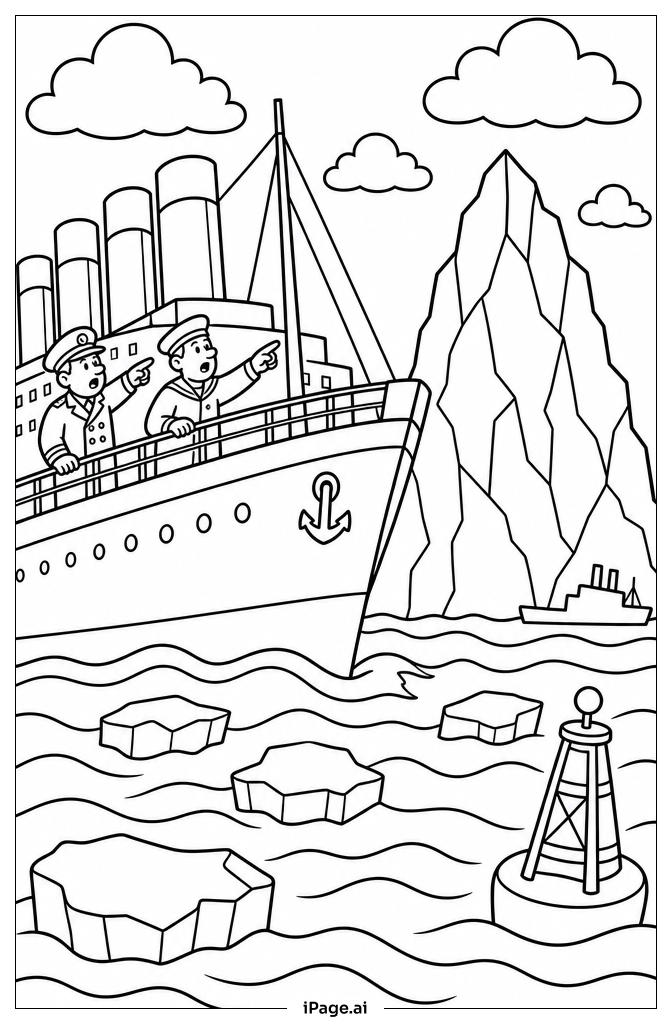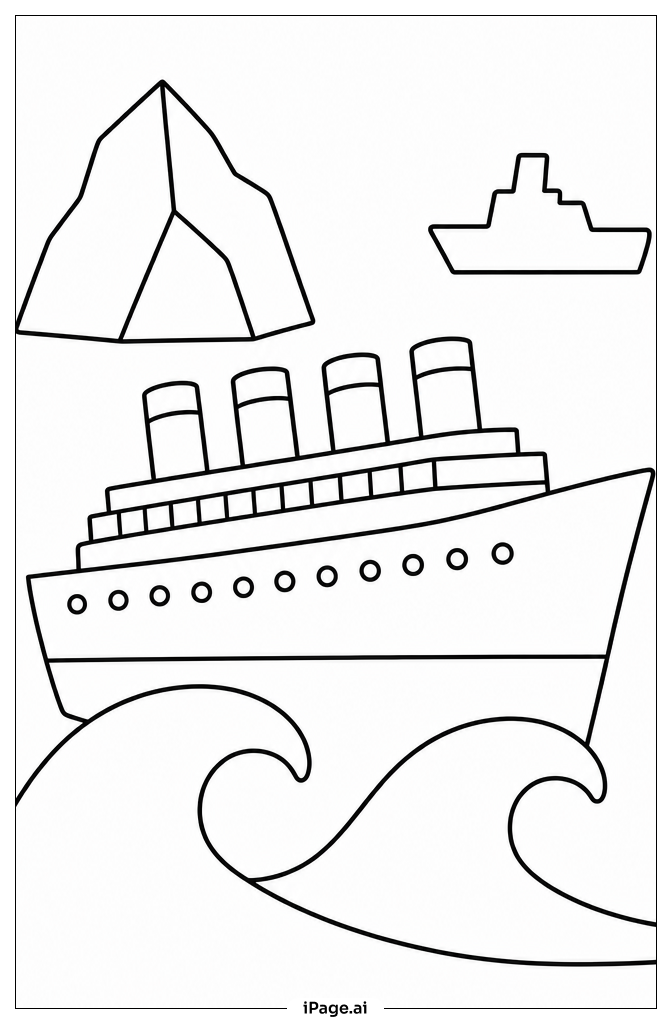
Coloring tips: How to color Titanic Iceberg Near coloring page well?
Start with the sky. Use deep navy blue or dark purple for the night sky. Add small white or pale yellow dots for the stars. For the ocean, use shades of dark blue and teal. Add lighter blue or white streaks to show the waves and foam around the ship's bow. Color the Titanic's hull in classic black or dark gray for the lower section, and white or cream for the upper decks. The smokestacks can be painted in black with a red or orange band near the top. Use warm yellow or orange for the glowing portholes to suggest light from inside the ship. For the iceberg, use white as the base, then add light blue and pale gray shadows to give it a cold, three-dimensional look. Darker blue-gray tones work well for the underwater portion if visible. Keep your strokes smooth and layered to create depth and drama in this historic scene.
Coloring challenges: Which parts are difficult to color and need attention for Titanic Iceberg Near coloring page?
Coloring this image comes with several exciting challenges that will test your patience and skill:
• **The Night Sky and Stars:** Creating a realistic night sky requires blending dark blues, purples, and blacks smoothly without muddying the colors. Leaving tiny white dots or carefully adding star details without smudging the dark background can be tricky, especially for younger colorists.
• **The Iceberg's Texture and Depth:** Icebergs are not simply white — they have complex shadows, cracks, and translucent blue-green tones. Capturing the cold, three-dimensional feel of the iceberg means layering multiple shades of white, light blue, and gray. Getting the shading right so it looks icy rather than flat is one of the hardest parts of this image.
• **The Ship's Fine Details:** The Titanic has many small, intricate features — rows of tiny portholes, railings, smokestacks, and the riveted hull. Staying within these small areas without going over the lines requires a sharp pencil or fine-tipped marker and a steady hand.
• **The Ocean Waves:** Water is always challenging to color convincingly. The dark, choppy North Atlantic needs careful blending of deep blues and greens, with white highlights to suggest movement and foam. Achieving a sense of depth and motion without overworking the area takes practice.
• **Tonal Contrast Between Ship and Sea:** Since both the ship's hull and the ocean are dark, maintaining clear contrast between them so each element reads separately is a subtle but important challenge. Using slightly different hues or values for each helps keep the composition clear and visually striking.
Benefits of coloring books: Advantages of drawing Titanic Iceberg Near coloring page
Coloring this Titanic iceberg scene offers a wonderful mix of fun, learning, and creative growth for kids and adults alike.
**Historical Connection:** As you color, you naturally learn about one of history's most famous ships. It sparks curiosity about the Titanic's story, ocean exploration, and real-world events.
**Focus and Patience:** The many fine details — tiny portholes, ship railings, and the iceberg's jagged edges — encourage children to slow down, concentrate, and work carefully. This builds patience and attention to detail.
**Color Theory Practice:** Choosing the right shades for a dark night sky, a glowing ship, and a cold iceberg teaches kids how colors interact. Blending blues, grays, and whites to create mood and depth is a practical lesson in color theory.
**Emotional Expression:** The dramatic, tense atmosphere of the scene gives colorists a chance to express feelings through their color choices — making the scene feel eerie, mysterious, or even hopeful.
**Fine Motor Skills:** Staying within the detailed lines of the ship and iceberg strengthens hand-eye coordination and fine motor control, skills that are especially valuable for younger children.
**Confidence and Pride:** Completing a complex, story-rich image like this gives a real sense of accomplishment, boosting self-confidence and encouraging kids to take on bigger creative challenges.