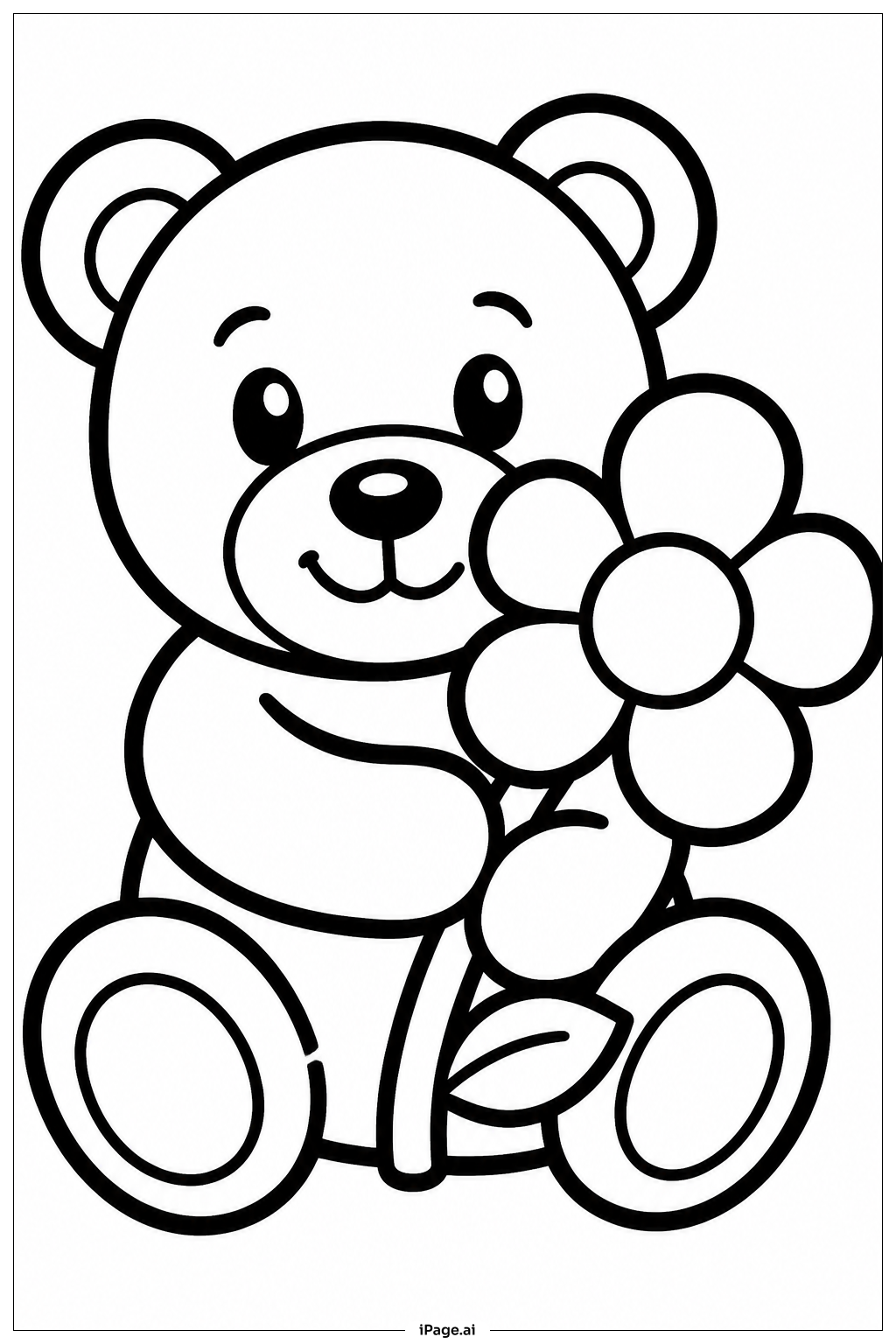
Coloring tips: How to color Teddy Bear With Flower coloring page well?
For this Teddy Bear With Flower picture, try using warm, soft tones to bring the scene to life. You could color the bear in shades of light brown, beige, or golden yellow to create a cuddly feel. The flower can be vibrant with reds, pinks, or purples to make it stand out. Add green shades to the leaves for a natural touch. Don’t forget to color the eyes shiny black or dark brown to give the bear its friendly expression. Use lighter and darker colors to add shadows and highlights, making the Teddy Bear look three-dimensional and cozy. Young artists can experiment with pastel or bright colors to create their own special version.
Coloring challenges: Which parts are difficult to color and need attention for Teddy Bear With Flower coloring page?
• Achieving the right texture for the Teddy Bear’s fur can be tricky. The detailed lines require careful coloring to keep the soft, fluffy look without going outside the lines.
• Coloring the flower petals requires attention to small spaces and layered shading to capture the delicate nature of the bloom.
• Getting the eyes to look bright and lively takes control over blending dark tones without smudging.
• The paw that holds the flower has fine details and rounded contours, which can challenge precision in coloring within the lines.
• Balancing shadows and highlights on the bear’s body while keeping the coloring smooth and natural demands patience and some practice.
Benefits of coloring books: Advantages of drawing Teddy Bear With Flower coloring page
Coloring this Teddy Bear With Flower page helps children develop fine motor skills and hand-eye coordination because of the careful attention needed for details. It encourages creativity as children choose colors and experiment with shading. The theme of a friendly bear sharing a flower promotes feelings of kindness and empathy. Coloring this image also improves focus and patience, making it a calming and rewarding activity. For younger children, it supports basic color recognition, while older kids can practice more advanced techniques like blending and texture creation.