Coloring tips: How to color Spring Simple Flower Basket coloring page well?
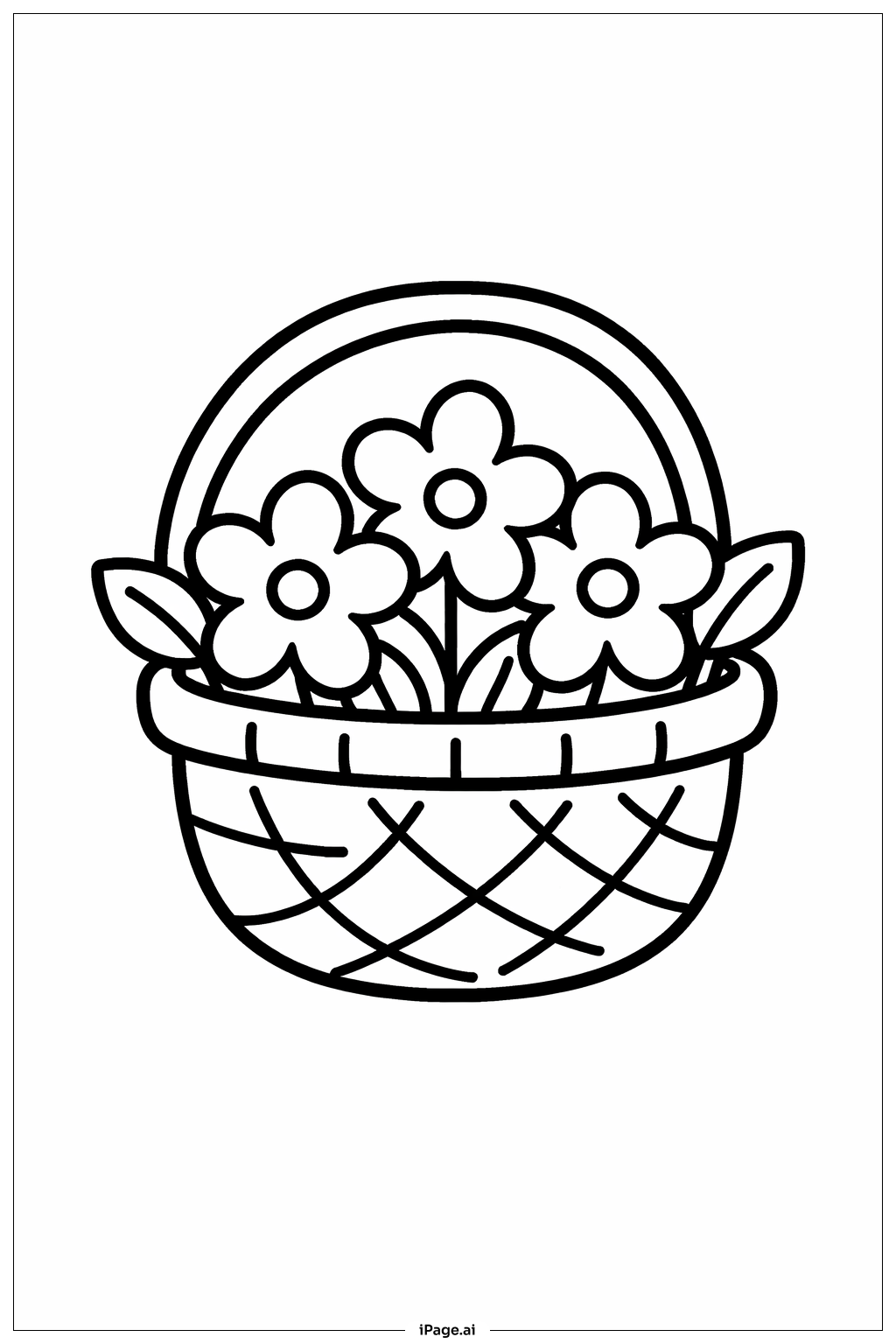
Start with the basket using warm browns, tans, or natural wicker colors. You can alternate lighter and darker shades on the woven strips to create a realistic woven texture. For the flowers, embrace the vibrant colors of spring! Try bright yellow or white for the daisies, with sunny yellow centers. Color the tulips in classic reds, pinks, purples, or even cheerful yellows. Mix and match different flower colors to create a rainbow effect, or choose a coordinated color scheme like pastels for a soft look or bold primary colors for something more striking. Use various shades of green for the leaves and stems, from light lime to deep forest green. Don't forget to add orange or brown centers to flowers like daisies. You can even add shading by pressing harder with your coloring tool on one side of each petal.
Coloring challenges: Which parts are difficult to color and need attention for Spring Simple Flower Basket coloring page?
• Basket Weaving Pattern: The interlaced strips of the basket require careful attention to maintain the over-under pattern. Young colorists may find it challenging to keep track of which strip goes over or under, especially where multiple strips intersect. Using two alternating shades helps distinguish the weaving direction and creates a more realistic three-dimensional appearance.
• Overlapping Flowers: Several flowers overlap each other in the arrangement, which can be tricky for children to navigate. Deciding where one flower ends and another begins requires careful observation of the lines. It helps to color one complete flower at a time, working from front to back, so you can see which petals belong to which bloom.
• Petal Consistency: Each flower has multiple petals that ideally should be colored uniformly or with intentional variation. Maintaining steady pressure and consistent strokes across all petals of a single flower takes practice and patience. Younger children might struggle with staying inside the lines on the curved petal edges.
• Small Spaces Between Elements: The gaps between flowers, leaves, and basket elements are sometimes quite narrow. These tight spaces can be difficult to color neatly without accidentally going over the lines or leaving white spots. Using fine-tipped coloring tools like colored pencils or thin markers works better than thick crayons for these detailed areas.
Benefits of coloring books: Advantages of drawing Spring Simple Flower Basket coloring page
Coloring this spring flower basket helps children develop fine motor skills as they carefully fill in petals, leaves, and the intricate basket weave. The variety of shapes and sizes encourages hand-eye coordination and precision. This image also teaches kids about spring flowers and nature, helping them recognize different flower types like daisies and tulips. Choosing colors for each flower promotes creativity and decision-making skills. The repetitive patterns in the basket weaving can have a calming, meditative effect, reducing stress and promoting relaxation. Completing this detailed image builds confidence and provides a sense of accomplishment. The cheerful spring theme can boost mood and create positive associations with the season. This coloring page also offers opportunities to practice color theory by experimenting with complementary colors and shading techniques.