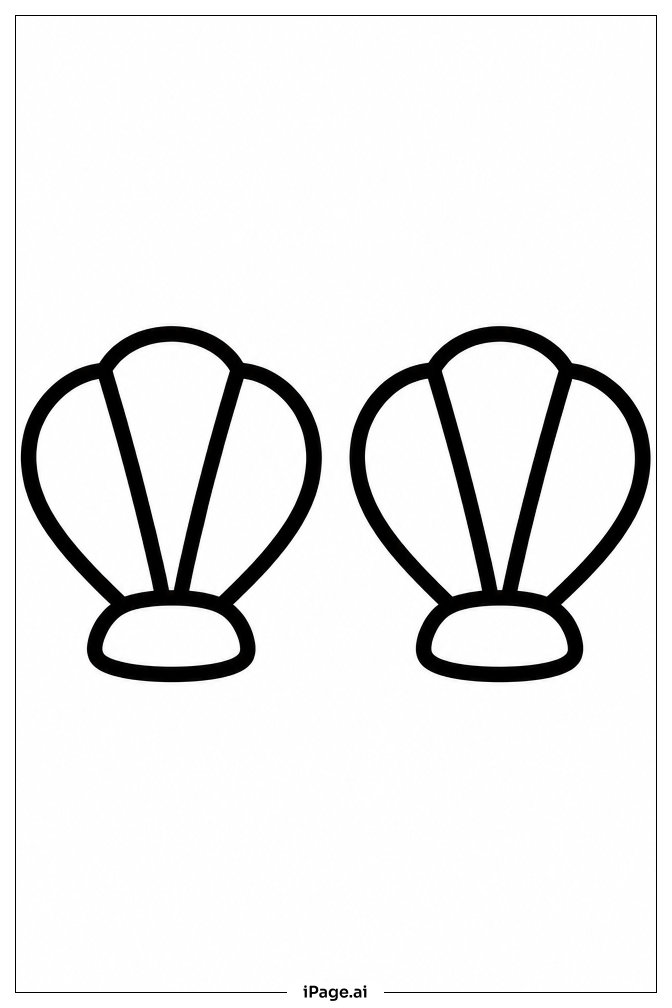
Coloring tips: How to color Tiny Seashell Pair coloring page well?
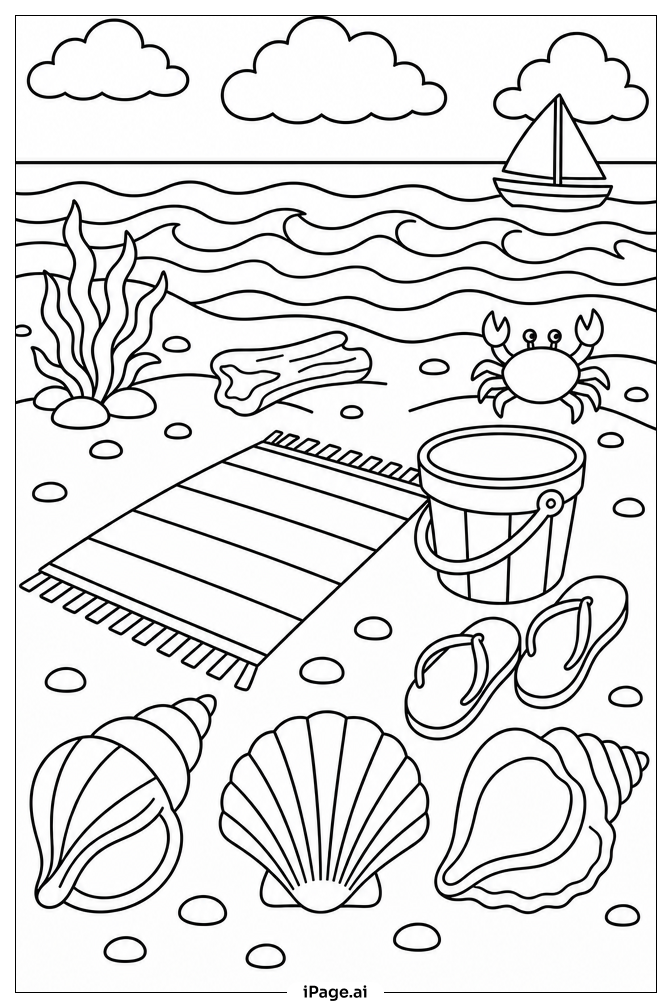
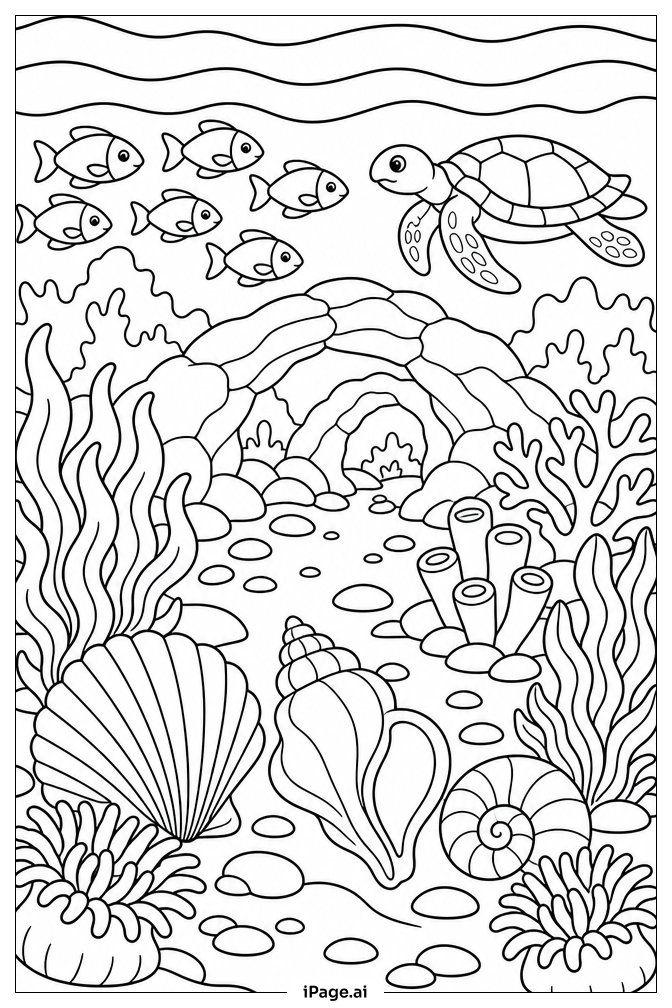
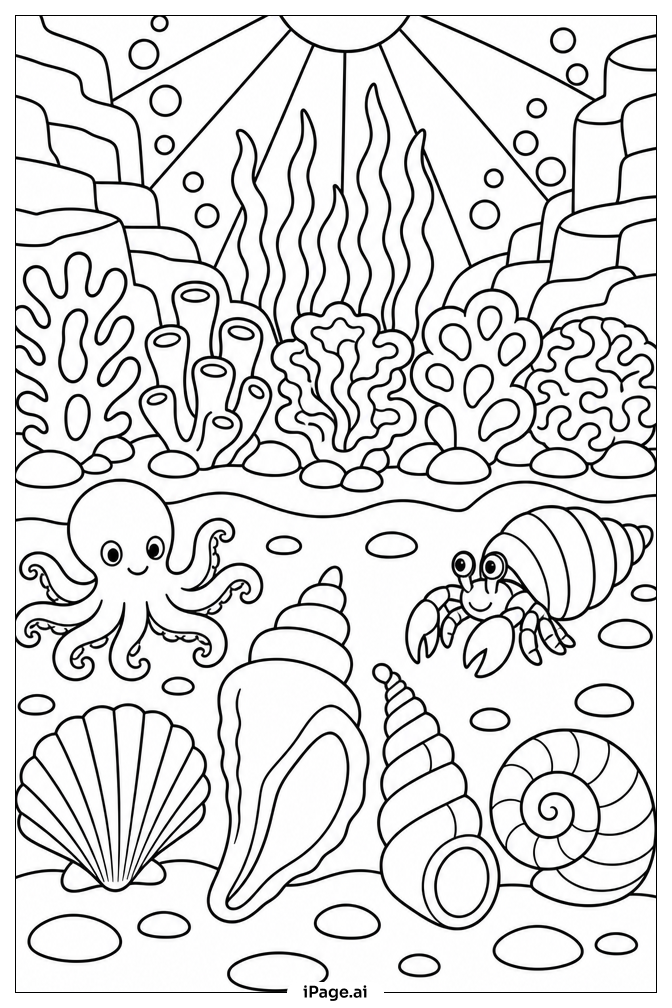
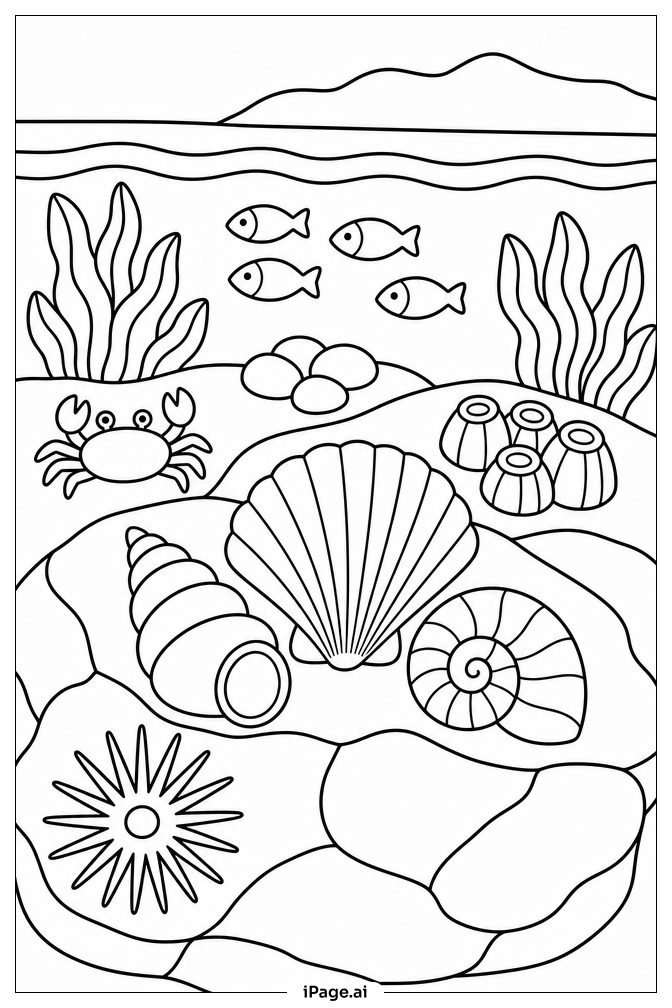
Start by choosing a soft, natural color palette inspired by real beach seashells. Creamy whites, warm beiges, soft pinks, and pale corals work beautifully for the base of each shell. For the spiral shell, try shading from a darker tan at the tip to a lighter cream near the opening to show depth. For the fan-shaped shell, use gentle strokes that follow the radiating lines outward, gradually lightening the color as you move toward the edges. Add a hint of peach or lavender for a dreamy touch. Use a light brown or gray pencil to add shadows along the ridges and grooves, giving the shells a three-dimensional look. Light blue or soft sand tones in the background can help the shells pop. This page is great for beginners and kids who want to practice blending and shading in a fun, relaxed way.
Coloring challenges: Which parts are difficult to color and need attention for Tiny Seashell Pair coloring page?
• Spiral Shell Ridges: The cone-shaped shell has many curved ridges that spiral from the pointed tip to the open end. Staying inside each narrow ridge without crossing the lines can be tricky, especially near the tightly wound tip where the spaces become very small. Use a fine-tipped colored pencil or a thin marker for the best results in these tight areas.
• Fan Shell Radiating Lines: The rounded shell features many lines that fan outward from a central point at the base. Coloring along these lines evenly, while keeping a smooth gradient from center to edge, requires a steady hand and patience. Rushing through this section can result in uneven tones that break the natural look of the shell.
• Surface Texture Details: Both shells include small dots, bumps, and subtle grooves scattered across their surfaces. These tiny details are easy to overlook but add a lot of life to the finished piece. Taking time to color around them carefully, or using them as accent points with a contrasting shade, can make a big difference in the final result.
• Shading and Depth: Because both shells are three-dimensional objects, creating a realistic sense of depth requires thoughtful shading. Identifying where the light would naturally hit each shell and leaving those areas lighter — while darkening the shadowed curves — can be challenging for younger or less experienced colorists.
• Keeping the Pair Visually Balanced: Since two shells appear together, making sure neither one overpowers the other in terms of color intensity and detail is an important visual challenge. Choosing complementary color combinations that feel harmonious keeps the pair looking like a unified, natural scene.
Benefits of coloring books: Advantages of drawing Tiny Seashell Pair coloring page
Coloring this Tiny Seashell Pair page offers a wonderful range of benefits for kids and young artists. Working with the fine details of each shell helps build focus and concentration, which are important skills both in and out of school. Following the ridges and lines carefully also strengthens hand-eye coordination and fine motor skills, making it great practice for writing and drawing. Choosing colors for the shells encourages creativity and artistic decision-making, helping children develop their own sense of style and aesthetic judgment. The relaxing, repetitive motion of coloring inside the shell's textures can also have a calming effect, reducing stress and promoting a sense of quiet enjoyment. Learning to blend and shade natural tones introduces young colorists to basic color theory in a hands-on, playful way. Plus, discovering how to recreate the look of a real shell from the beach sparks curiosity about nature and the world around them. Completing the page gives a satisfying sense of achievement that builds confidence and encourages kids to keep creating.