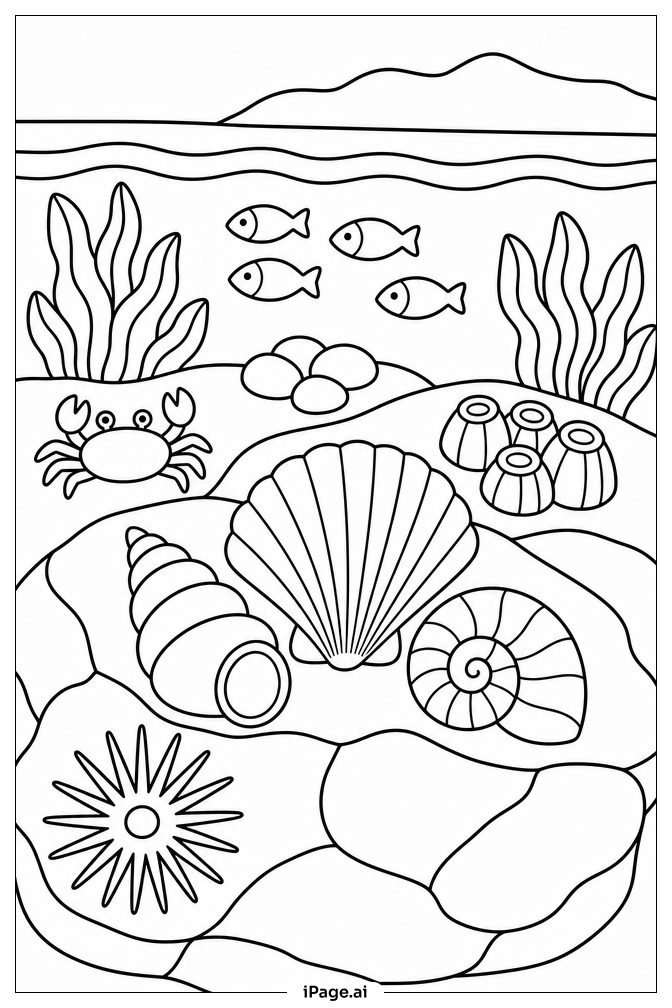
Coloring tips: How to color Seashell Tidepool Scene coloring page well?
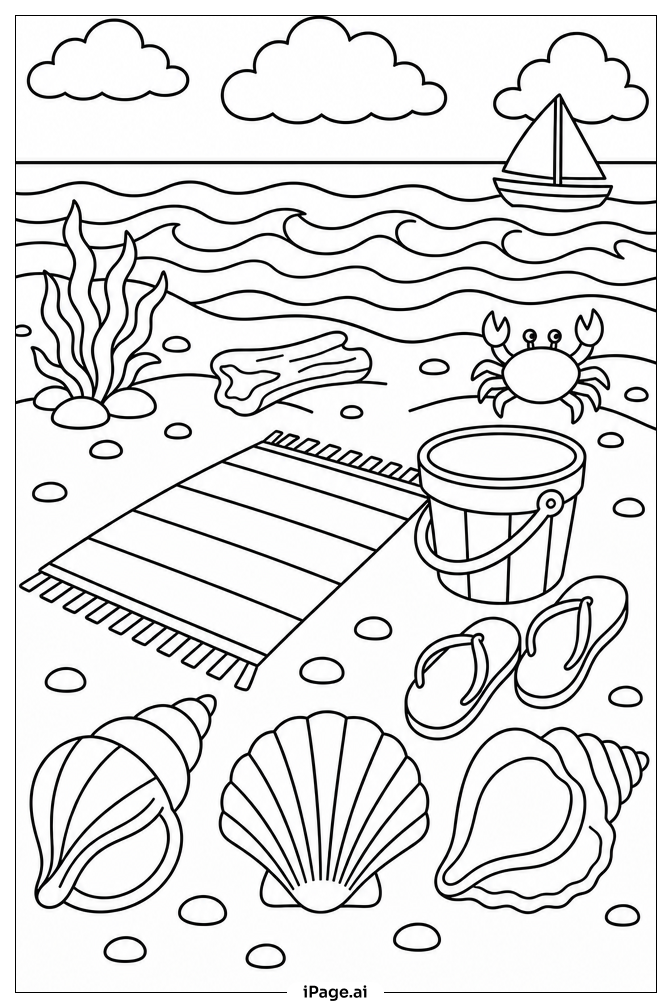
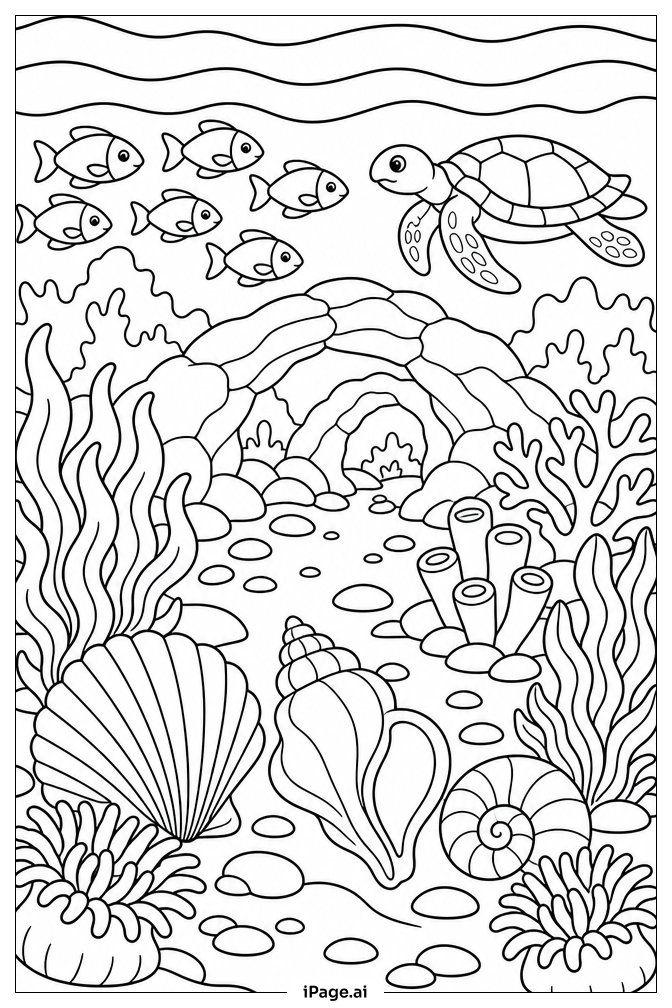
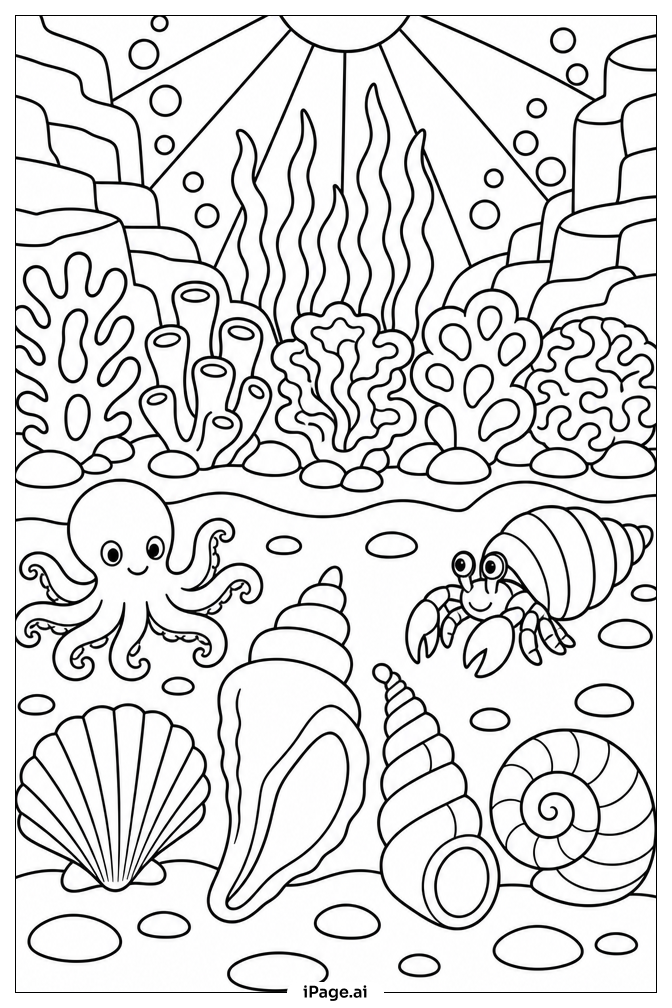
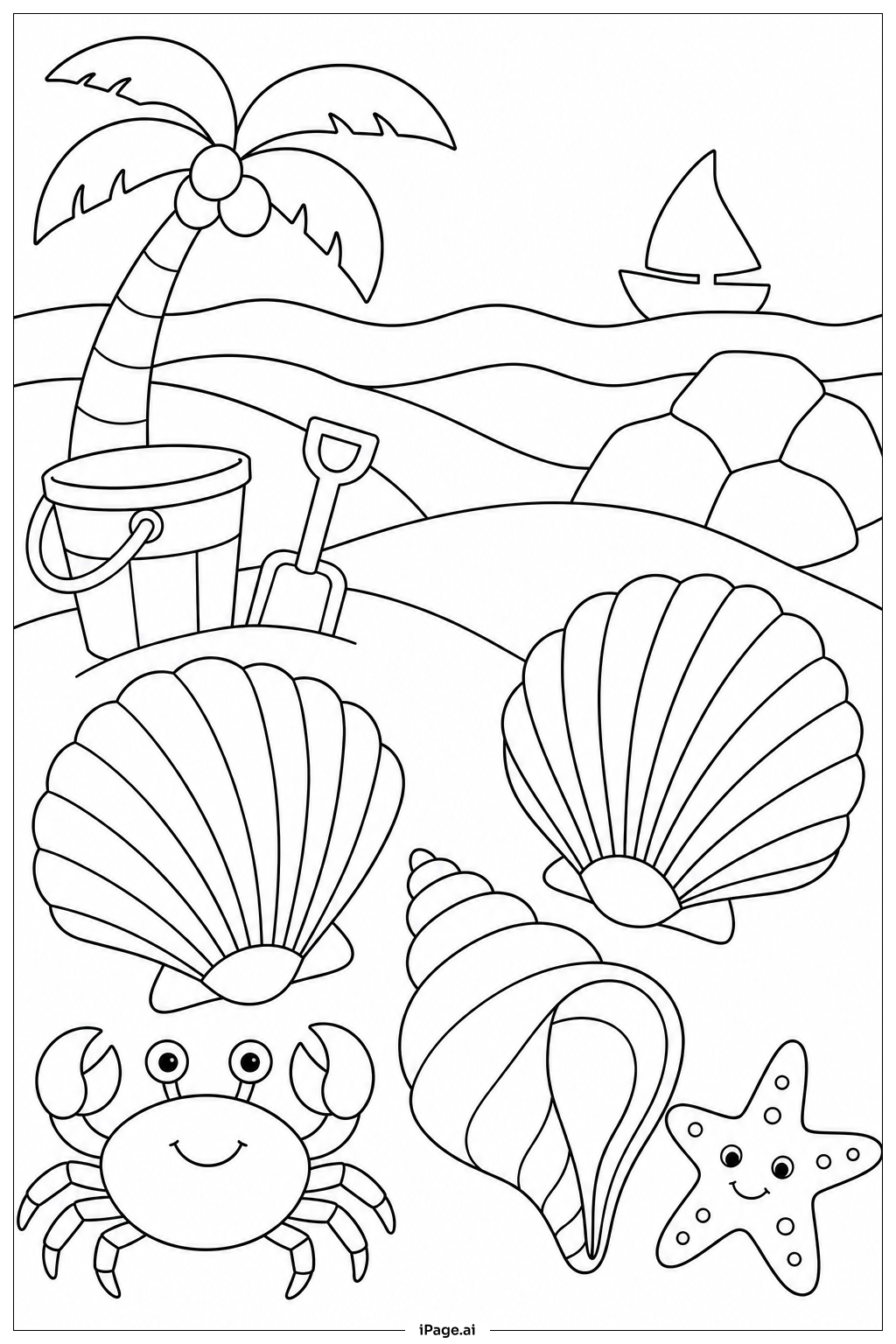
Start with the sandy areas using warm tan and golden yellow tones. Color the ocean water in shades of light blue and aqua to give it a clear, shallow feel. For the seashells, use a mix of soft pinks, creamy whites, peach, and warm oranges — try adding stripes or spots to make each shell unique. Paint the starfish in bright orange or yellow. Give the sea anemones vivid colors like purple, red, or magenta to make them pop. Use deep greens for the seaweed and soft browns for the rocky surfaces. Small fish can be colored in bright, tropical shades like teal, yellow, or coral. Don't be afraid to mix colors and add your own creative patterns to each shell!
Coloring challenges: Which parts are difficult to color and need attention for Seashell Tidepool Scene coloring page?
Coloring this tidepool scene comes with several fun challenges to work through:
• **Shell detail and patterns:** Each seashell has its own unique ridges, spirals, and surface textures. Carefully following these fine lines with colored pencils or thin markers requires steady hands and patience. Blending two or three colors along the curves of a spiral shell can be tricky but very rewarding.
• **Water texture and transparency:** Capturing the look of shallow, clear tidepool water is one of the hardest parts. You'll need to layer light blues and greens softly without making the water look too dark or flat. Leaving some areas very lightly colored helps suggest the see-through quality of the water.
• **Distinguishing overlapping elements:** Shells, rocks, seaweed, and sea creatures often overlap in this scene. Deciding which element goes in front and using slightly darker shades on the parts that are behind other objects helps create a sense of depth and dimension.
• **Small details on tiny creatures:** The small crabs, fish, and anemone tentacles have very fine details packed into a small space. Using a sharp pencil or a fine-tipped marker is essential here to stay within the lines and add detail without muddying the colors.
• **Balancing the overall color palette:** With so many different elements — shells, water, sand, plants, and animals — keeping the whole image looking balanced and harmonious takes planning. Choosing a consistent color palette before you start and spreading similar colors throughout the scene will help everything feel unified.
Benefits of coloring books: Advantages of drawing Seashell Tidepool Scene coloring page
Coloring this Seashell Tidepool Scene offers a wonderful range of benefits for kids and beginners alike. Working through the many shells, sea creatures, and ocean details helps build fine motor skills and hand-eye coordination as artists carefully stay within the lines and fill in small spaces. The variety of shapes and textures encourages creative thinking, since each shell can be colored in a completely unique way. Kids learn about the natural world as they color — discovering the different types of shells, starfish, and sea life found in real tidepools. The calming, ocean-themed imagery promotes focus and relaxation, making it a great activity for winding down. Choosing and mixing colors for the water, sand, and sea creatures also develops color awareness and artistic confidence. Completing a detailed scene like this gives children a strong sense of accomplishment and pride in their work. Whether colored alone or as a group activity, this page sparks curiosity about the ocean and inspires a love of nature and art.