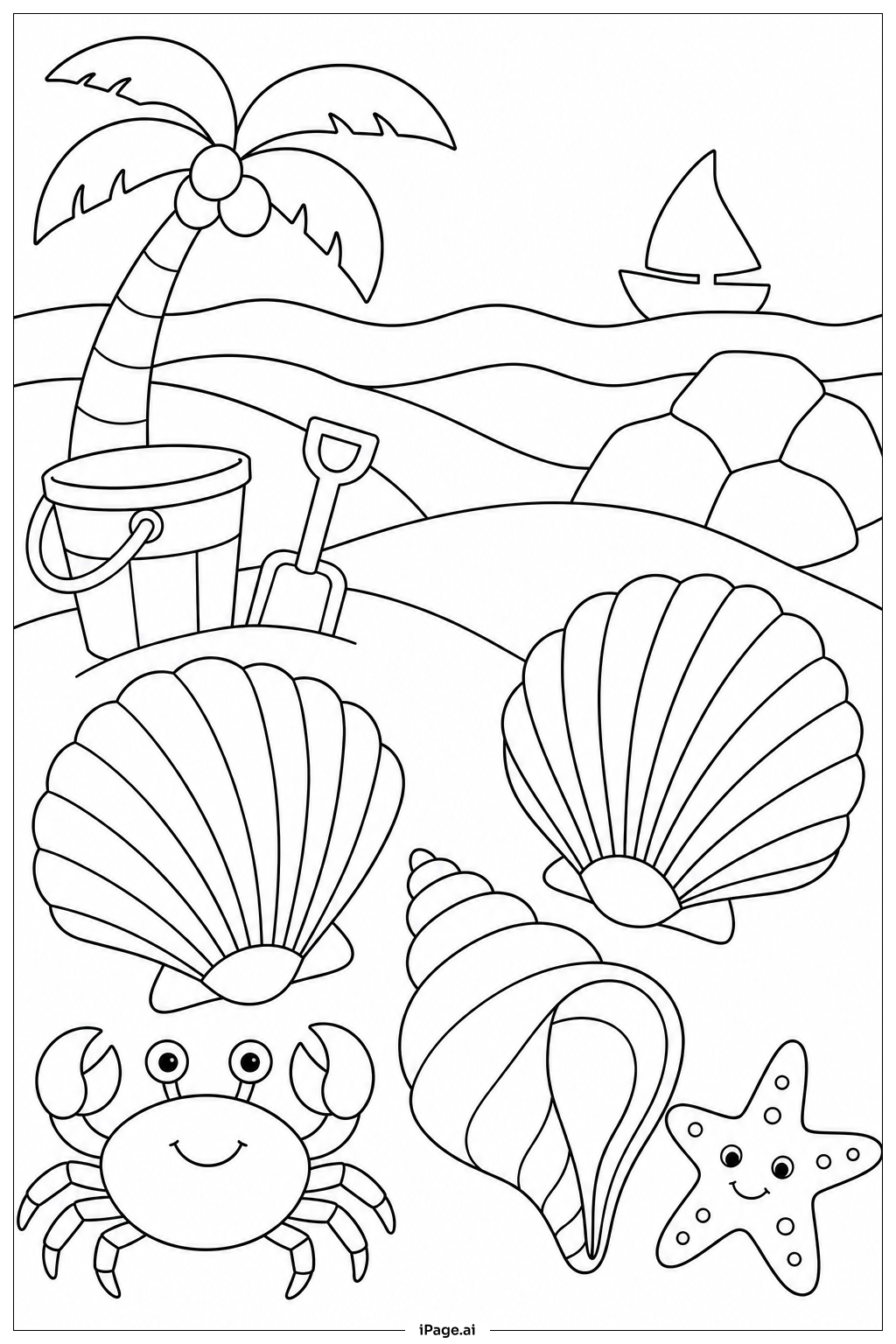
Coloring tips: How to color Seashell Beach Panorama coloring page well?
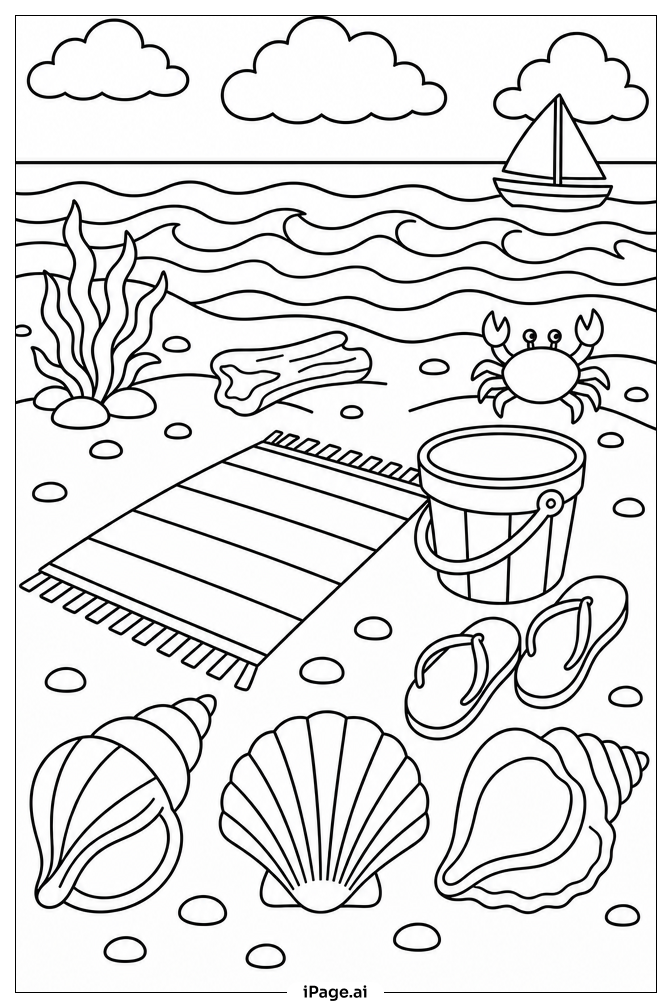
Start with the sky using light blue and soft white for the clouds. Use sandy yellow and pale tan for the beach. Color the ocean in shades of blue and teal — darker near the horizon and lighter close to the shore. For the seashells, use a mix of warm colors: peach, coral, cream, tan, and soft pink. Conch shells look great in orange and pink tones. Scallop shells can be striped with alternating beige and brown. Give sand dollars a soft sandy beige. Color starfish in bright orange or golden yellow. Use deep green for the beach grasses. Adding gentle color gradients will make the scene feel more alive and realistic. Have fun mixing colors to make each shell unique!
Coloring challenges: Which parts are difficult to color and need attention for Seashell Beach Panorama coloring page?
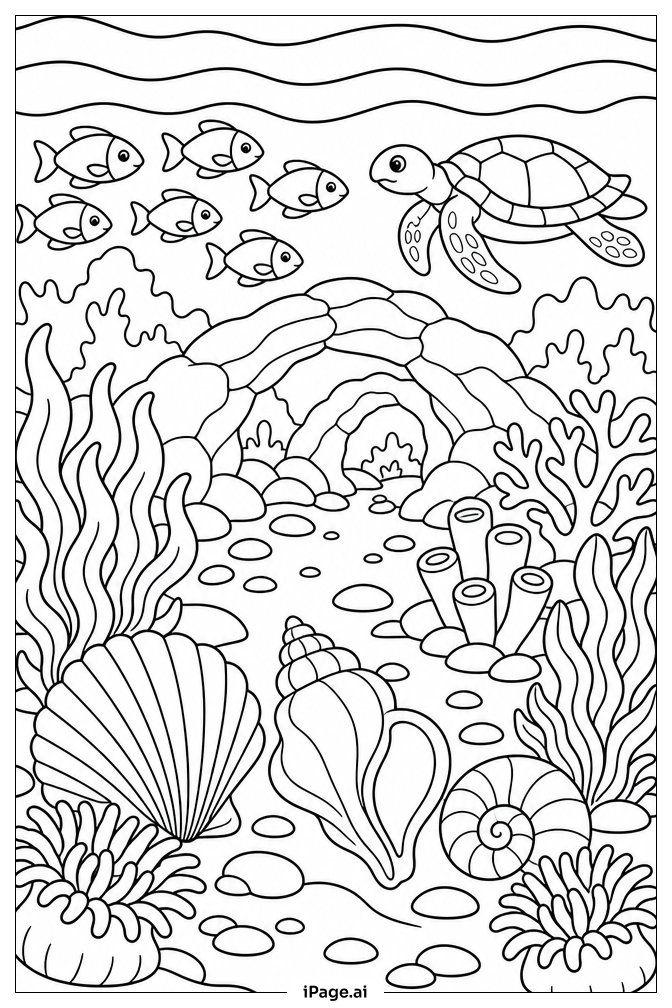
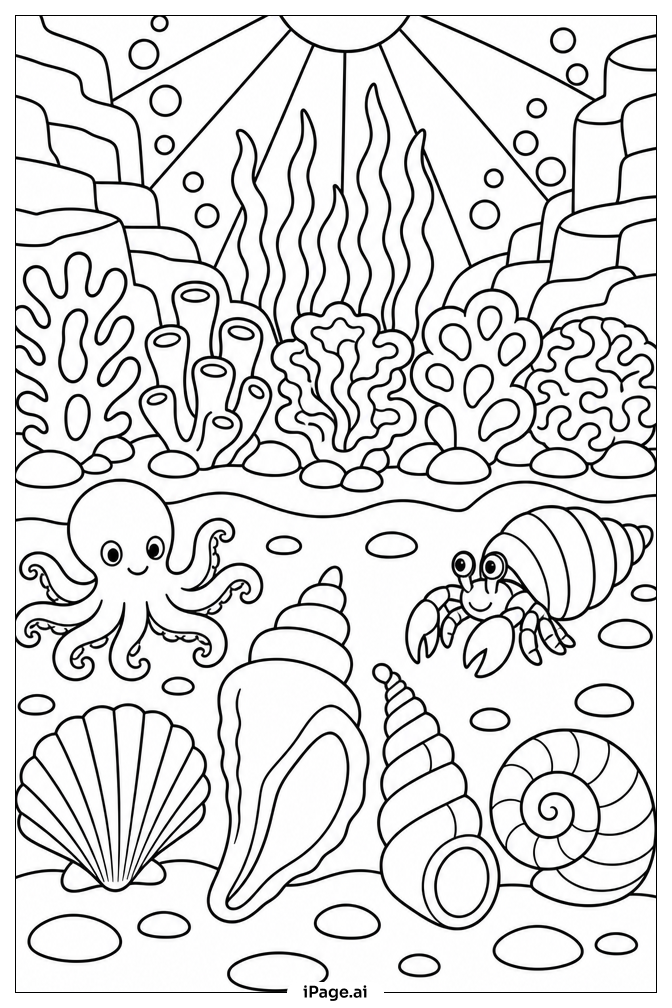
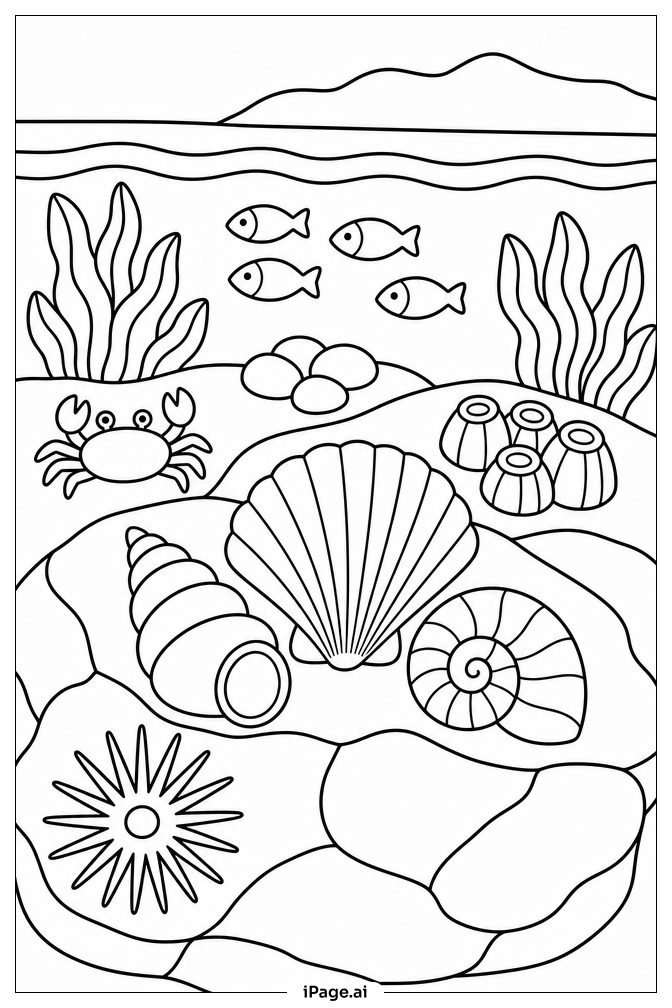
• **Shell Variety and Detail:** The image contains many different types of seashells, each with its own unique shape, texture, and pattern. Coloring ridged scallop shells, spiral conchs, and sand dollars all require different techniques. Staying within the fine lines of each shell's detail without smudging nearby areas is a real challenge, especially for younger colorists.
• **Shading and Depth:** Creating a sense of depth across a wide panorama is tricky. The beach needs to look closer in the foreground and fade into the distance near the water. Blending light and shadow on rounded shell surfaces, such as conch spirals or clam domes, requires careful layering of tones and a steady hand.
• **Ocean Gradient:** Coloring the water realistically means smoothly transitioning from deep blue at the horizon to lighter aqua or turquoise near the shoreline. Achieving a smooth, even gradient without visible streaks or harsh lines can be difficult, particularly with colored pencils or crayons.
• **Busy Foreground:** The foreground is densely packed with shells, starfish, and wet sand details. With so many small, overlapping elements close together, it can be easy to accidentally color outside the lines or lose track of which section you are working on. Planning which areas to color first and using fine-tipped tools helps greatly.
• **Sky and Cloud Balance:** The sky needs to feel light and airy without overpowering the beach scene below. Keeping the clouds soft and the blue sky subtle while still making the overall image vibrant requires a light touch and controlled pressure.
Benefits of coloring books: Advantages of drawing Seashell Beach Panorama coloring page
Coloring this Seashell Beach Panorama offers a wonderful range of benefits for children and young learners. The wide coastal scene encourages creativity, allowing kids to experiment with color choices for each unique shell, the ocean, the sky, and the sandy shore.
Working through the many shell details helps build fine motor skills and improves hand-eye coordination. Carefully coloring within intricate lines trains focus and patience — skills that are valuable both inside and outside the classroom.
The variety of shell shapes also sparks natural curiosity about ocean life and coastal ecosystems. Children may be inspired to learn the names of different shells or explore what sea creatures live inside them, making this a fun gateway to science and nature discovery.
The peaceful beach setting has a naturally calming effect. Spending quiet time coloring this scene can help reduce stress and encourage mindfulness. It gives children a chance to slow down and enjoy a relaxing creative activity.
Finally, completing a large, detailed panorama like this builds a genuine sense of accomplishment. Seeing the finished, colorful artwork displayed proudly is a fantastic confidence boost for colorists of all ages and skill levels.