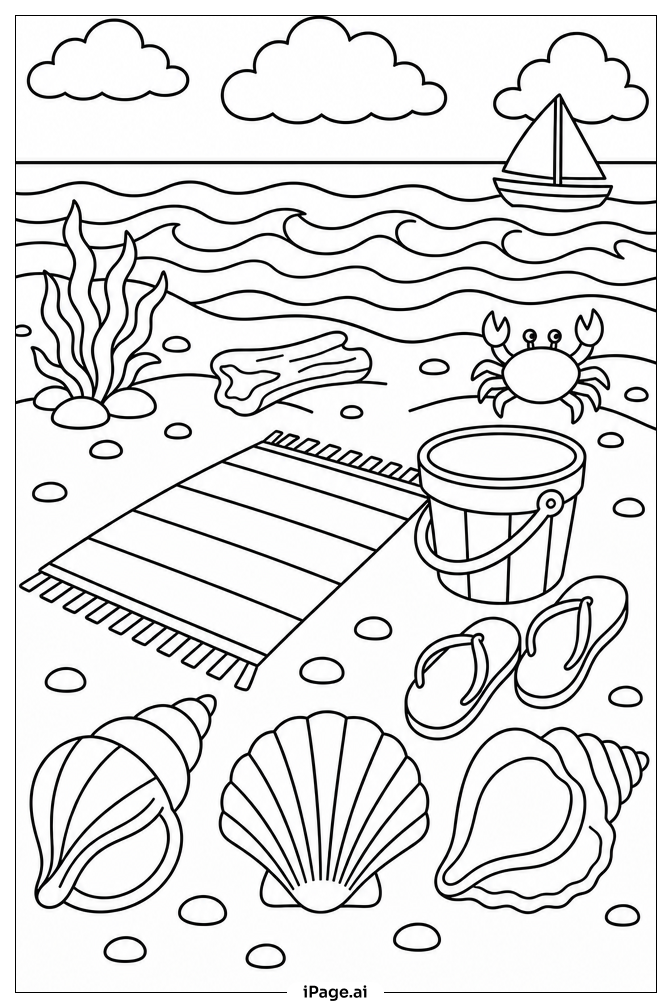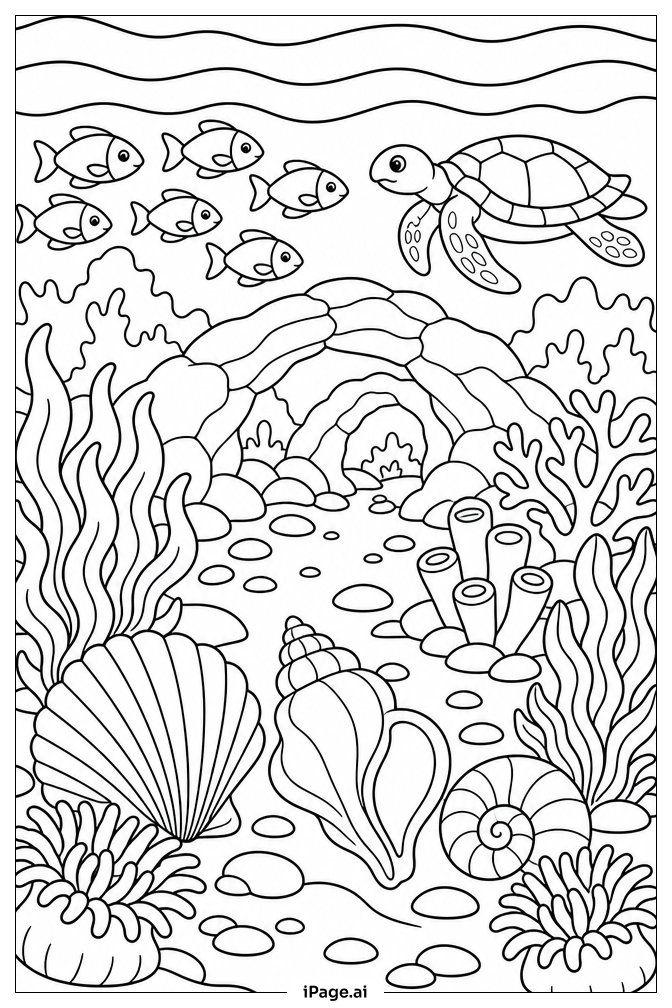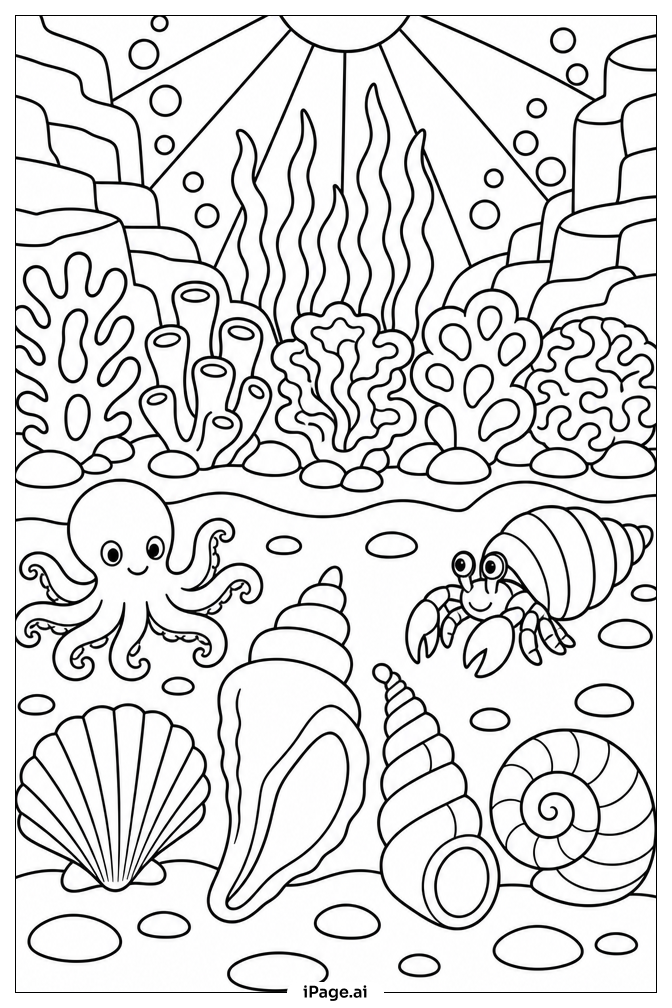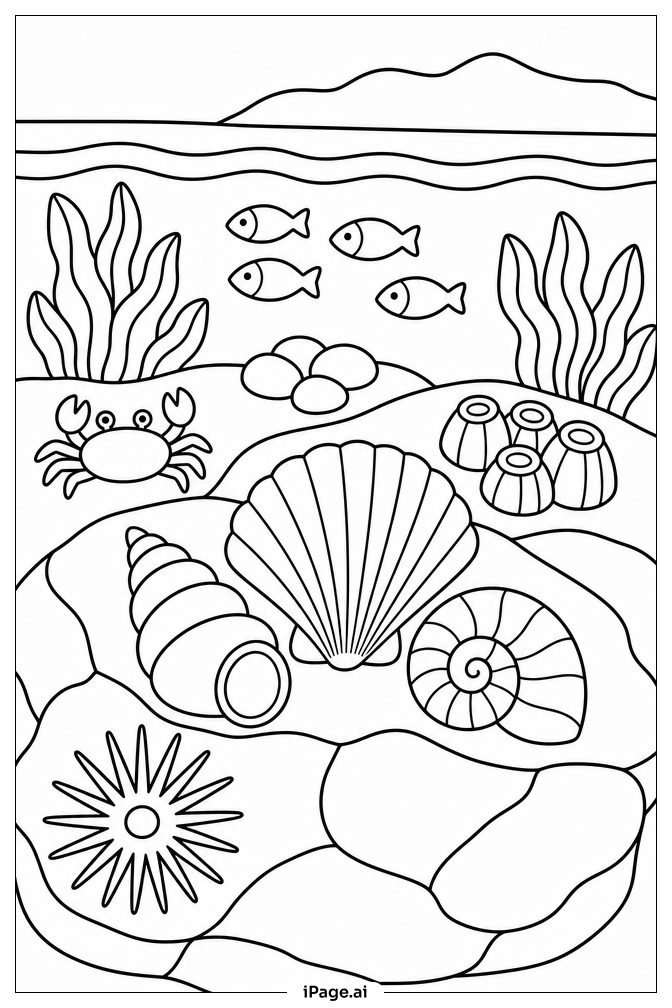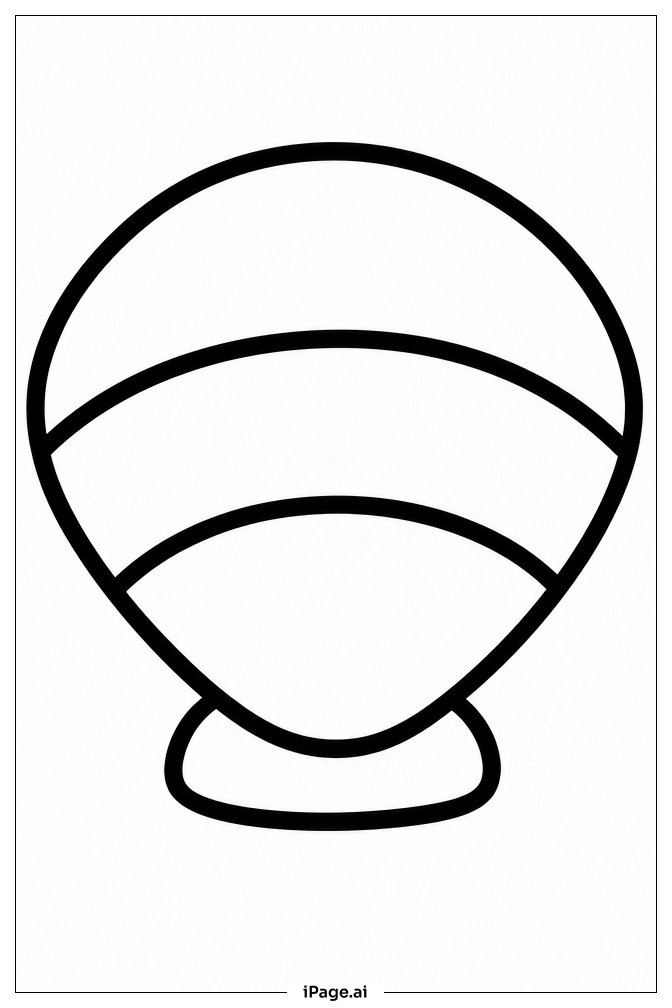
Coloring tips: How to color Striped Seashell coloring page well?
Start by choosing a base color for the shell's background — soft creamy white, pale yellow, or light peach all look great. Then pick two or three colors for the stripes. Real cone shells often have brown, orange, tan, and white patterns, so earthy tones work beautifully. You can also get creative with bright blues, purples, or pinks for a fantasy look! Color each stripe carefully, following the natural curve of the shell. Try making alternating stripes darker and lighter to create contrast. Add a soft highlight along the upper edge of the shell using a white colored pencil or by leaving that area lightly colored. This gives the shell a shiny, polished look. Use a slightly darker shade in the deeper grooves to add depth and make the shell look three-dimensional. Blending colors smoothly from light to dark can make the shell look even more realistic and impressive.
Coloring challenges: Which parts are difficult to color and need attention for Striped Seashell coloring page?
Coloring this striped seashell comes with a few fun challenges to keep in mind:
• **Following the curved stripes accurately:** The stripes on this shell are not straight — they curve and twist along with the shell's spiral shape. Staying inside each stripe's boundaries while following the curve requires steady hands and good concentration. Take your time with each stroke, especially near the narrow tip where the stripes get smaller and closer together.
• **Creating a sense of depth and dimension:** A seashell is a three-dimensional object, and showing that on a flat page is tricky. To make the shell look rounded and real, you need to use shading. The side of the shell facing the light should be lighter, while the edges and curves that face away should be gradually darker. This gradual change from light to shadow is called shading, and it takes practice to get right.
• **Keeping colors consistent across stripes:** If you are using multiple colors for the stripes, it can be challenging to keep each color looking even and consistent from the wide base of the shell up to the narrow tip. Uneven pressure or color changes can make the stripes look patchy. Try to use steady, even pressure throughout.
• **Working in the narrow tip area:** The very top of the shell tapers to a tight point where the stripes become extremely thin. Coloring in this small area without going outside the lines can be difficult, especially with thicker crayons or markers. Fine-tipped colored pencils or thin markers work best here.
• **Adding a realistic shine:** Real seashells have a smooth, glossy surface. Capturing that sheen by leaving small white highlights or blending carefully can be challenging but makes the finished result look stunning.
Benefits of coloring books: Advantages of drawing Striped Seashell coloring page
Coloring this striped seashell page offers many wonderful benefits for kids and beginners alike.
Tracing the long, curved stripes helps children practice fine motor skills and hand control. Staying within the lines and following curves strengthens the same muscles used for writing.
The repeating stripe pattern is a great introduction to color sequencing and pattern recognition. Kids can experiment with alternating colors and discover how patterns create visual harmony.
Choosing colors for a shell encourages creativity and self-expression. There is no single right answer — every child can create their own unique version, building confidence in their artistic choices.
The focused, repetitive motion of coloring is naturally calming. It helps kids slow down, concentrate, and find a peaceful rhythm — a great activity after a busy or stressful day.
Learning about seashells through art also sparks curiosity about nature and ocean life. Kids may want to learn more about where shells come from, what creatures live in them, and how they are formed.
Finally, completing the whole page gives a real sense of accomplishment. A finished, colorful seashell is something to be proud of and makes a beautiful piece of artwork to display or share.