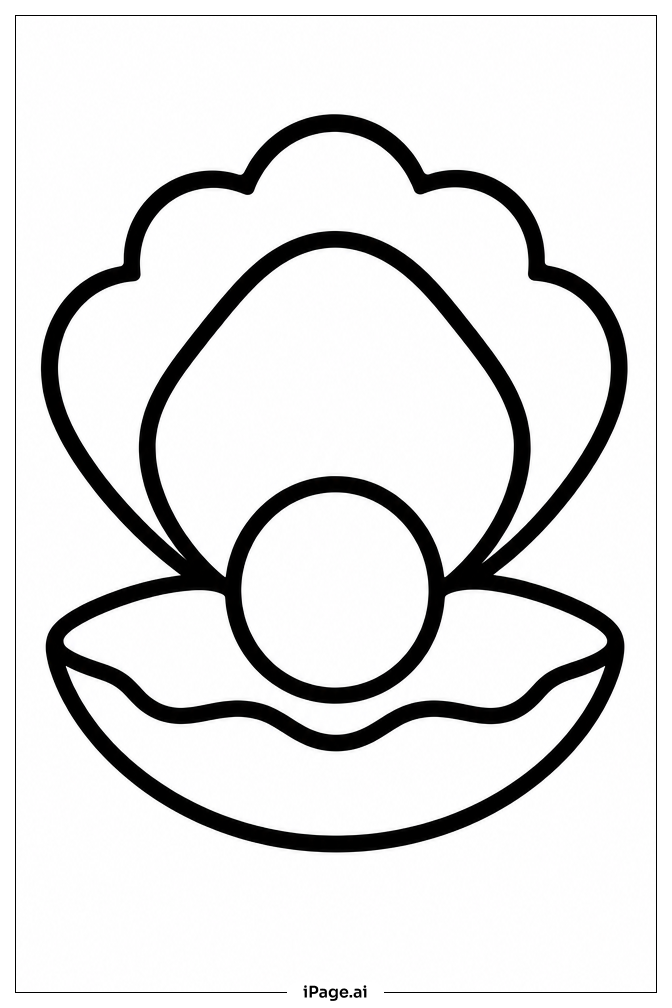
Coloring tips: How to color Seashell With Pearl coloring page well?
Start with the pearl in the center. Use a soft white or light gray as the base. Add pale pink, lavender, or sky blue highlights to give it a shimmery, glowing look. Leave a small bright spot uncolored to show reflection.
For the inside of the shell, try peach, soft pink, or cream. Blend from a lighter tone near the center to a slightly deeper shade near the edges to show depth.
For the outside of the shell, use sandy tan, warm beige, or light brown. Add darker streaks along the ridges to bring out the texture.
Color the water or waves in light blue or aqua. Use gentle strokes to keep it calm and peaceful.
Use a light hand throughout — soft, blended colors will make this image look graceful and beautiful. This is a great image for trying out color gradients and shading for the first time!
Coloring challenges: Which parts are difficult to color and need attention for Seashell With Pearl coloring page?
Coloring this image comes with a few fun challenges to keep in mind:
• **Shading the pearl realistically:** The round pearl is one of the trickiest parts. To make it look three-dimensional and shiny, you need to layer light and shadow carefully. Leave a small highlight near the top and gradually darken the lower half. Blending smoothly is key — harsh lines will make the pearl look flat instead of round and glowing.
• **Capturing the shell's inner luster:** The interior of a clamshell has a soft, almost iridescent quality. Recreating this with colored pencils or markers can be difficult. You'll need to layer multiple soft shades — pinks, creams, and subtle purples — and blend them gently to mimic the natural shimmer.
• **Working within the fine ridged lines:** The outer shell has many closely spaced ridges and textured grooves. Staying within these narrow lines requires a sharp pencil tip and a steady hand. Rushing through this section may cause colors to bleed across the lines, losing the shell's detailed look.
• **Creating contrast between inside and outside:** The shell's interior and exterior should look clearly different in tone and texture. Balancing warm tones outside and soft, luminous tones inside without the colors clashing takes careful planning before you start.
• **Coloring the water without overpowering the shell:** The surrounding waves and bubbles should support the shell, not steal attention. Using light, airy blues and keeping the water strokes gentle will help the shell remain the clear focal point of the whole image.
Benefits of coloring books: Advantages of drawing Seashell With Pearl coloring page
Coloring this seashell and pearl image offers many wonderful benefits for kids and beginners alike.
Working on the fine ridges of the shell helps build hand-eye coordination and trains your fingers to make careful, controlled movements. This is great practice for writing and drawing skills.
Choosing colors for the pearl and shell interior encourages creative thinking. There is no single right answer — experimenting with pinks, blues, and creams helps you discover what combinations look beautiful together.
Trying to shade the round pearl teaches basic art concepts like light, shadow, and depth. These are real skills that artists use, and learning them through a fun coloring page makes the process feel natural and enjoyable.
Focusing on detailed work like this is also calming. It helps quiet busy thoughts and brings a sense of focus and peace — similar to mindfulness. Many people find that coloring helps reduce stress and improve mood.
Finally, finishing a detailed image like this gives a real sense of pride and accomplishment. It shows that patience and effort pay off, which is a great lesson for children and adults of all ages.