Coloring tips: How to color Seashell With Little Fish coloring page well?
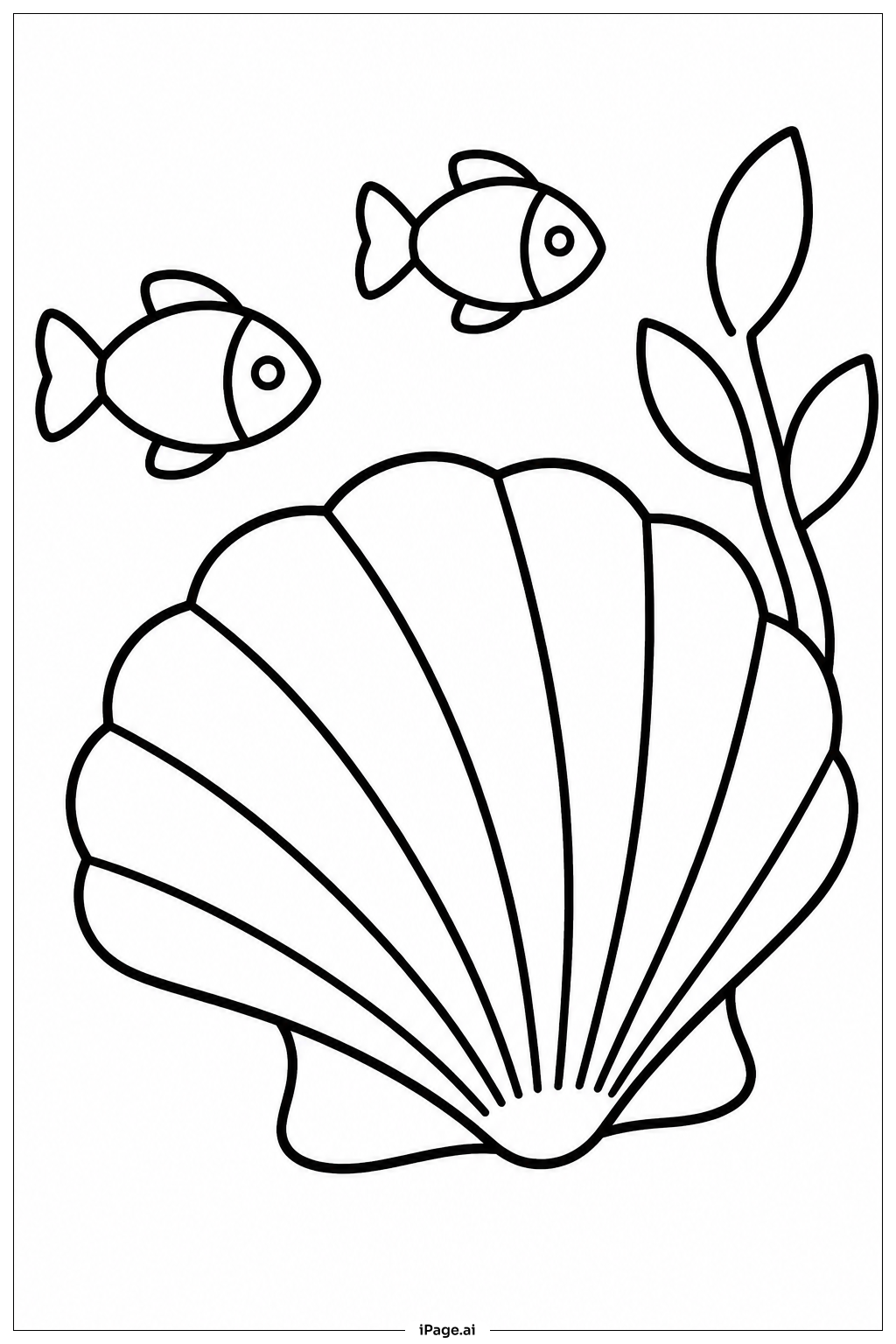
Start with the large seashell using warm, sandy tones like peach, tan, or light orange. Add darker shades along the ridges and inner curves to make the shell look three-dimensional. Try using a cream or ivory color for the smooth, inner part of the shell.
For the little fish, use bright, cheerful colors like yellow, blue, orange, or red to make them pop against the shell. Give each fish a different color to make the scene feel lively and fun.
Color the bubbles light blue or leave them white for a soft, airy feel. Use shades of aqua, teal, or blue-green for the surrounding water and waves. Blending lighter and darker shades of blue together can help the water look more realistic and flowing.
Don't be afraid to get creative — mix unexpected colors to make your ocean scene truly unique!
Coloring challenges: Which parts are difficult to color and need attention for Seashell With Little Fish coloring page?
Coloring this image comes with a few fun challenges to keep in mind:
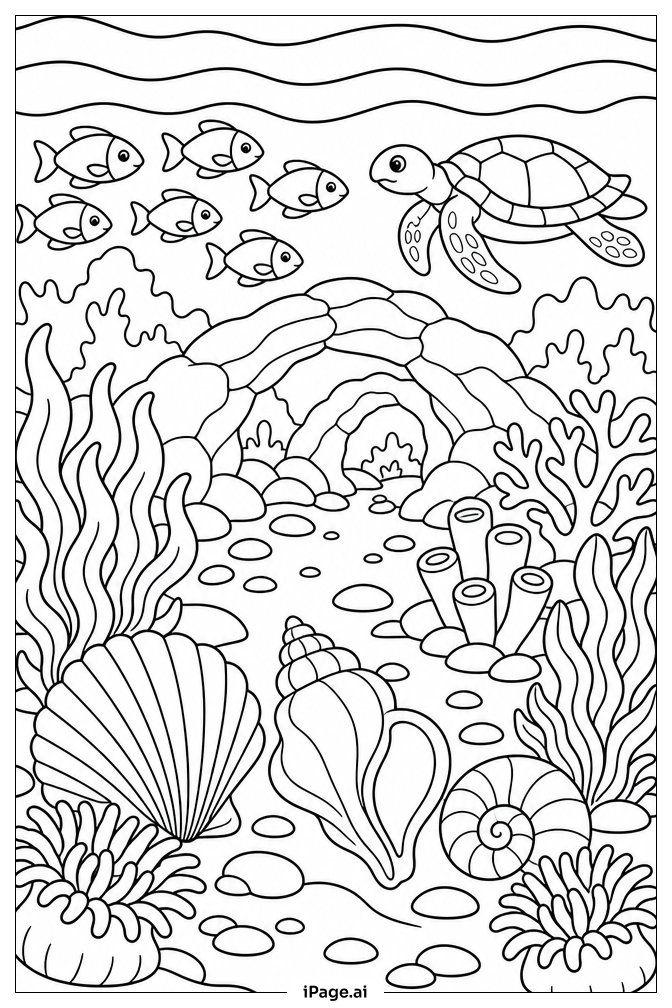
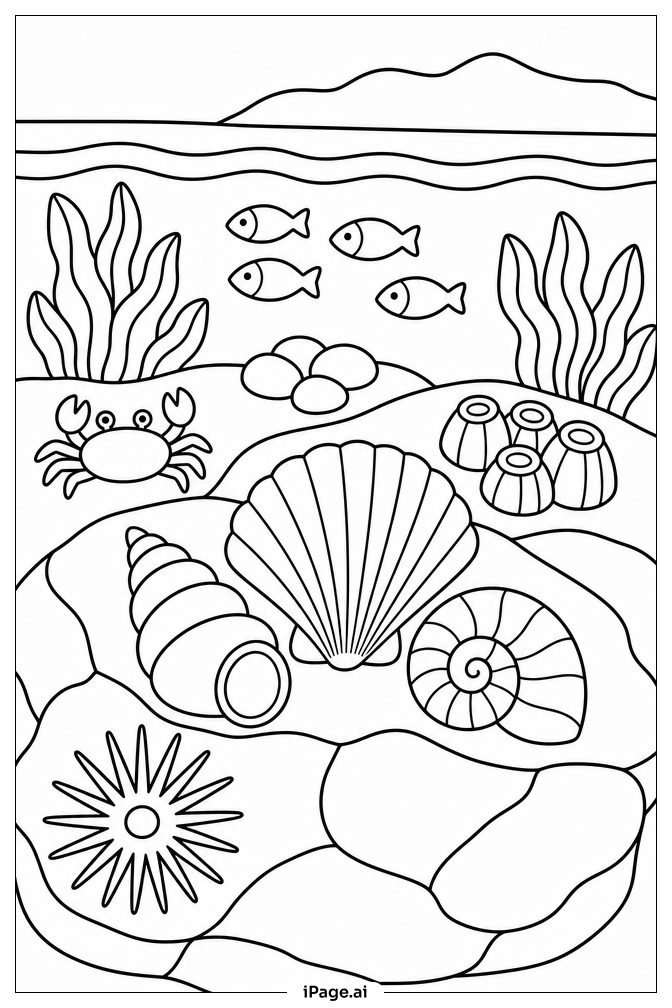
• **Intricate shell details:** The seashell features many curved ridges, spiral lines, and layered textures. Carefully following each line without going outside the borders requires patience and a steady hand. Using a fine-tipped colored pencil or thin marker can help you stay precise in these narrow areas.
• **Small fish details:** The little fish tucked in and around the shell are quite small, with tiny fins, eyes, and tail shapes. Filling in these miniature details without smudging or overlapping colors can be tricky, especially for younger colorists. Take your time and use the sharpest tip of your pencil or marker.
• **Creating depth and dimension:** The shell has a naturally curved, three-dimensional form. Achieving a realistic look means shading strategically — applying darker tones to shadowed areas and lighter tones where light would naturally hit. This technique, called shading, can be challenging but makes the final result look stunning.
• **Color harmony between elements:** Balancing the colors of the shell, the fish, and the water background so they all look good together takes thought. If the shell and fish are too similar in color, details can get lost. Choosing contrasting colors for each element helps each part stand out clearly.
• **Staying within small spaces:** Some areas between the fish fins and shell edges are very narrow. Younger children may find it difficult to color neatly inside these tight spaces. Using smaller coloring tools makes this much easier.
Benefits of coloring books: Advantages of drawing Seashell With Little Fish coloring page
Coloring this Seashell With Little Fish page offers a wonderful range of benefits for children of all ages.
First, it helps develop **fine motor skills**. Carefully coloring the shell's ridges and tiny fish details strengthens hand and finger muscles, which supports better handwriting and coordination over time.
Second, it encourages **creativity and self-expression**. Choosing colors for the shell, fish, and water allows kids to make their own artistic decisions, building confidence and imagination.
Third, it teaches **focus and patience**. The detailed nature of this image requires children to slow down, concentrate, and work carefully — skills that are valuable both in school and everyday life.
Fourth, it introduces kids to the **natural world**. The ocean-themed scene sparks curiosity about sea life, shells, and underwater environments, making learning feel playful and engaging.
Finally, coloring is a proven way to **reduce stress and promote calm**. The repetitive, gentle motion of coloring helps children (and adults) relax, unwind, and feel a sense of peaceful accomplishment when the page is complete.
This page is a perfect blend of fun, learning, and creativity — great for Boys and Girls of all skill levels!