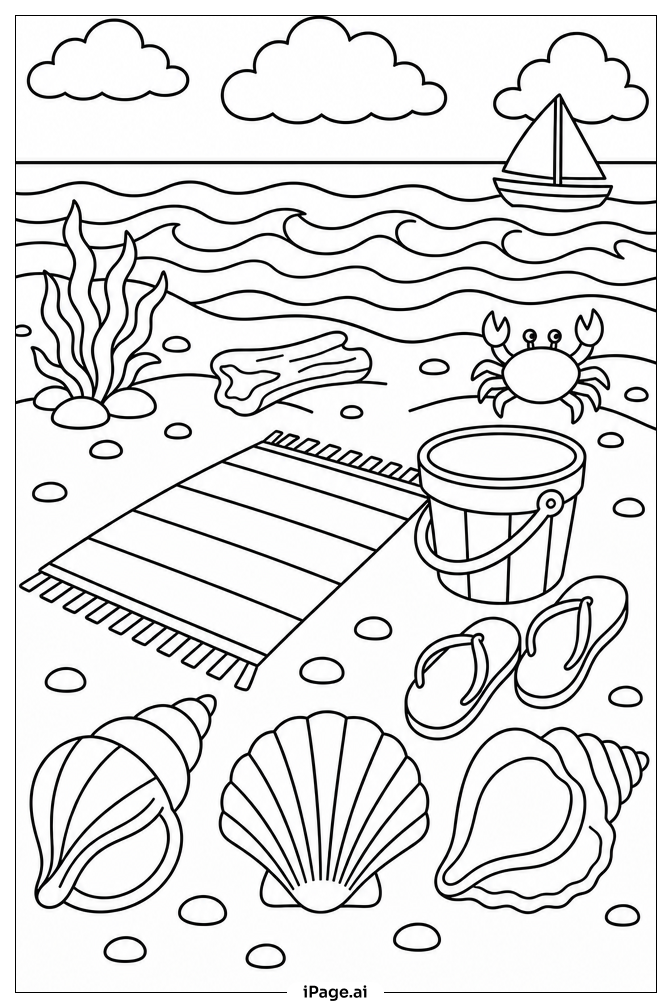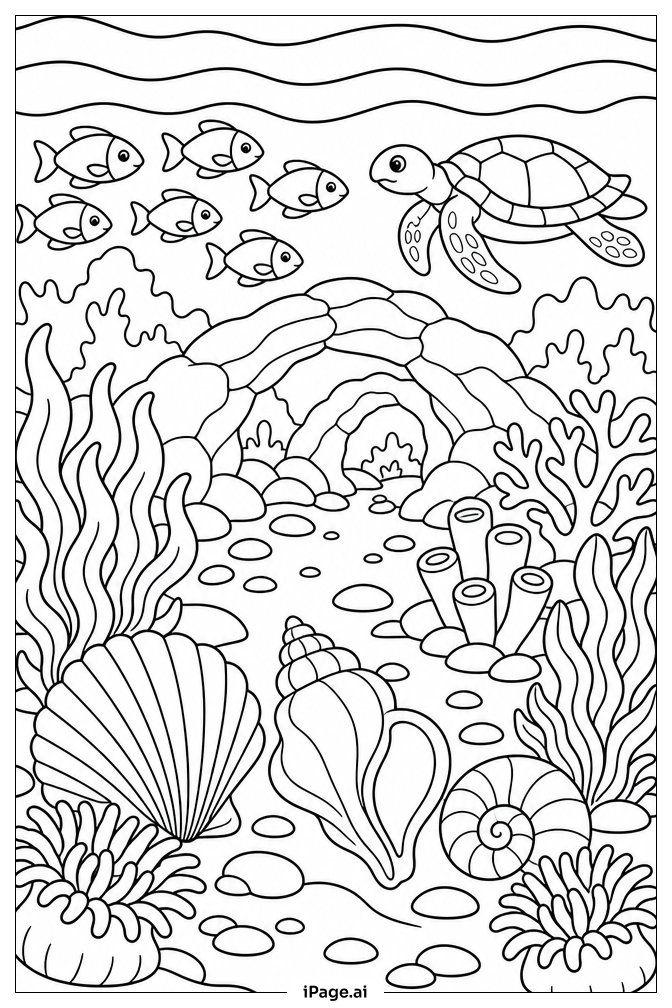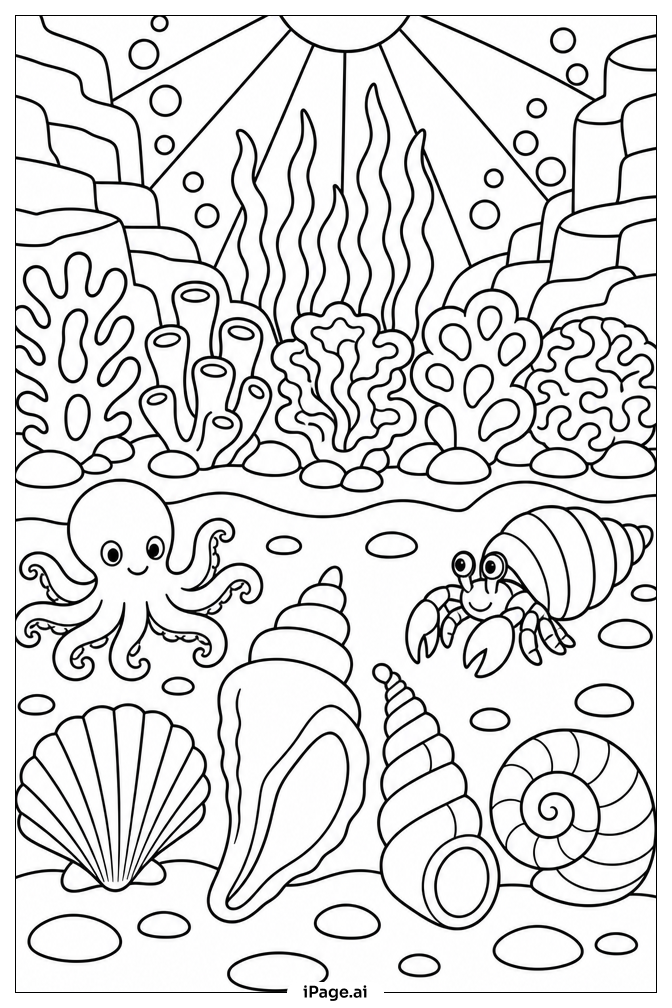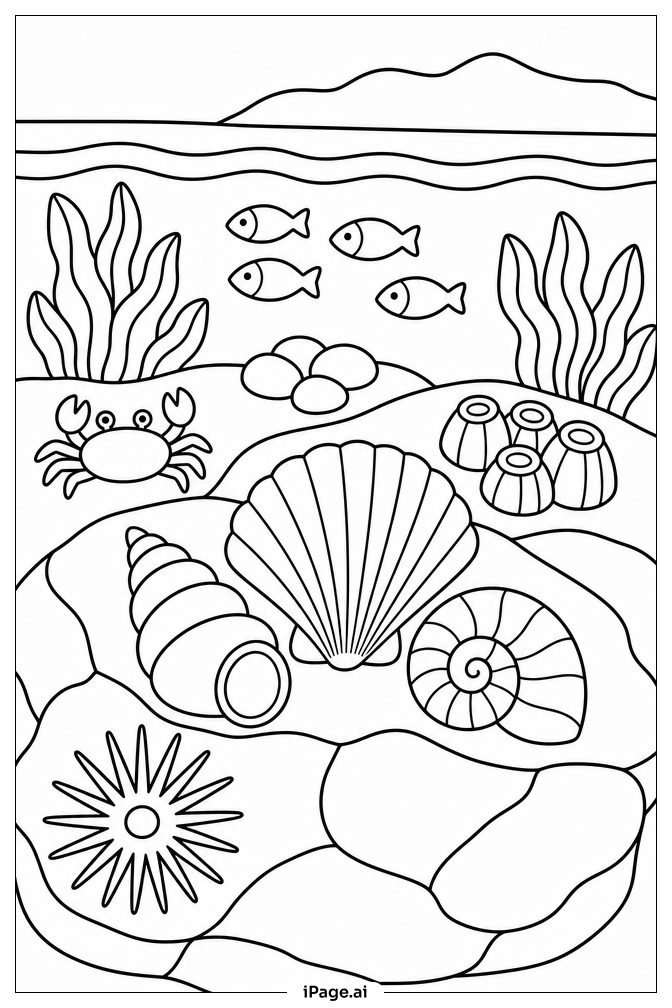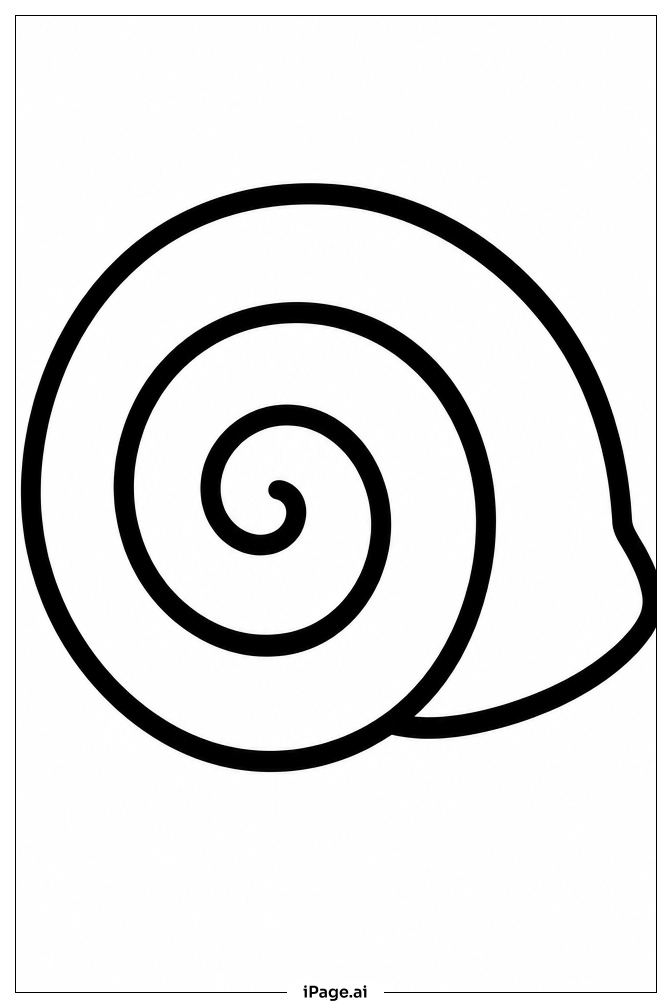
Coloring tips: How to color Seashell Spiral coloring page well?
Start by choosing ocean-inspired colors like soft pinks, warm peaches, creamy whites, and sandy beiges for the main shell body. Use a light base color first, then slowly build up darker shades in the grooves and ridges to create depth. For the spiral at the center, try a deeper, richer tone like coral or rose to make it stand out. You can add a gentle gradient effect by blending colors from light at the top to darker at the bottom. If you want a fantasy look, try purples, teals, or even shimmering gold. Use a fine-tipped marker or colored pencil for the small detailed lines near the spiral. Always color in the direction of the shell's natural curves to keep it looking smooth and realistic. Have fun mixing colors!
Coloring challenges: Which parts are difficult to color and need attention for Seashell Spiral coloring page?
Coloring this seashell spiral image comes with a few fun challenges to keep in mind:
• **The Central Spiral:** The tight, curling spiral at the heart of the shell is the most complex area. The lines are close together and curve inward, making it tricky to stay within each section without going over the edges. A sharp pencil tip or a fine-tipped marker works best here. Take your time and work slowly from the outside of the spiral inward.
• **Layered Ridges and Grooves:** The shell's surface has many parallel ridges that fan outward. Coloring each ridge consistently while also creating a sense of shadow and depth requires careful attention. If the shading is uneven, the texture of the shell may look flat instead of three-dimensional.
• **Smooth Gradient Blending:** Achieving a natural, smooth color transition from the lighter tip of the shell to the darker base is a real skill challenge. Blending too quickly can create harsh lines, while blending too slowly may cause the colors to look muddy or patchy.
• **Small Detail Lines:** Near the spiral and along the edges of the shell, there are very fine decorative lines. These tiny areas are difficult to color without accidentally crossing into neighboring sections, especially for younger colorists or those using broader coloring tools.
• **Maintaining Consistency:** Because the shell has a symmetrical and repetitive pattern, keeping your color choices consistent across the whole image requires planning ahead. Randomly switching colors mid-pattern can break the visual flow of the design.
Benefits of coloring books: Advantages of drawing Seashell Spiral coloring page
Coloring this seashell spiral page offers many wonderful benefits for kids and beginners alike.
Following the curved lines and detailed spiral helps improve **hand-eye coordination** and fine motor skills. It teaches young colorists how to control their tools carefully and precisely.
The spiral and ridge patterns are excellent for building **focus and concentration**. Staying within the lines requires patience, which is a great skill to practice.
Choosing colors for the shell sparks **creativity and imagination**. Kids can decide between realistic ocean tones or fantastical rainbow palettes, making every finished page uniquely their own.
The repetitive nature of coloring the ridges and grooves is naturally **calming and relaxing**. It can help reduce stress and anxiety, making it a wonderful quiet-time activity.
Learning about natural shapes like spirals also supports **early science and math awareness**. The spiral pattern found in seashells is a real mathematical pattern called the Fibonacci spiral, gently introducing kids to the wonders of nature and numbers.
Overall, this coloring page is a fun and enriching activity that nurtures both the artistic and intellectual growth of young learners.