Coloring tips: How to color Seashell Smile coloring page well?
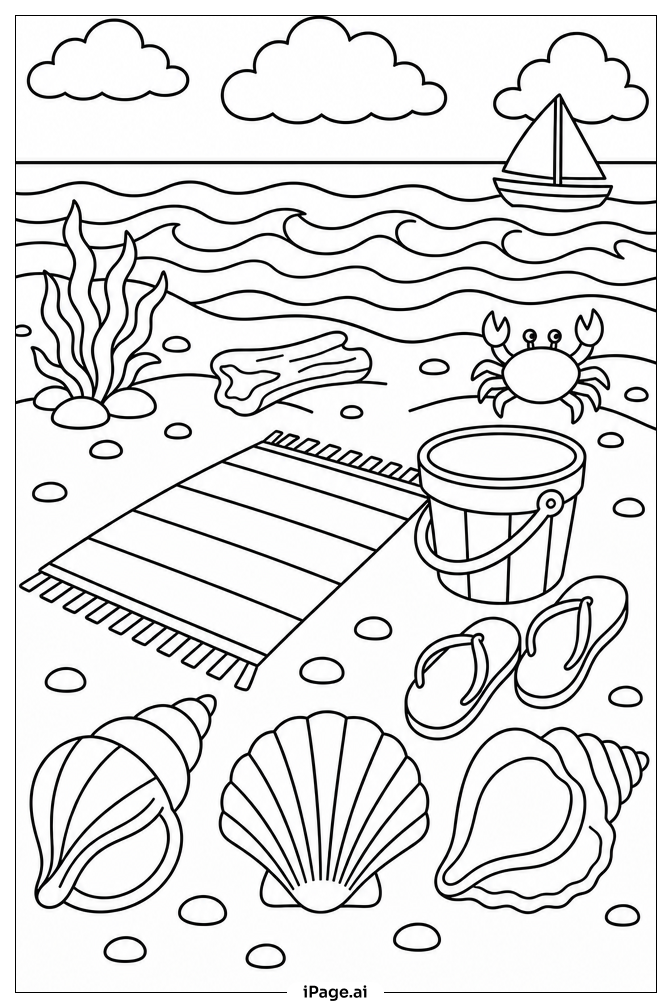
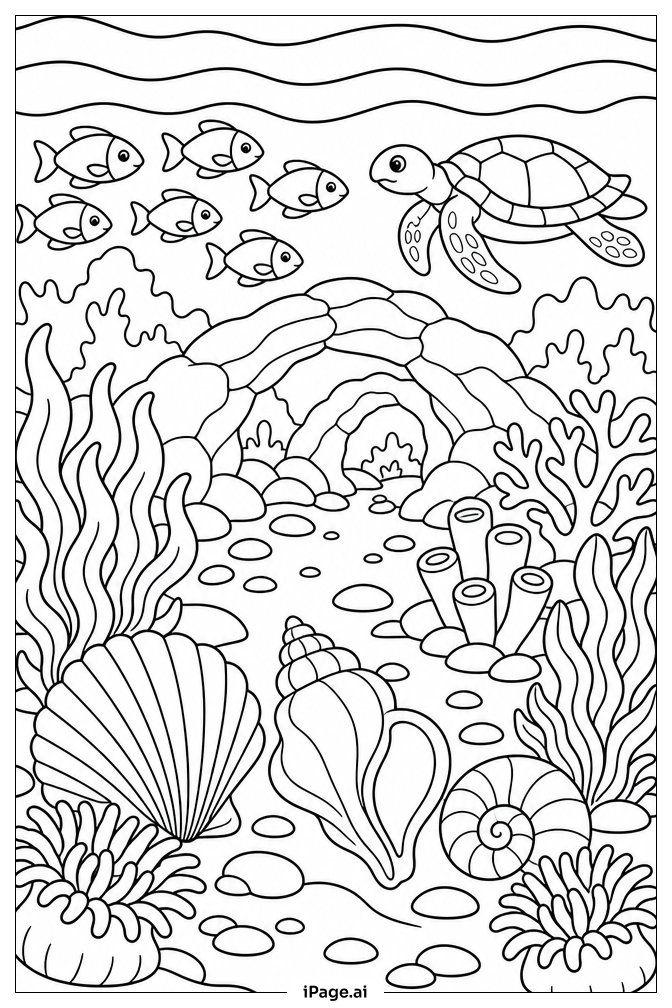
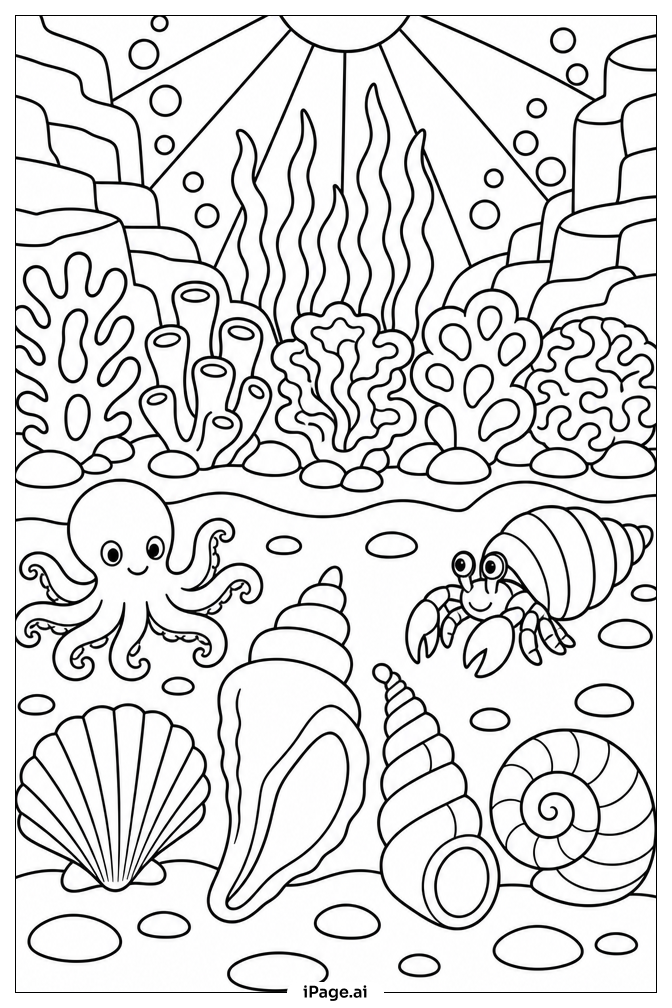
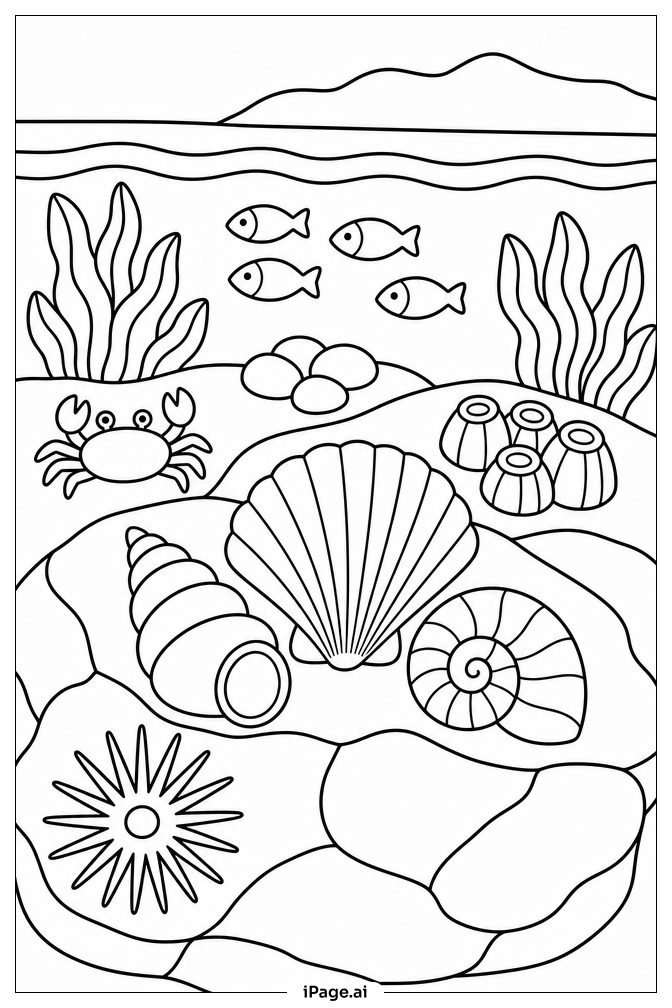
Start with the shell's main body. Seashells often have warm, natural tones — try creamy white, soft peach, sandy beige, or light pink. You can add gradient shading by using a darker shade along the ridges and a lighter tone on the raised areas to give the shell a three-dimensional look. For the spiral center, use a deeper coral or rose color to make it pop. Color the cheerful smile and eyes with bright, lively colors like yellow or orange to highlight the happy expression. If there are ocean waves or background details, soft blues and aquas work beautifully. Foam tips on waves can be left white or colored with the lightest blue you have. Don't be afraid to mix colors — real seashells come in stunning pinks, purples, and golden hues. Have fun and let your imagination guide your color choices!
Coloring challenges: Which parts are difficult to color and need attention for Seashell Smile coloring page?
Coloring this seashell image comes with a few fun challenges to keep in mind:
• **Shell Ridges and Spiral Lines:** The seashell has many curved ridges and a spiral pattern. Staying inside each narrow section and following the curves neatly can be tricky, especially for younger colorists. Take your time and use a sharpened pencil or a fine-tipped marker for the thin areas.
• **Creating Depth and Texture:** A flat, single color won't capture the natural beauty of a seashell. The real challenge is using two or three shades of the same color to show light and shadow. Lighter tones go on raised areas, while darker shades go into the grooves. This takes patience and practice but makes the shell look wonderfully realistic.
• **Facial Features:** The eyes and smile are small details that need careful attention. Using the wrong color or going outside the lines in these tiny areas can change the whole expression of the character. Fine-tipped tools are strongly recommended here.
• **Smooth Color Blending:** Achieving a smooth gradient across the shell's surface — going from one color to another without harsh lines — requires gentle, layered strokes. Rushing this step often leads to uneven patches of color.
• **Background Balance:** If the image includes ocean waves or bubbles around the shell, choosing background colors that complement but don't overpower the shell itself is a subtle but important challenge. The shell should remain the star of the image.
Benefits of coloring books: Advantages of drawing Seashell Smile coloring page
Coloring this happy seashell character offers a wonderful range of benefits for kids and young colorists:
**Builds Focus and Patience:** Working through the shell's detailed ridges and tiny facial features encourages children to slow down, concentrate, and develop their attention span in a fun and rewarding way.
**Sparks Creativity:** Choosing colors for a smiling seashell is a joyful creative exercise. There are no wrong answers — kids can go for realistic ocean tones or dream up a rainbow shell. Either way, they're expressing themselves.
**Develops Fine Motor Skills:** Carefully coloring inside curved lines, narrow ridges, and small details like eyes and a smile strengthens hand-eye coordination and the fine motor control needed for writing and drawing.
**Teaches Color Theory:** Experimenting with shading, blending warm and cool tones, and creating gradients on the shell body gives young artists a hands-on introduction to how colors work together.
**Promotes Relaxation:** The repetitive, gentle motion of coloring is naturally calming. It helps children manage stress and anxiety while keeping their hands and minds pleasantly occupied.
**Connects Kids to Nature:** A smiling seashell is a delightful gateway to learning about ocean life, beaches, and the natural world — making coloring both educational and imaginative.