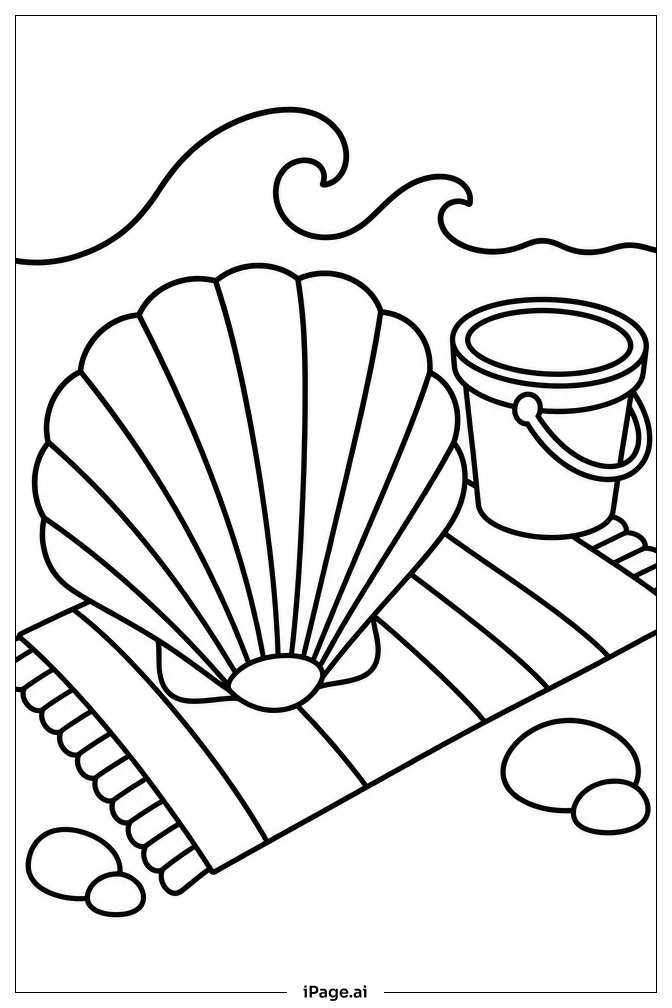
Coloring tips: How to color Seashell Picnic coloring page well?
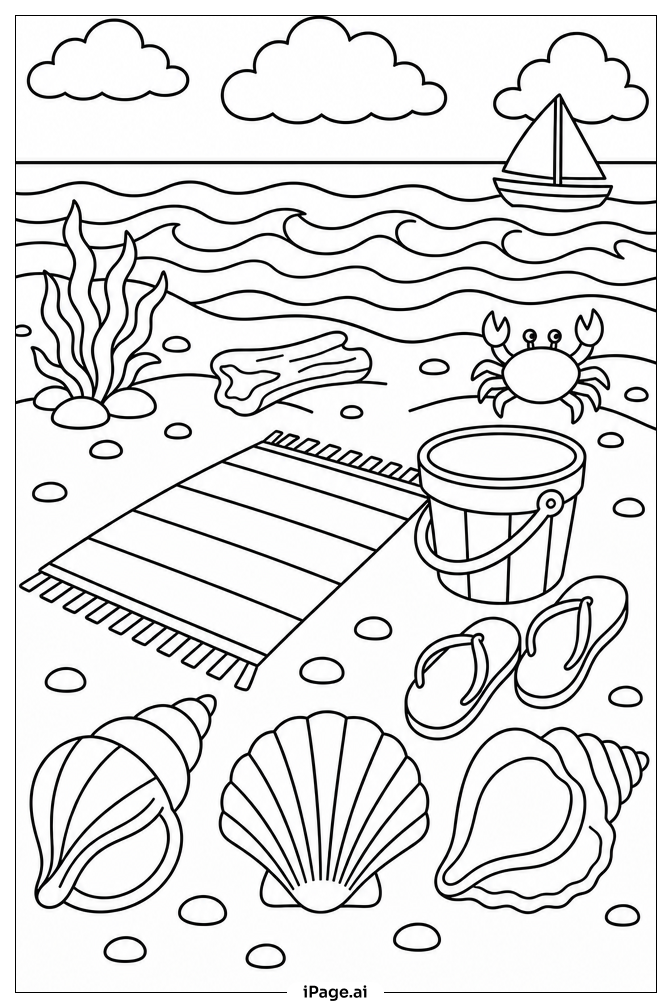
Start with the lightest colors first, then build up to darker shades. For the seashells, try soft pinks, creams, peaches, and lavender. Mix light purple and white for a pearly shell effect. Use warm sandy yellows and tans for the beach. Color the ocean with shades of blue and teal — light blue near the shore, deeper blue farther out. Make the picnic blanket bright and cheerful with stripes or checkered patterns in red, yellow, and green. Use orange and red for the crabs, and yellow or gold for the starfish. Color the picnic basket in warm browns. Keep the sky a soft blue with white or pale yellow clouds. Feel free to add your own color patterns to the shell designs to make them extra special and unique!
Coloring challenges: Which parts are difficult to color and need attention for Seashell Picnic coloring page?
Coloring this image comes with a few fun challenges to keep in mind:
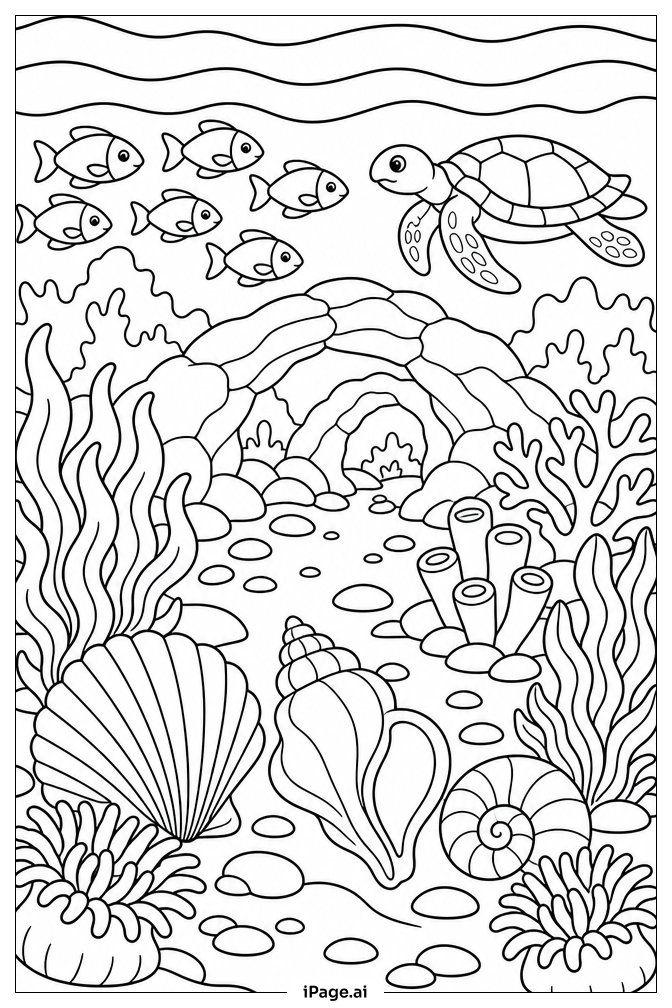
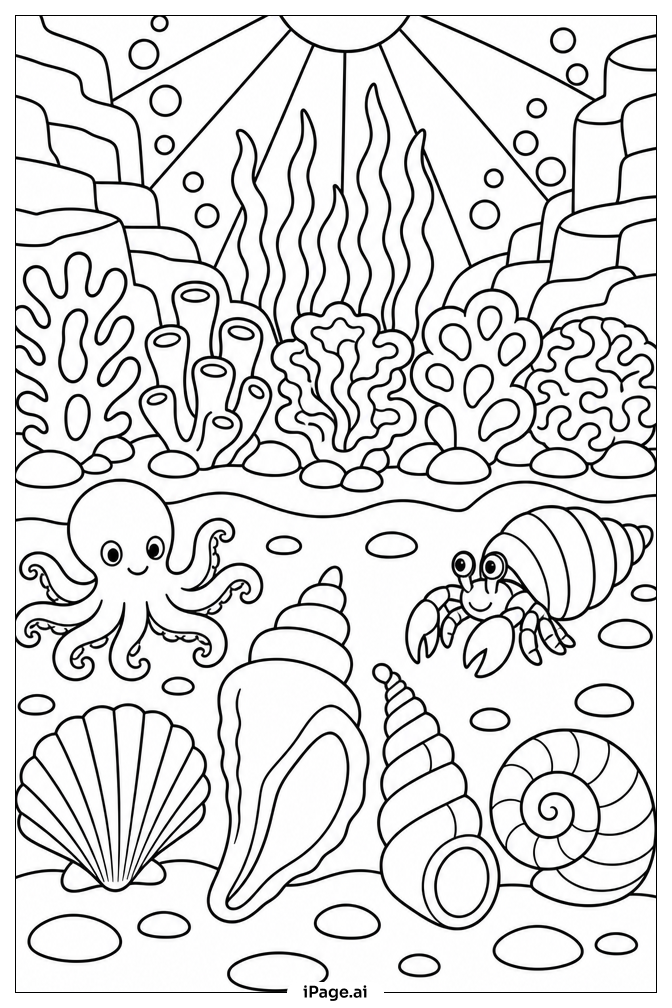
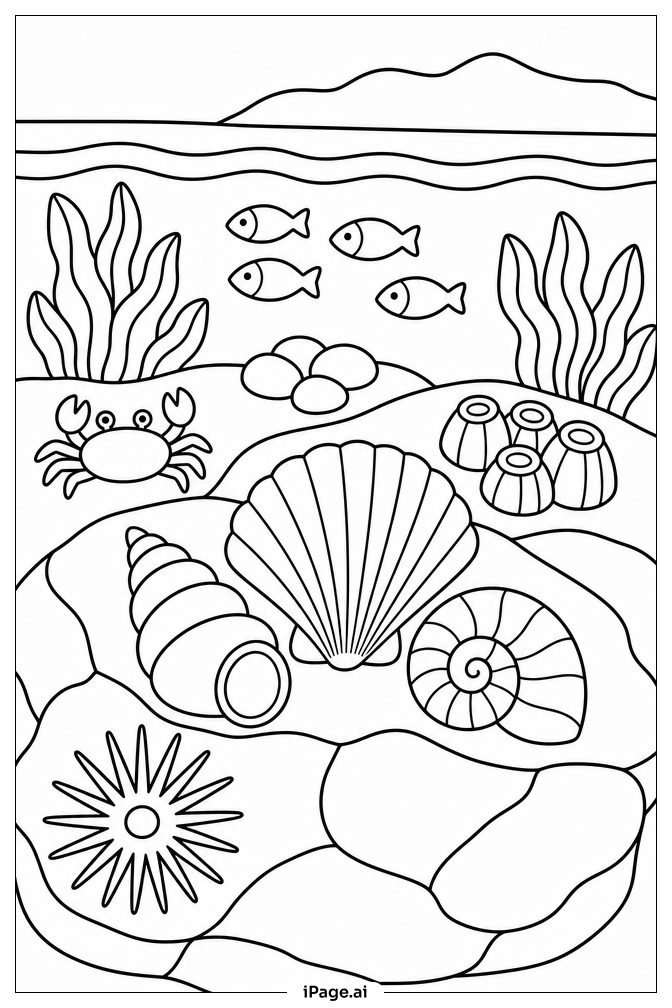
• **Intricate Shell Patterns:** The seashells feature detailed swirls, ridges, and spiral textures. Staying within these small, curved lines requires a sharp pencil or a fine-tipped marker. Take your time and work slowly from the center of each shell outward to avoid color bleeding between sections.
• **Layering Colors for Depth:** Real seashells have a natural gradient — lighter at the tips and darker in the grooves. Achieving this effect means blending two or three colors together smoothly. This can be tricky, especially for younger artists. Try using colored pencils and gently layer a darker shade over a lighter base color.
• **Differentiating Overlapping Elements:** Several objects overlap — shells may sit on top of the blanket, and crabs or starfish may rest near shell edges. It helps to decide on a color palette for each object before you start so that neighboring items don't end up looking the same.
• **Textured Surfaces:** The picnic basket, sandy beach, and ocean waves each have their own unique texture. Representing these different surfaces — the woven basket, the grainy sand, and the flowing water — using color alone takes creativity. Try using short, directional strokes that match the texture of each surface.
• **Small Background Details:** Tiny elements like distant waves, clouds, and flying seagulls are small and closely spaced. Use thin tools and light colors for these areas to avoid making the background feel too heavy or crowded compared to the main foreground scene.
Benefits of coloring books: Advantages of drawing Seashell Picnic coloring page
Coloring this Seashell Picnic scene offers a wide range of wonderful benefits for kids and beginners alike.
First, it helps build **fine motor skills**. Carefully coloring the tiny shell patterns and small details strengthens hand muscles and improves pencil control — skills that are useful for writing and drawing.
Second, it encourages **creativity and self-expression**. There is no single "right" way to color a seashell. Kids can experiment with any color combination they like, building confidence in their own artistic choices.
Third, it supports **focus and patience**. The detailed designs require concentration and careful attention, helping children practice sitting still and working through a task from start to finish.
Fourth, it introduces **nature and science concepts**. The image features different types of shells, starfish, crabs, and ocean scenery. Coloring these elements can spark curiosity about marine life and the natural world.
Finally, it provides a **calming, screen-free activity**. Spending quiet time with coloring helps reduce stress and anxiety, making it a healthy and enjoyable way to relax. Whether done alone or with friends and family, this picnic-by-the-sea scene is sure to bring joy and creativity to everyone who colors it.